There is a home within walking distance of Manteca High.
The lawn is dead.
There are several vehicles parked on it.
One appears to be inoperable.
There is some items that might be described politely as junk in the front yard.
Several bushes are dead as well.
Property rights, you say.
A man’s home is his castle.
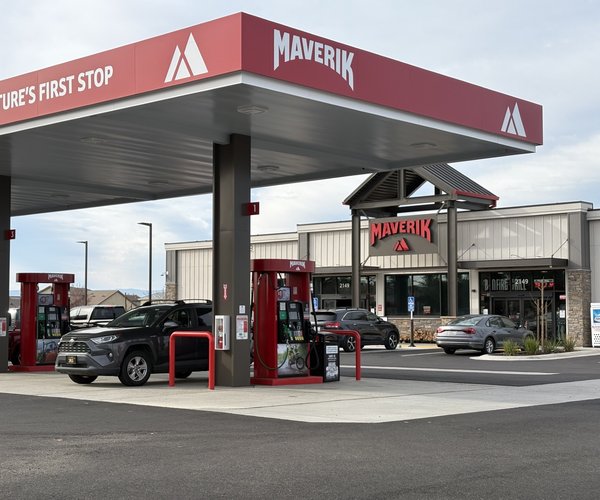
What if I were to tell you that it is actually no different than a 7-Eleven?
Before you start scratching your head, here’s the scoop.
It is a rental.
Someone owns it and rents/leases it out to make money.
That makes the house a business.
It should be treated no different than a 7-Eleven.
And if a 7-Eleven looks like a dilapidated junkyard, the City of Manteca, assuming code enforcement is more than just lip service, would be enforcing the conditions of approval placed on that business.
Au contraire if you think the city doesn’t place “conditions” on single family homes’ upkeep.
They’re called covenants, conditions, and restrictions, or CC&Rs for short.
Ask the city to enforce them and their answer might as well as be to
tell you to “go fly a kite.”
It’s a civil matter, they say.
OK, let’s say that is the city’s position, which it is.
There are also pesky things called city ordinances that municipal staff write and elected councils duly adopt to say they are doing things to address quality of life issues and concerns.
It’s called the Manteca Municipal Code.
That’s the public relations spin.
It really is the “Emperor Has No Clothes” gone nuclear.
If you think that is an overreach, drive to the four corners of Manteca.
Take in real old neighborhoods, old neighborhoods, relatively new neighborhoods, and even a few neighborhoods that are channeling the Terrible Twos.
More than a share of problematic properties are rentals.
Let’s pause for a moment, to be clear on one point.
Renters, by and large, are not hellbent on turning the streets they live on into a 21st century version of Tobacco Road.
Nor are all homeowners, or should we say the actual few that own their homes free and clear and the rest who are paying down mortgages, in the running for the cover of Better Homes & Garden.
The Census’ American Community Survey indicates 24% of Manteca’s housing units are rentals.
That translates into 7,424 dwellings. Take out apartments and mobile homes and there are roughly 1,600 “single family homes,” duplexes, and townhomes that are rental property.
As such, there are 1,600 homes that are operated no different than a 7-Eleven, which means they exist for the owner to make money.
The city needs to improve the quality of life, fight blight, and step up its effort to stop the trashing of Manteca.
They can start by pulling a much lauded play from their 2008 playbook to fight back on trashed homes when Manteca-Stockton-Tracy-Lathrop was the foreclosure capital of the United States.
It was a time when one house could have liar loan mortgages sliced, diced, and then repackaged and owned by six different banks and hedge funds.
Homes would be in foreclosure and no one lender would take responsibility for them.
So the city wised up.
The city assigned a staffer to track down the lenders that held pieces of foreclosed homes’ mortgages that were in the most egregious condition.
They passed a home maintenance and upkeep ordinance.
It required broken windows to be bordered up and painted to match the exterior paint within a week of being notified.
Yards had to be maintained. Freely translated, the lawn needed to be kept green and bushes were not allowed to become drier than Death Valley at high noon on the Fourth of July.
They could not be occupied by partiers, the homeless, druggies, and such.
The fine was a minimum of $1,000 a day.
There was some pushback.
The city’s retort: The owner of foreclosed homes are owned by businesses to make money. They are not owner occupied.
National TV networks reported it as the toughest ordinance in the USA regarding upkeep of foreclosures.
The city actually poked the bears.
And they actually snapped the bear trap on them.
It didn’t happen over night.
But within a year Manteca went from the poster city for trashed foreclosures to getting a handle on the cancerous mess.
Here we are 17 years later.
People who own rentals do so to make money.
It is the definition of being a business.
The city may get skittish when someone suggests Manteca might want to enforce its ordinances involving property upkeep without waiting for neighbors to assume the role of snitches to report the obvious that any code enforcement officer can see by driving through a neighborhood.
But let’s be clear on one point.
Someone that rents a home in the manner that essentially flips off the rest of the neighborhood to make a profit is not a homeowner. They are in business.
Manteca needs to hire more code enforcement officers.
They need to put in place ordinances that make a clear difference between a home owned as a rental business and an owner occupied home.
Is it treating Manteca residents differently?
No, because the ultimate upkeep of a business — just like the 7-Eleven — isn’t on the customer. It’s on the proprietor.
The real question is why is Manteca is allowing a fair number of businesses to trash neighborhoods.
Is that what the City of Manteca means by being business friendly?
This column is the opinion of editor, Dennis Wyatt, and does not necessarily represent the opinions of The Bulletin or 209 Multimedia. He can be reached at dwyatt@mantecabulletin.com