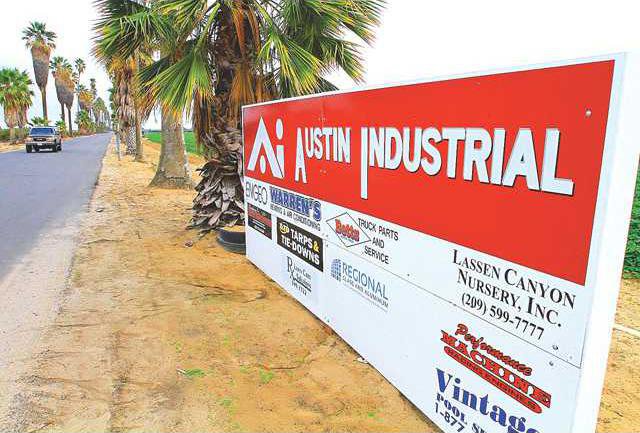
Job centers and not housing are in line to develop first in the proposed 1,049-acre Austin Road Business Park project.
It has everything to do with the current market, land that is within the Williamson Act designed to protect agriculture, as well as the cost of infrastructure.
The initial phase involves 218 acres of heavy industrial - essentially large scale distribution centers. It also involves 24 acres of business/industrial/professional zoning or what you’d typically find in business parks such as the one now on Moffat Boulevard next to Crossroads Grace Community Church. It also includes 46 acres of public/quasi public use including an eight-acre site the Manteca Visitors Center envisions for a 5,000-seat amphitheatre and other convention-style uses. It also encompasses parkland that will double as a major storm retention basin for all of the non-residential portion of the Austin Road project.
The 268 acres is located in the southeast portion of the project. It is bordered on the west by the existing Austin Road and on the north by the future alignment of McKinley Avenue that ultimately would connect with Highway 99 in a new interchange south of the existing Austin Road interchange.
The alignment of McKinley Avenue is roughly a quarter of a mile north of Sedan Avenue.
AKF Development - one of the partners in Austin Road Business Park - has received a number of inquiries from companies interested in building distribution centers.
The second phase would consist of 82 acres including the remaining 41 acres of business/industrial/professional plus 41 acres of commercial mixed use designed to integrate high density residential often in the same building but on upper floors of retail buildings as well as condos and apartments that are more urbanized. The land is all east of Austin Road.
The third phase consists of 315 acres of low density residential as well as park and open space to the west of Austin Road, to the south of Woodward Avenue and to the east of the future extension of Atherton Drive due south from where it intersects Woodward Avenue today.
The fourth phase is comprised of 108.2 acres of general commercial east of Austin Road and north of the McKinley Avenue extension alignment.
The fifth and final phase consists of all remaining residential. The land is now in the Williamson Act. The act protects agriculture through lower property tax assessment. It takes 10 years to take the land out of the Williamson Act after notification is given without suffering severe property tax penalties. Developers could opt to pay the penalties but it would add significantly to the cost of the project.
The phasing is also critical to allow continued use of the Austin Road interchange until such time a new interchange is built at McKinley Avenue and Highway 99 further to the south.
By not allowing housing to go first, it assures adequate capacity at the Austin Road interchange with just a few modifications.
The impact of the project generally south of Highway 99 saddling Austin Road is so big it will:
*Possibly require a re-alignment of Highway 99.
*Generate 10, 200 residents or about a seventh of the existing population of Manteca.
*Convert 1,049 acres from farming and rural residential use to urban development.
*Impact Ripon Unified schools even bigger than Manteca Unified schools as most of the residential would be within Manteca city limits but within the Ripon Unified district. The number of students going to Ripon could easily exceed the current enrollment of Ripon High.
•The potential to create up to 13,000 jobs - or close to 50 percent of the existing jobs in the city.
*The residential alone represents the potential of creating $1.02 billion in today’s dollars.
* 84 acres of commercial mixed use that will blend high density residential with commercial uses designed to encourage a valley version of the much acclaimed Santana Row development in San Jose that combines commercial and retail to create a neighborhood where people can live and walk to stores, entertainment, and other diversions.
The project will require a new Austin Road interchange further south than the existing location.
The reason is two-fold. First, the existing interchange is too close to the Highway 120 Bypass/Highway 99 interchange to allow safe merger. Caltrans can’t add a second south Highway 99 merge land that would ease the afternoon commute with the interchange at its current location.
Austin Road needs to also clear the railroad tracks as well as Highway 99 much like the replacement Jack Tone Road interchange does in Ripon.
It has everything to do with the current market, land that is within the Williamson Act designed to protect agriculture, as well as the cost of infrastructure.
The initial phase involves 218 acres of heavy industrial - essentially large scale distribution centers. It also involves 24 acres of business/industrial/professional zoning or what you’d typically find in business parks such as the one now on Moffat Boulevard next to Crossroads Grace Community Church. It also includes 46 acres of public/quasi public use including an eight-acre site the Manteca Visitors Center envisions for a 5,000-seat amphitheatre and other convention-style uses. It also encompasses parkland that will double as a major storm retention basin for all of the non-residential portion of the Austin Road project.
The 268 acres is located in the southeast portion of the project. It is bordered on the west by the existing Austin Road and on the north by the future alignment of McKinley Avenue that ultimately would connect with Highway 99 in a new interchange south of the existing Austin Road interchange.
The alignment of McKinley Avenue is roughly a quarter of a mile north of Sedan Avenue.
AKF Development - one of the partners in Austin Road Business Park - has received a number of inquiries from companies interested in building distribution centers.
The second phase would consist of 82 acres including the remaining 41 acres of business/industrial/professional plus 41 acres of commercial mixed use designed to integrate high density residential often in the same building but on upper floors of retail buildings as well as condos and apartments that are more urbanized. The land is all east of Austin Road.
The third phase consists of 315 acres of low density residential as well as park and open space to the west of Austin Road, to the south of Woodward Avenue and to the east of the future extension of Atherton Drive due south from where it intersects Woodward Avenue today.
The fourth phase is comprised of 108.2 acres of general commercial east of Austin Road and north of the McKinley Avenue extension alignment.
The fifth and final phase consists of all remaining residential. The land is now in the Williamson Act. The act protects agriculture through lower property tax assessment. It takes 10 years to take the land out of the Williamson Act after notification is given without suffering severe property tax penalties. Developers could opt to pay the penalties but it would add significantly to the cost of the project.
The phasing is also critical to allow continued use of the Austin Road interchange until such time a new interchange is built at McKinley Avenue and Highway 99 further to the south.
By not allowing housing to go first, it assures adequate capacity at the Austin Road interchange with just a few modifications.
The impact of the project generally south of Highway 99 saddling Austin Road is so big it will:
*Possibly require a re-alignment of Highway 99.
*Generate 10, 200 residents or about a seventh of the existing population of Manteca.
*Convert 1,049 acres from farming and rural residential use to urban development.
*Impact Ripon Unified schools even bigger than Manteca Unified schools as most of the residential would be within Manteca city limits but within the Ripon Unified district. The number of students going to Ripon could easily exceed the current enrollment of Ripon High.
•The potential to create up to 13,000 jobs - or close to 50 percent of the existing jobs in the city.
*The residential alone represents the potential of creating $1.02 billion in today’s dollars.
* 84 acres of commercial mixed use that will blend high density residential with commercial uses designed to encourage a valley version of the much acclaimed Santana Row development in San Jose that combines commercial and retail to create a neighborhood where people can live and walk to stores, entertainment, and other diversions.
The project will require a new Austin Road interchange further south than the existing location.
The reason is two-fold. First, the existing interchange is too close to the Highway 120 Bypass/Highway 99 interchange to allow safe merger. Caltrans can’t add a second south Highway 99 merge land that would ease the afternoon commute with the interchange at its current location.
Austin Road needs to also clear the railroad tracks as well as Highway 99 much like the replacement Jack Tone Road interchange does in Ripon.