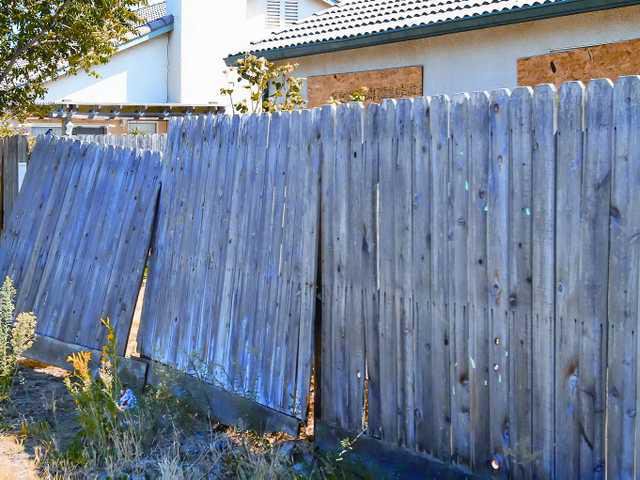
Dead grass. Swimming pools with green water infested with mosquitoes. Garbage stacked in yards. Broken windows and trashed interiors.
They are all sure signs of a house in foreclosure.
You still seem them around Manteca but problem homes aren’t lingering for long going unkempt especially compared to 2007 and 2008 when the first wave of foreclosures slammed Manteca. And it’s not because foreclosures are dropping off. Experts anticipate Manteca will see another 800 to 1,000 foreclosures hit the market this year at almost the same annual pace as the past three years.
So what’s the big difference? It’s Manteca’s hammer and carrot approach with banks holding foreclosed homes.
Manteca’s three man code enforcement team – headed up by supervisor Scott Cunningham – is proactively working with banks when they spot problem homes. They will work with the banks to resolve issues as long as the financial institutions respond in a reasonable time frame and demonstrate they are making headway. But if banks steadfastly ignore the city and refuse to make an effort to keep a foreclosed home from either falling in disrepair or bring it up to code, they bring down the hammer.
That hammer is Manteca’s foreclosure fight blight ordinance adopted several years ago. While banks tend to eventually cooperate, some simply won’t. That can be costly. The biggest fine successfully slapped on a bank through the administrative law process involving failure to maintain and fix a Manteca foreclosure they owned is $13,500.
Cunningham said the city’s goal isn’t to extract large fines out of banks. It is to get them to take care of the homes they own. But if they steadfastly decline to provide an action plan and to make actual progress, the citation book comes out. If there’s no progress in 10 days, they cite them again. They continue to cite the banks every 10 days in such instances until either they do the work or they go to sell the home.
And if they decided to ignore the city all the way through the process, they have to clear up fines before they can transfer title of the home.
In extreme cases where there is a clear health and safety issue with a foreclosed home and the bank doesn’t take immediate action, the city will go ahead and abate the problem by contracting the work to be done and then placing a lien against the property.
And while neighbors of many foreclosures may see the condition they are in as a pressing health and safety issue, Cunningham noted it is not that clear cut.
“We have to respect the Fourth Amendment regarding illegal search and seizure,” Cunningham said.
But in rare cases where the health or safety issues exceed a reasonable threshold the city will act.
One such case was where the people evicted from a foreclosure left massive five-foot high piles of trash in the back yard.
Cunningham noted that some banks – specifically Wells Fargo – are becoming proactive. They will make it a priority to get back to the city when they are contacted to start addressing deficiencies involving a foreclosed property.
The city in 2011 handled 2,600 code violation complaints. Of those, about a third involved foreclosed homes.
The foreclosure process has had a silver lining.
The code enforcement effort connected with foreclosures is helping the city identify and correct out-of-compliance improvements.
“There is a lot of illegal remodeling where unsafe work has been done,” Cunningham said.
That runs the gamut from entire rooms added on without a permit that fail to meet building code standards to outbuilding that more often than not have wiring hazards that pose safety and fire issues.
The foreclosure process allows the city a way to not just get a chance to inspect property in disrepair but to do so in a manner that whatever issues they find they can force them to be corrected. If they aren’t and the city has taken action against the property a sale cannot go through.
Cunningham pointed out you will see instances where those evicted have done extensive damage inside a home including one where they stripped a kitchen down to its bare walls taking even the cabinet. A bank could sell it as is but not if it has been cited that is impossible to do.
Cunningham, who has been on the job for 2.5 years in Manteca, said he believes the city has improved its response to concerns posed by foreclosed homes. Four years ago, foreclosure problems were a common subject for people to bring up during citizens comments at council meetings. In the past 14 months, only one neighbor of a foreclosed home was so frustrated with progress being taken to abate problems that they came to a council meeting.
And in that case the bank hadn’t been able to successfully start the eviction process.
Cunningham said that if a bank has been cited and they haven’t been able to do anything to improve the situation but have started the eviction process the city will work with them.
“As long as they are making progress,” he said.
Sometimes investors who are novices will find themselves with a foreclosed home they bought at auction for bargain basement prices that need a lot of repairs mandated by citations issued by the city in order to clear title.
Cunningham said that doesn’t make the investors happy but that the property has to be brought up to standards.
Cunningham pointed out foreclosures can be a cancerous blight on a neighborhood which is why the city’s proactive policy runs the gamut from making sure banks keep landscaping watered and maintained to correcting serious structural issues.
Fighting foreclosure blight
Manteca gaining upper hand thanks to code enforcement