It’s the second day of it being illegal to use potable water that is suitable for drinking and domestic uses to irrigate ornamental turf that’s part of institutional landscaping.
The emergency state order prohibiting such use is designed to conserve drinking water in a bid to help California survive the severe drought that is now well into its third year.
Some institutional users such as churches, schools (non-playing field areas) government building, commercial, industrial and even cemeteries are exempt from the order.
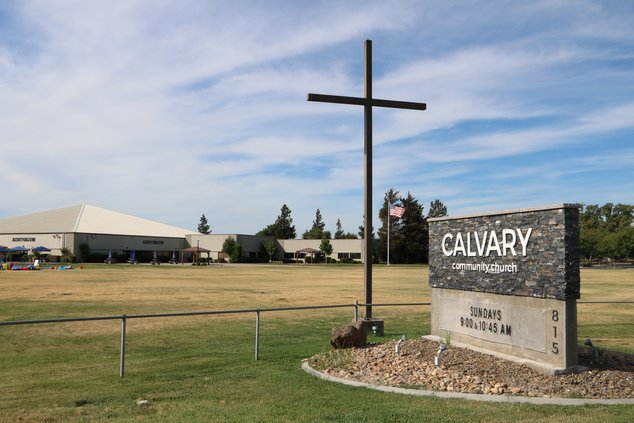
That’s because like Calvary Community Church on Lathrop Road they have installed shallow wells that tap into non-potable water tables with water that is unsuited for human consumption.
The decision to do so years ago allowed users with large turf areas such as Calvary to reduce their water bill for expensive treated city water. Calvary uses treated city water inside their facilities.
Besides saving the church expenses, it reduced pressure on the city’s potable water supplies and helped stretch the system’s capacity.
The church plans to post signs advising the public they are using non-potable water to irrigate the turf.
Even so, they have cut back on water use in a bid to help stretch non-portable water sources as well.
Among other areas in Manteca that are exempt from the state order that will essentially kill off institutional ornamental turf is East Union Cemetery. That’s because the cemetery, like Calvary, has a shallow well that taps into non-potable water.
The City of Manteca and other local jurisdictions throughout the state are gearing up to enforce the state mandate.
Outright exemptions involve areas of community use such as parks, playing fields, and golf courses.
Given trees can be irrigated using potable water, areas where trees are watered by sprinklers also may qualify for an exemption.
Full compliance statewide is projected to save enough water for one year’s consumption by 760,000 California households. That’s the population equivalent of 3.5 times that of San Joaquin County.
While the entire state is in at least moderate drought, the Eastern Sierra and Coastal Range are in severe drought.
Almost 60 percent of California based on the USDA drought monitor is in extreme drought including all of the Central Valley as well as San Joaquin County. That said a growing segment of the San Joaquín Valley and adjoining Sierra foothills is now classified in the most serious level of water emergency — exceptional drought.
To contact Dennis Wyatt, email dwyatt@mantecabulletin.com