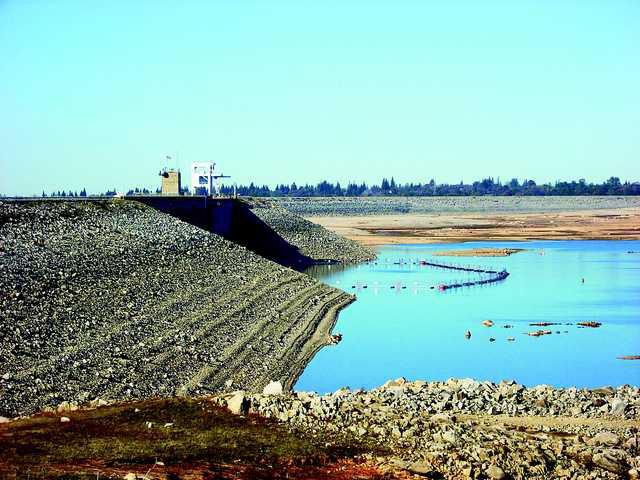
Continued spring-like weather and critical Sierra snowpack at 37 percent of normal are prompting Manteca leaders to consider taking conservation measures to the next level.
Each year when Daylight Savings Time rolls around, the city restricts landscape watering in the heat of the day and calls for households only to irrigate four days a week with a system tied to odd and even addresses with everyone allowed to water on Sundays. Water is not allowed to run-off into the gutter and other measures such as prohibiting the washing of vehicles with open end hoses is prohibited.
Public Works Director Mark Houghton noted the city may have to explore ways to step up its game in a bid to reduce per capita water consumption if the back of the dry spell isn’t broken. One such strategy could take a page out of the conservation playbooks of water districts elsewhere in California where residents are enticed with financial incentives to remove high water use lawn and replace it with more drought tolerant landscaping.
Houghton’s comments followed concerns raised by Councilman Steve DeBrum during Tuesday’s council meeting. DeBrum noted that given the current conditions the South San Joaquin Irrigation District is looking at the strong possibility of curtailing water deliveries to area farmers this year.
The SSJID provides Manteca with treated surface water that the city blends with well water.
DeBrum believes it would be irresponsible for the city to wait until such time as conditions worsen to put in place an aggressive water conservation effort.
Houghton said staff is carefully monitoring the water situation and will work on possible strategies including a stepped up public education effort and other ways of reducing water use.
“When temperatures start going up our water use tracks up too,” Houghton said.
The snowpack is the most critical element of California’s overall water outlook. It is by far the largest reservoir when it comes to water. The snow melt feeds reservoirs that are part of the Central Valley Project and the State Water Project that supplies water to 25 million of the state’s 40 million residents. The federal and state systems also supply the bulk of water for agriculture as well as to protect the Delta ecological system.
The SSJID’s water comes from the Stanislaus River watershed that is part of the Central Sierra which also happens to have the weakest snowpack in the state in terms of average water content.
As it stands now this winter is at a new record low for snow. And in terms of April 1 – considered the last key benchmark measure for summer and fall water supplies – the current snowpack if it isn’t compromised by warm temperatures translates into 23 percent of normal for that date.
Carryover from last year’s above average winter snow are helping the situation but state water experts warn it won’t be enough if the current weather pattern doesn’t change.
February is typically the wettest month of the year. However, there has been only one storm of any consequence this month. As the extended forecast stood on Tuesday, there is no rain expected through at least Feb. 21.
Will we have enough water?
Manteca leaders may push for more effective conservation measures