Thirty years ago, Manteca leaders decided the current library was inadequate for what was then a city of 45,060 residents.
The time had come to look at building a new library.
The current library was built in 1962. It was expanded in 1977 with space, according to the experts at the time, adequate enough to address the library needs of a community of 44,000.
The declared “need” for a new library in 1995 kicked off a robust debate.
Given the Age of the Internet and the birth of e-books had arrived, some argued libraries would begin being superfluous by the dawn of the 20th century and go the way of the blacksmith shop within decades.
Others astutely observed that libraries were more than a depository of books.
They were a place of life-long learning. They were a form of recreation.
And in Bay Area cities that were at the forefront of the transformation of libraries, they had become a place where changing times brought makers spaces, computer literacy programs to complement literacy programs, and more.
They were still a universal access point for knowledge. Technology wouldn’t change that.
So it was decided, based on the recommendation of a citizens committee, to go for a two-story 52,000 square foot library anchored still in the concept of lifelong learning but with modern twists such as a “coffee shop.”
The same group got behind the concept of pursuing a more robust replacement central library instead of adding satellite neighborhood libraries.
Despite spending $150,000 on a design and feasibility study that would have replaced the current 14,296 square foot Manteca Library with one just under three times the size at 52,000 square feet, the council in 2003 officially dropped the idea.
It was after they barely missed the cut twice for funding from a statewide library bond.
Let’s be clear on what has happened in the last 22 years since the city decided a new library really wasn’t important.
The Internet hasn’t been the promised fountain of universal knowledge that would help rise all of the proverbial boats.
It is not kept focused by trained librarians and other stewards of knowledge and mentors of literacy.
Instead, it is filled with not just fluff but is often a place where facts are degraded, literacy is an afterthought if that, and algorithms work mightily to re-enforce one’s world instead of opening doors to other worlds.
It is done to attract clicks to monetize the Internet via ad dollars.
There is no equivalent of the Dewey Decimal System where you will find books that have nothing to do with hobbies, concepts, religions, societies, and such you have no inkling of that you can explore.
Instead, it is a maddening closed world Google and other search engines create to keep bringing you back to ideas and such you already embrace.
One could go and on how — despite essentially being as boundless as the cloud — the vastness of the Internet can easily limit your knowledge and expose you to all sorts of unmeasured and reactionary takes on just about everything.
Also, public libraries are still doing what Andrew Carnegie envisioned they would do, which is spread literacy and literally lend the ability to learn.
All of this brings us to what might be the last chance to avoid library services in Manteca from falling to the wayside as less than an afterthought as the city grows.
Measure Q is a 20-year sales tax.
There are a lot of pressing needs and wants to be addressed.
Based on the city’s current population growth trends, by the time the tax expires in 2045, Manteca will likely have a population of at least 130,000.
The “preliminary” community facilities needs that Measure Q can help address in part was pegged at $216.3 million two years ago.
It included 10 facilities.
It is not set in stone yet, but the city is building a plan that will guide Measure Q spending wedded with growth fees and other funding over the course of the next two decades.
Whether all 10 of those endeavors can be addressed is a legitimate question.
It is why this council needs to have a serious public discussion on community facility priorities before too many more months pass.
The current list was cobbled together from general council input and staff observations.
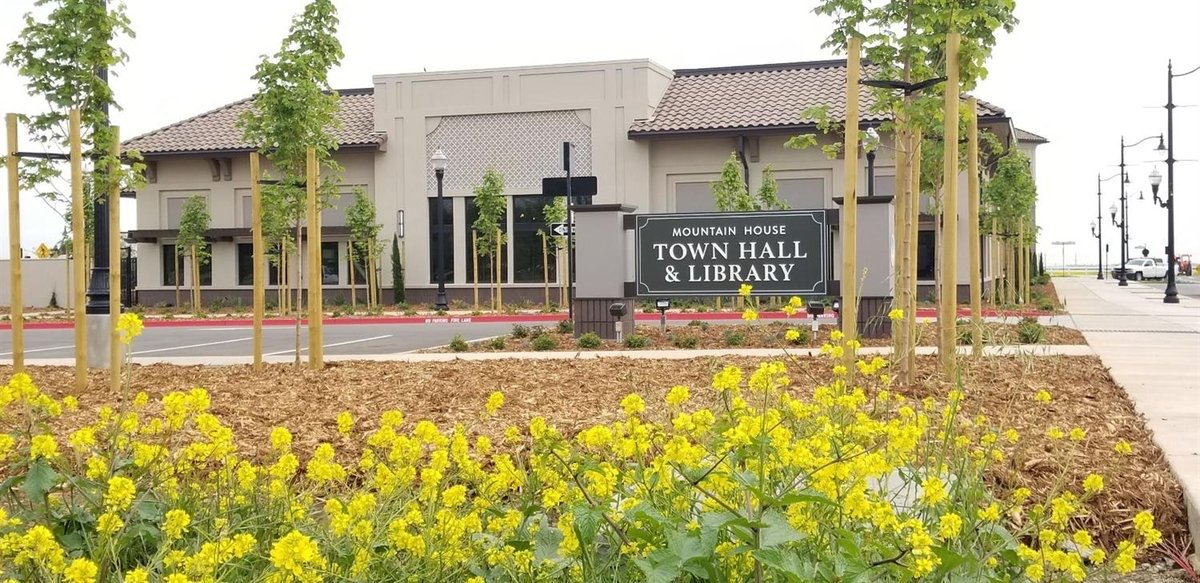
As it stands, a new city hall is a higher priority than a new library.
Working toward a new city hall would start in 2030 while a library wouldn’t come up on the city’s radar until 2032.
Keep in mind just because there is a list with 10 identified projects such as an aquatics center, expanded public works facilities, a community center, and such doesn’t mean the money will be there to actually build them.
It is why the council needs to make it clear a new library is a higher priority than building new office space from scratch for city operations.
There is no reason the space currently occupied by the police department — that includes a modern evidence building ideal for storing city records or housing IT — with new buildings in the quad or expanding on the northwest corner of the civic campus won’t meet city needs.
A new, from scratch city hall with everything under one roof with a design that conveys “civic pride” is expensive and not necessary to house what are basically offices.
And if the is a more pressing need for something such as larger council chambers, that function could be incorporated into the library/performing arts/community combo Mayor Gary Singh envisions for city-owned land going next to the new police station on South Main Street.
The community doesn’t need the proverbial Taj Mahl so City Hall makes an impressive statement about Manteca.
What would be impressive is the city making sure a city of 130,000 in 2045 is served by a robust learning center that wasn’t built in 1977, designed to serve a city of 44,000 people, and was conceived when the Internet as we now know it didn’t exist.
This column is the opinion of editor, Dennis Wyatt, and does not necessarily represent the opinions of The Bulletin or 209 Multimedia. He can be reached at dwyatt@mantecabulletin.com