California’s newest — and 483rd city — is somewhat cutting edge.
It is also home to San Joaquin County’s highest household median income of $171,169, per the US Census Bureau.
The city is Mountain House.
It is just 25 days away from marking its first anniversary as an incorporated city.
It was conceived in 1994 by the San Joaquin County Board of Supervisors as a way to encourage planned growth, reduce the slicing and dicing of farming areas, and to provide affordable housing opportunities.
The first home was built in 2001. There are now 27,069 residents.
As for the affordable housing opportunities, resale homes closing escrow for $1 million or more are nearly a dime a dozen.
And there are resale homes that have fetched $1.4 million plus.
There are a number of things that make it even cutting edge today.
They range from a square footage house tax that means Mountain House doesn’t have to rely on sales tax to fund municipal services to homes built across from schools having garage access from modern-style alleys.
That took into consideration pedestrian safety and congestion by eliminating driveways on streets surrounding schools.
But perhaps the most innovative and effective aspect is the housing requirement the county baked into approval of the master planned community.
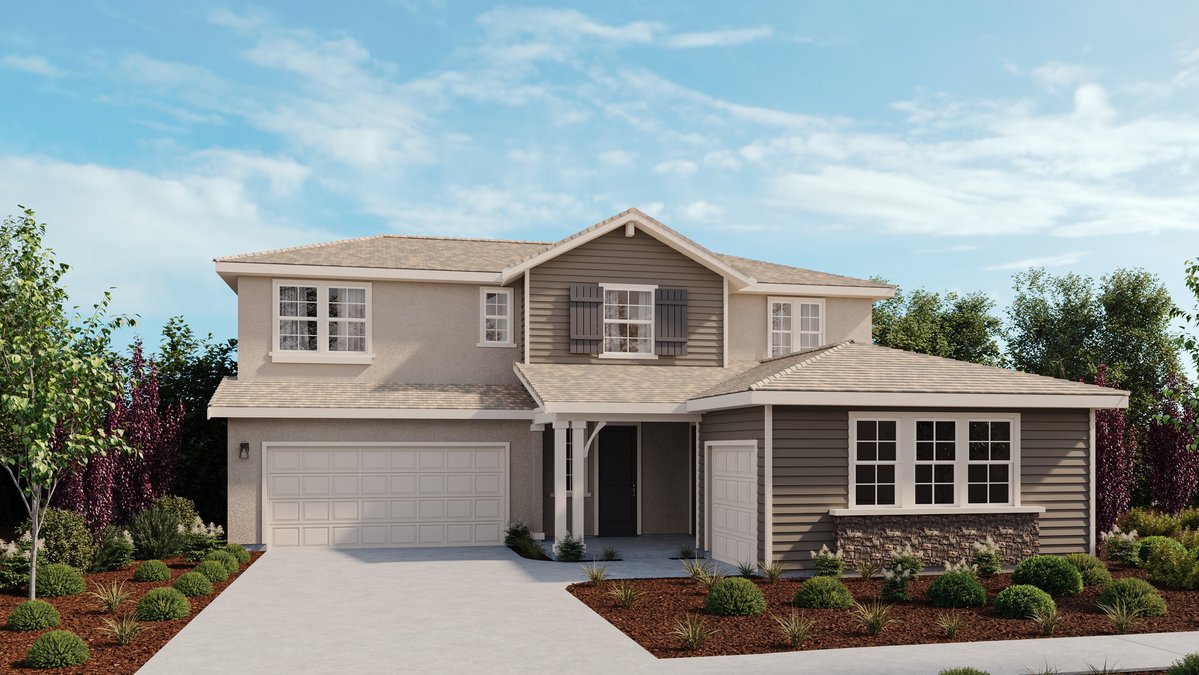
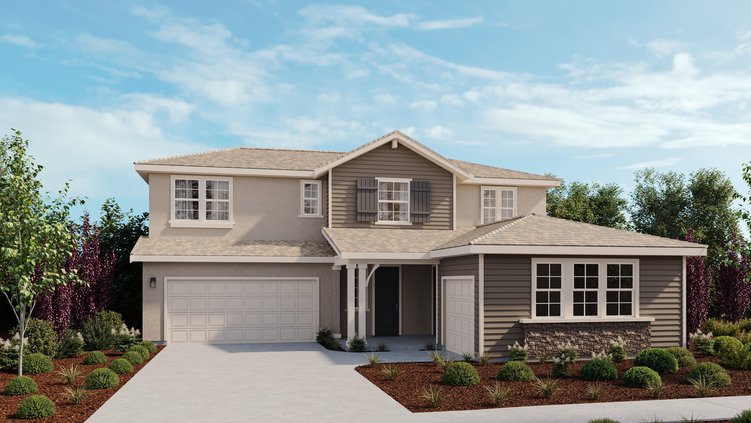
Depending on specific areas, the builder had to construct and sell 6 to 7 percent of all homes with an ADU, shorthand for auxiliary dwelling units.
There are now roughly 1,000 ADUs in Mountain House.
Almost all are incorporated under the roof of the primary residence and have separate entrances.
As such, most have basic floor plans that would reflect a two-car garage conversion — bathroom, kitchen/dining area complete with laundry, sleeping area, living area, and closets.
The layouts typically are much like studio apartments.
But because they are under the same roof and part of the same structure, they blend in seamlessly when it comes to architecture.
It makes them essentially invisible to someone walking or driving past them.
There are some ADUs that are detached.
And, as Mountain House City Manager Steve Pinkerton noted, there are homeowners who have the yard space that are seeking to build an additional ADU that is detached
Likely, a large number house either parents or others related to homeowners.
Many are rented to non-family tenants.
They command between $1,000 and $2,000 a month in rent.
That may not be affordable housing based on San Joaquin County’s median household income of $88,531, but it is clearly affordable based on the Mountain House community.
It partly explains how the Census Bureau notes Mountain House has 2.7 percent of the population living below poverty.
ADUs, by chance, happen to be the big card the State of California has in their playbook to cut into the huge and chronic backlog of insufficient housing.
It is why Manteca, which is gearing up to develop an affordable housing plan complete with a fee on growth to help finance it, should take a look at the Mountain House ADU policy.
Manteca could condition new subdivisions with the requirement 10 percent of all homes must include an ADU of some type.
It might seem like it would make home ownership less affordable, but it could end up doing the opposite.
In the initial years of recovery from the 2008 mortgage meltdown and subsequent foreclosure and housing crisis, several Manteca builders reported a number of larger floor plans were being bought by buyers who immediately rented rooms out.
It helped cover the mortgage payments.
Building an ADU by adding 400 to 500 square feet under the same roof as the primary residence is a lot cheaper than building a freestanding ADU.
Developers might balk about whether it would work in terms of being sell-able.
If that happens, all the city needs to do is point at Mountain House which is unquestionably one of the most success housing markets in all of the Northern San Joaquin Valley.
This is not to take away from city plans to put a several thousand dollar affordable housing fee in place to leverage affordable housing projects and efforts.
Mountain House has such a fee.
And they are developing a housing plan that includes high density as well as affordable housing elements.
The forward thinking of the county 34 years ago means Mountain House has successfully integrated higher end households in terms of incomes with lower income households in the same neighborhood.
It effectively reduces the economic segregation caused by tract homes.
And by doing so, they have more people using services per mile of infrastructure — streets, sewer lines, water lines, and such.
This matters because in the long haul when infrastructure wears and needs to be replaced the per capita cost of doing so will be less expensive.
Mountain House stands as a prime example of how ADUs work. Mountain House should be held up as an example by the State of California as an ideal way of avoiding new tract developments from exacerbating the housing crisis by creating only more “at-market” homes.
If 10 percent of all new tract homes built in Manteca had to have an ADU, that would mean every time 100 homes were built there would also be 10 affordable ADU rentals.
It clearly addresses the working class or ever lower middle income housing needs of individuals or couples.
It doesn’t eliminate the need for a fee.
Cities still have to address the very low income housing stock.
And virtually the only way to do that within the building code is for jurisdictions to leverage grants or entities able to use tax-free bonds to put housing developments in place such as those Manteca has for seniors at Almond Terrace on North Union Road or the 100 units going up for low-income working families in North Main Street behind the Moose Lodge.
Of course, Manteca could do what it is now doing and just keep issuing building permits for housing that less and less people can afford to buy or rent.
This column is the opinion of editor, Dennis Wyatt, and does not necessarily represent the opinions of The Bulletin or 209 Multimedia. He can be reached at dwyatt@mantecabulletin.com