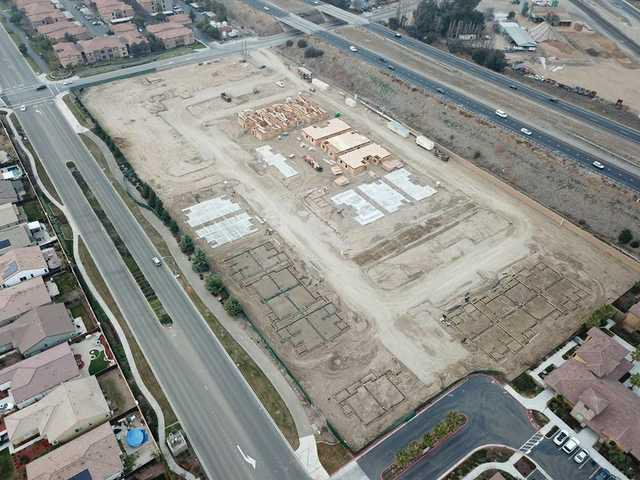
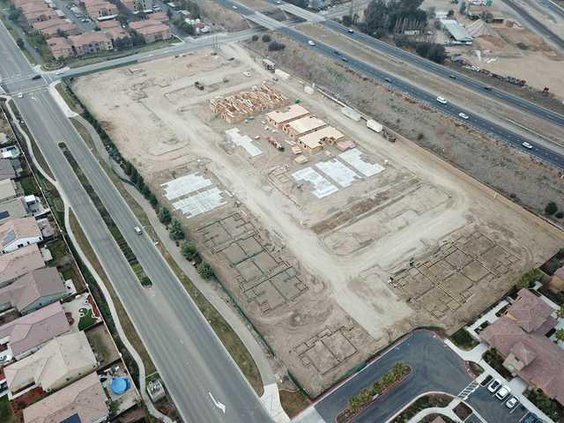
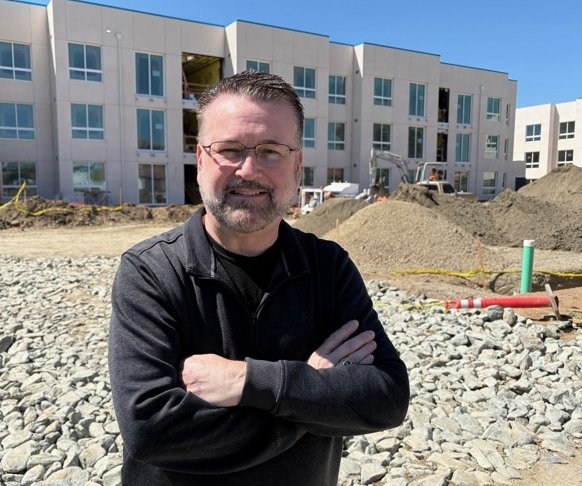
If you live south of the 120 Bypass the odds are likely you’re being serenaded each workday morning by the sound of circular saws and hammers.
Manteca recorded its third highest year for the new housing units in 2017 with 822 units being started that included 660 single family homes and 162 apartment units. Based on an average yield of 2.8 residents per housing unit, when the 822 units are completed it will translate into about 2,300 new residents.
All of those housing units except perhaps 50 were started south of the 120 Bypass.
And with three more projects breaking ground in the coming months — the 212-home Terra Ranch that also includes 209 apartments in southwest Manteca, the 492-home Shadowbrook neighborhood just east of Highway 99 on Louise Avenue, and the 48-unit subsidized apartments for seniors on Cottage Avenue next to Highway 99— 2018 could see housing starts push the 1,000 mark.
That’s because existing builders surveyed by the Bulletin expect sales to be at least as strong as they were in 2017. At the same time developers of the 128-unit Woodbridge Apartments northeast of the Union Road and Lathrop Road intersection plus 56 townhouses in two separate Central Manteca projects also plan to start building.
In terms of single family homes, 2017 was the fifth biggest year on the books for Manteca with 669 starts. It was eclipsed by 1,410 homes in 1980, 1,075 homes in 2000, 803 homes in 2002, and 746 homes in 2004.
This year also happens to mark the 30th anniversary of Manteca breaking new ground to become the first jurisdiction in the San Joaquin Valley to impose a growth cap.
The chances of Manteca running up against the 3.9 percent growth cap based on sewer allocations this year is slim to none.
Other cities have
set numbers for
homes that can be
built in a given year
The number of allocations that can be issued in any given year is 3.9 percent. The number is obtained by taking the overall count of housing units within the city limits on Dec. 31 each year — single family homes, apartment units, mobile homes, duplexes, triplexes, condos, and townhouses — and multiplying the total by 3.9 percent.
So if there are 25,000 housing units on Dec. 31, the city can issue a maximum of 975 sewer allocations the following year. If all 975 sewer permits are issued to bring the housing inventory to 24,936 units on the following Dec. 31, then 1,013 permits could be issued the year following that.
The basic framework of the growth management ordinance adopted in 1988 means the real cap in terms of the number of homes that can be built in a given year keeps growing. Last decade elected leaders amended the ordinance to exempt age-restricted housing such as Del Webb at Woodbridge, affordable housing as defined by the city’s housing element, and secondary housing known as granny flats on existing residential lots that already have a home on them.
Any allocations awarded to developers that are unused can be rolled over by developers into future years.
Almost all other city growth management plans set a firm number.
Tracy is one example. After a wave of approved residential projects were starting to build last decade similar to the 11,000 plus homes that Manteca now has in various stages of approval, residents revolted leading to a successful ballot measure to restrict growth.
Tracy residents were concerned growth was swamping their schools plus the fact almost all new homes that were being built catered to those with larger salaries fleeing the high-priced Bay Area, the lack of new senior housing, the lack of so-called step-up housing (more affordable at-market housing) residents employed locally can afford, very little apartments being built, and the city was being overwhelmed having quadrupled its population to 80,000 in less than 25 years.
Tracy has a growth management board in place that essentially awards an average of 600 residential growth allocations (housing units) although another 150 can be issued in a given year if they meet affordability guidelines.
How Manteca’s growth
management got started
While Manteca set the trend when it comes to controlled growth in the Northern San Joaquin Valley, its 30-year old cap rules are now arguably the most liberal.
The 3.9 percent growth cap on residential housing permits that was tied to the number of sewer allocations that could be issued in any given year was codified in Municipal Ordinance No. 800 in 1988. It was years before any other jurisdiction in the region even started seriously toying with the idea of growth caps.
That, though, still wasn’t enough for some people.
A group known as the Concerned Citizens for Planned Growth rolled out a plan to put a 2 percent growth cap on the ballot and started collecting signatures. It was countered by developers who wanted a 4.5 percent growth cap instead.
That prompted then Mayor Jack Snyder to roll out an initiative plan that basically mirrored the 3.9 percent growth cap on residential housing. Developers backed down and ultimately the more stringent 2 percent growth cap didn’t qualify for the ballot.
The 1970s had ended with four strong growth years capped with a 12 percent gain in residents in 1980 that took the city’s population from 20,187 to 25,641 or an increase of roughly 25 percent in 48 months.
The growth rate slowed a bit but then it hit a record 12.1 percent in 1985 followed by a 9.2 percent jump in 1986 that took Manteca’s population up from 29,027 to 35,437 in two years. Manteca today —some 32 years later — has almost 78,000 residents.
The proverbial straw that broke the camel’s back was the city’s inability to keep up with growth. Fees on growth were inadequate or non-existent for a wide variety of amenities such as parks and fire services.
Manteca was
bouncing back from
near bankruptcy
The city was still recovering from a near-bankruptcy episode in 1980 when the budget reserve was a razor-thin $1,800. Manteca’s financial trials were heavy on civic leaders’ minds during the building boom of 1984 to 1987. They didn’t want a repeat of the early 1980s experience which forced the city to leave the just completed Louise Avenue fire station unopened because they couldn’t afford to staff it while city police were using old CHP cars with excess of 90,000 miles on them when the city took delivery of them as primary patrol units.
Many residents shared the concern that Manteca was growing faster than basic services could keep up with it. The sentiment was Manteca was growing too fast as neighborhoods such as Mayors Park in the triangle formed by the railroad tracks, Louise Avenue and Union Road seemed to develop overnight.
The ordinance went into effect just as the economy started receding. It would take 12 years before the cap would be reached in a particular year to effectively stop issuing sewer connection allocations.
Tying into sewer allocations was viewed by legal experts and civic leaders at the time as the easiest way to implement a growth management plan.
Ordinance No. 800 was put into effect on Aug. 16, 1988 as the guideline for how the first phase of the municipal wastewater treatment plant expansion would be utilized to divide sewer capacity. It was subsequently extended in future years to govern how the second phase of the treatment plant would have its capacity parceled out.
A percentage was set aside for every category in terms of how much capacity of the plant would be allocated to a particular use. Those percentages set aside 60 percent of the overall capacity to housing with no distinction being between apartments, single family homes, duplexes or mobile homes. The other categories — schools, industrial, retail and office divided the rest of the capacity.
Based on the intent and the actual wording of Ordinance No. 800, city leaders view the growth management plan as a success.
That, however, isn’t a universal view. There are those who believe the city has been growing too fast.
Legal counsel steered the city toward using sewer allocations and not actual building permits when the ordinance was implemented due to ease of tracking as well as the economic realities of moving any development project forward.
To contact Dennis Wyatt, e-mail dwyatt@mantecabulletin.com
2017: 822 HOUSING STARTS
Manteca may mark 30th anniversary of growth cap with 1,000 more homes