Two years ago, if a third grade student in Manteca Unified got a “B” in math a parent really didn’t have a grasp of exactly what their child had mastered and what they needed help in learning.
They knew they were doing better than if they had received a “C”.
And they had no indication what areas needed work so their child could attain an “A”.
Worse yet, the “B” per se did not tell them exactly where their child was in mastering basic skills.
That meant they weren’t really sure by the time their child entered the seventh grade when education starts expanding rapidly beyond simply reading, writing, and arithmetic that they would be prepared to take full advantage of school.
It is why last school year, Manteca Unified jettisoned traditional letter grades through the sixth grade level.
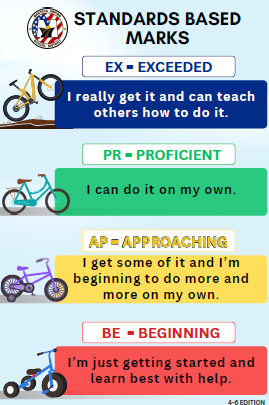
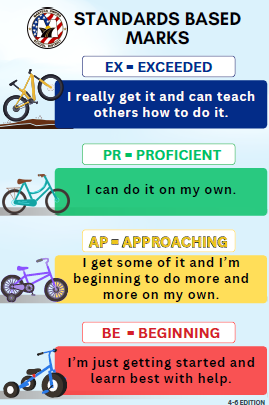
Instead, they went to standards-based report cards.
That might sound like mumbo jumbo, “dummying down” education, or giving every student the report card equivalent of participation trophies.
Far from it.
The move to standards base report cards — that is not the norm in California public schools — was the result of the teachers and district administrators working to devise a better way to engage parents and caretakers in their student’s education.
That was driven by the Manteca Unified commitment to work with every student so they can attain their full possible potential.
As such, a reporting system was needed that was truly tailored to reflect individual progress as opposed to lumping all elementary students into one of four letter categories.
“It’s a partnership,” Superintendent Clark Burke said.
Burke said teachers need parents — and vice versa — to work as a team to get the best possible educational outcome for individual students.
The process of using letter grades, especially in the lower class levels where curriculum is designed to build a solid foundation for not just the breadth of curriculum seventh through 12th grade offer but for lifetime learning as well, is a tad abstract.
Traditionally, teachers assign an overall letter grade for a subject. They average student understanding with extras such as participation, homework, and extra credit.
Combining student understanding with bonus points obscures whether a student actually understands key grade-level concepts tied to state standards.
Standards-based grading offers a cleaer picture of what students know and where they need additional support by only assessing a student’s growth toward a specific standard.
For example, on a traditional report card, a third-grade student might receive an “A” in math, but whether they have mastered essential standards such as “fluently adding and subtracting with 1,000 using strategies and algorithms” is unclear.
Standards-based report cards provide a more precise and “actionable” understanding of student learning
Parents seem to agree.
A survey of all transitional kindergarten through sixth grade parents after the release of last school year’s Trimester 2 report cards, indicated 85 percent of parents understood the grade level standards their child was expected to learn by the end of the year.
Coupled with online information Manteca Unified supplies individual parents about their child’s progress along with apps that students access to step up their learning that include ways parents can help their child master a standard, parents say they are better equipped on knowing how to help their children practice standards.
The standards-based report cards has also changed the concept of parent-teacher conferences to provide a more robust partnership between home and school.
Now “goal setting conferences” that provide a proactive take on traditional parent-teacher conferences, take place before report cards are sent home.
Parents and teachers discuss:
*the exact standards their child needs to know.
*how they will know once their child is proficient.
*what they can do if their child is struggling.
*what to do when their child reaches mastery.
The conferences lay the foundation for collaboration between teachers and students to track a student’s learning throughout the year.
Before the standard based reporting was rolled out districtwide for the 2024-2025 school year for TK through the sixth grade, a test run was conducted at select grade levels at a sampling of schools.
It was done to engage feedback from parents and teachers alike to address potential pitfalls and refine the process.
Teachers have noted students “are actually learning and not working toward a letter grade.”
“Our purpose is to educate students with the skills they need to be college and career ready,” Burke said. “Standards-based reporting is a more authentic and aligned way to assess student learning.”
To contact Dennis Wyatt, email dwyatt@mantecabulletin.com