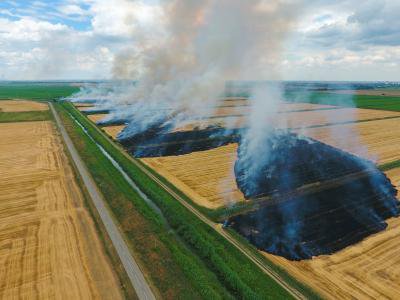
Farmers growing almonds, walnuts and grapes in South San Joaquin County are facing an expensive mandate.
The California Air Resources Board voted last month to phase out virtually all agricultural burning by Jan. 1, 2025.
The unanimous decision impacts all eight counties under the jurisdiction of the San Joaquin Valley Air Pollution Control District — San Joaquin, Stanislaus, Merced, Madera, Fresno, Kings, Tulare, and Kings County.
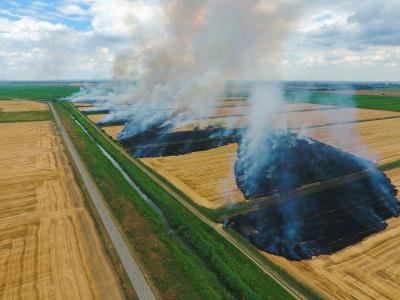
Typically when vineyards and orchards are removed or pruned a large segment of what is piled up is burned off. That requires a permit and is limited to days where weather conditions mean the burning will have minimal impact on air quality.
Currently the air pollution control district has a substantial backlog of requests for burning permits.
Originally the California Legislature in 2003 adopted a bill to phase out ag burning by 2010. The deadline was extended several times.
In excess of a third of all air pollution from agricultural burning in the state is from within the San Joaquin Valley basin. Based on California Air Resources Board stats, in 2017 there was an average of six tons of fine particles per day released into the air statewide from ag burning. The Air Resources Board indicates that is the rough equivalent of the air pollution spewed by 12 million cars.
While it creates air quality issues in this area, they are minimal compared to the southern end of the San Joaquin Valley as you approach Bakersfield where pollution ends up lingering thanks to the Sierra, Tehachapi and Coastal mountain ranges. The Central Valley, of which San Joaquin Valley is the southern part, is 400 miles long and up to 50 miles wide. Prevailing winds trap smoke at the southern and northern ends of the valley with the San Joaquin Valley being the worst.
It is the same geographic and weather conditions that allow for the lingering of the valley’s notorious Tule fog.
The Fresno-Bakersfield has some of the worst asthma and other respiratory malady rates in the nation that is tied to the fact the San Joaquin Valley has some of the nation’s most unhealthiest air.
The air quality district already has some crop burning bans in place such as most rice stubble and selected pruning from orchards.
Data shows in the four-year period ending in 2014, ag burning in the San Joaquin Valley dropped down to 1 million tons that was burned annually before 2004 down to 200,000 tons. Since then, ag burning has rebounded with 600,000 tons being burned last year.
The problem growers are facing — especially smaller ones that virtually dominate farming in San Joaquin County — is the high cost of alternatives.
Biomass facilities that turn wood removed from orchards and vineyards have been closing. They also create pollution which is counter to the state’s objective.
At the same time the price of chipping equipment is cost prohibitive for small growers as is contracting with existing firms that do the work.
Chipping mixes the wood back into the spoil. It increases organic matter and makes the soil better at retaining water according to research the Almond Board of California and the state funded.
It also would help address the need to keep finding ways to reduce water use.
Air quality officials expect it will cost close to $240 million for the equipment needed to phase out wood burning over the next four years.
Growers that have dozens of acres as opposed to hundreds of acres aren’t able to dilute the cost of chipping at this point in time on a per acre basis enough to make it affordable to do.
Air quality officials believe growers will need assistance in some form to meet the mandate. One proposal being floated is for the state to subsidize a mobile chipping program.
Also complicating the issue are old vineyards that are removed have wire wrapped around the vines that make chipping a non-viable option. The only practical way to separate the wire that ends up being intertwined in the wood after decades of growth is by burning.
To contact Dennis Wyatt, email dwyatt@mantecabulletin.com