The promise made to Manteca Unified voters was simple when they were asked to approve $419 million in school bonds.
The money would be used to modernize campuses to assure facilities meet today’s learning needs as well as enhance school safety.
The $159 million Measure G bond approved in November 2014 and the $260 million Measure A bond passed in November 2020 have been focused on both objectives.
The modernization component has ranged from replacing limited cafeteria/assembly space at elementary schools with fully functional multipurpose rooms, replacing aging portables with permanent classrooms, and repurposing everything from closets to small teaching spaces into modern classrooms to replacing aging plumbing, electrical wiring, and other infrastructure.
The enhanced school safety and security aspect is reflected in:
*Classroom doors that stay locked.
*Moving school offices to the front of campuses at the main entrance.
*Wrought iron fencing so the homeless looking for an overnight place to bed down don’t do so on school grounds.
*Separating bus loading zones from student drop off zones.
*Replacing aging fire alarm systems that provide precise location of the alarm during incidents.
*A modern classroom paging system integrated into campus’ digital network and the district’s network infrastructure.
Intruder security
Driving the bond projects completed, now underway, and those yet to be started is addressing the concern of campus intruders.
Classrooms door locks are designed to always stay in the locked position for outside access and unlocked for those inside.
In an emergency situation, no one needs to scurry around campus with a master key to lock classrooms.
Campuses where school offices were not located at the entrance gate had new offices built at the front of schools.
Shasta School, as an example, previously had its office near the middle of the campus.
That meant people — including individuals not authorized to be in campus — had the ability to walk onto campus.
The replacement office is not only by the front gate, but after the school day ends, those accessing the campus have to pass through the office as the gate is locked.
Care has been taken to eliminate security sight-line issues when new construction is required.
Campuses built prior to 2000 before school shootings became prevalent didn’t give much attention to “blind spots.”
The bond projects incorporated natural surveillance principles such as clear sight lines between buildings.
Manteca High: No
longer a giant sieve
There is no other campus that has undergone as significant of a transformation as Manteca High.
And it’s not just replacing classrooms that were closing in in 70 years, replacing 1940-era electrical transformers, and addressing chronic drainage issues that required grading land.
There were two more security situations.
*The campus had no less than 13 access points making it, for all practical purposes, a security sieve. Today it is down to four.
*Historically, Manteca High has faced challenges stemming from homelessness in the surrounding community running the gamut from vandalism, trespassing, theft, doing the No. 1 and No. 2 to illegal camping.
The permanent closure of Garfield Avenue no longer means the campus is split roughly in half.
During school hours, the street was closed to traffic for years.
That didn’t prevent pedestrians from walking down Garfield when it was temporarily closed on school days to go to and from Moffat Boulevard.
It also meant when the school was closed for the day, over weekends, and during vacations the temporary barriers were removed allowing traffic to go down Garfield.
And given the section of Garfield going through the school was away from nearby residences and commercial properties, it provided more opportunities for the homeless.
In previous years, the homeless cut through chain link fencing on what seemed to be a weekly basis forcing repeated repairs.
The homeless were found sleeping on rooftops, sleeping in hallways, and committing multiple wire thefts.
They were also sleeping in an area between the Lincoln School and Manteca High campuses and often were found sleeping under the football stadium bleachers and even in the press box.
The placement of chain link fencing with wrought iron fencing has been a key factor in reducing the homeless issue.
The same is true of the permanent closure of Garfield and removing the pavement and sidewalks to create a seamless continuation of the campus. No structures per se were placed on the area where the street was closed to allow access, if needed, to municipal utilities.
The acquisition and demolition of the former motel on Moffat that allowed expansion of the student parking lot also eliminated a security issue.
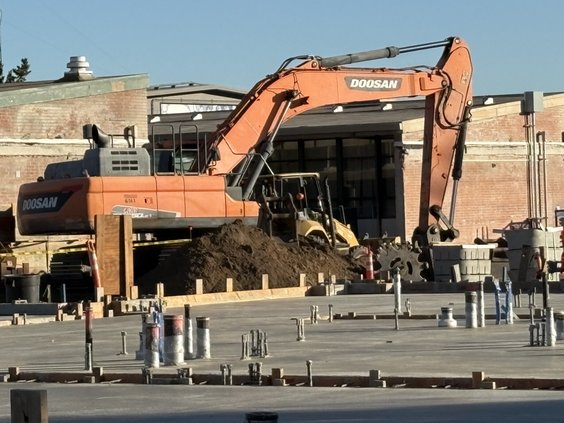
The purchase of homes along Mikesell where a 20-classroom structure and a shop class building were completed at the start of the current school year also eliminated issues to help secure the campus’ perimeter.
MUSD Director of Facilities Aaron Bowers noted the city’s opening of the 75-bed emergency homeless shelter has also helped reduce homeless problems for the campus and adjacent neighborhoods.
The district has also made the ranks of campus security monitors more robust.
In addition, Manteca High has made significant strides in campus security through the ongoing modernization projects.
The fire alarm systems are — or have been — upgraded, expanded, and fully updated. The same goes for the paging system.
To contact Dennis Wyatt, email dwyatt@mantecabulletin.com