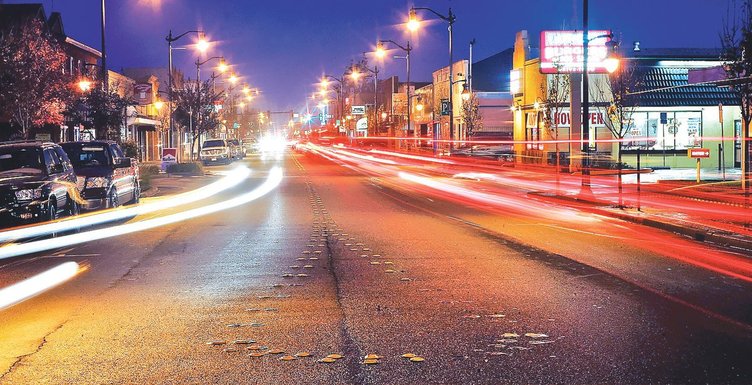
Downtown Manteca may be about to clear a hurdle that has been too vaunting to conquer in 62 years of trying.
The hurdle?
Conducting an actual vote to form an association — or more specifically in the current effort — a district that collects fees on the basis of square footage to fund a downtown property and business improvement district (PBID).
Mayor Gary Singh on Thursday at the State of the City event at Great Wolf announced that just days earlier the majority of property owners involved gave their support for the city to move forward.
What happens next is the council at an upcoming meeting adopts a resolution calling for the vote within the delineated area.
It then takes place.
The big difference this time was individual council members sitting down on a one-to-one basis with a number of property owners to explain what a PBID could do and to answer questions.
Singh, as well as council members Jose Nuno and Mike Morowit, conducted a number of one-on-one meetings.
Those onboard that called for the vote include the majority of the six financial institutions that have an oversized stake in the continued vitality of downtown.
The existence of a PBID is the common factor in Northern San Joaquin Valley and Tri-Valley cities that have successful downtown makeovers.
They bring the private sector together in a united effort to move a downtown forward.
It includes fairly basic things that Manteca doesn’t have.
Most successful downtowns, as an example, have an active website that is part of a coordinated marketing plan that abandons the assumption just because downtown is “there” and people drive through it that most will end up stopping and getting out of their cars.
Some PBIDs address efforts to make areas cleaner, enhance the feeling of security, and to beautify sidewalks with planters and such.
They also will pursue unified standards for endeavors such as outdoor dining.
And equally important, they coordinate year-round events above and beyond the farmers market, the two street fairs, and Christmas parade that Manteca already has in downtown.
In downtowns that have successfully snared more dining spots and “entertainment” venues along with specialty shops, they are multiple events throughout the year.
In Tracy, they run the gamut from summertime concerts, wine strolls, beer tasting events, art endeavors, and such.
They also create a semi-autonomous governing mechanism that doesn’t require city approval every time something needs to be addressed.
It is supported via assessments based on square footage
And because of that, one of the biggest — if not the biggest — payee of assessments would be the City of Manteca.
That’s because it has numerus parking lots, the library and adjoining park, the transit center and two properties the city owns on Sycamore Avenue.
The city is already covering the tab for the regular power washing of sidewalks and pavers as well as sponsoring the weekly Saturday Market on Maple farmers market event along with Maple on Music events.
In the past, the city has used redevelopment agency money collected on a large swath of property owners beyond downtown to pay for upgrades such as specialty street light standards, streetscape furniture, and such. The cost of those projects are still being repaid on the property tax bills of a number of residential and commercial property owners that are not located in downtown.
Several years ago, the council pulled the plug on a proposed $1 million expenditure to come up what is essentially a masterplan for downtown when they were piecing together a budget after the majority of downtown property owners and businesses made it clear they weren’t on the same page.
They didn’t want to repeat the same mistake of past councils that — based on being told by downtown property owners and businesses that there was buy in — went ahead and spent substantial tax dollars and staff time developing plans only to have the plan that was developed not be embraced.
As a result, five downtown plans have been developed over the years and four of them produced little or no results.
It is why the current council has placed a heavy emphasis that a business improvement district was needed to be in place as a specific plan is being developed.
The last plan did lead to streetscape improvements and installing specialty street lights, bulb outs, Library Park upgrades, the transit station, helping fund mural improvements, among other upgrades.
The first effort to organize a downtown association took place in 1962.
To contact Dennis Wyatt, email dwyatt@mantecabulletin.com