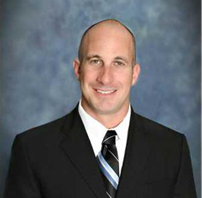
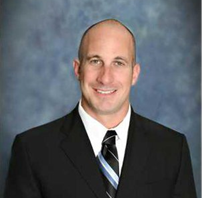
Assembly minority leader Heath Flora, R-Ripon, and fellow Republicans in Sacramento have effectively latched on to affordability concerns to put intense public scrutiny on a study that could lead to taxing Californians for every mile they drive.
It even prompted Gov. Gavin Newsom to issue a statement that even if a mileage tax was adopted that he would vote against.
The source of the dust up is Assembly Bill 1421.
The proposed law would extend a pilot program the California Legislature in 2014 put in motion to possibly augment, and then replace, the gas tax.
Democrats have pushed back noting it is simply a study extension and not currently a proposal to implement a new tax. That said, the study is needed to determine placing a tax on miles driven would work.
“If this was just a harmless study, Governor Newsom would not be out trying to clean up the mess,” Flora said. “The Democrat supermajority got caught, and now they are trying too hard to cover it up.”
Flora believes it is clear the plan is to impose a new tax given the Democrat-controlled legislature rejected a proposal for a state constitutional amendment (ACA 14) that would have, among other things, required voter approval for new taxes on items such as vehicles, fuel, and investments.
Flora questioned if there is no real threat of a mileage tax, why Newsom’s office publicly state he would not sign one.
“You don’t spend time and money studying a mileage tax unless you are thinking about passing one,” Flora said in response to Democratic lawmakers’ insistence “it is just a study.
“As Leader, I will speak loudly against this and every tax proposal coming out of Sacramento to protect taxpayers’ pocketbooks.”
The California State Transportation Agency — at the legislature’s direction — had already been studying a mileage tax to potentially replace the gas tax used to fund state and local road maintenance and projects as well as transit endeavors.
AB 1421 extends the work of Road Usage Charge Technical Advisory Committee and directs the California Transportation Commission to compile research and deliver a full report to lawmakers by Jan. 1, 2027.
Caltrans, on its official site, noted, the pay-per-mile methodology could eventually augment and ultimately replace the existing fuel tax and ensure that all vehicle users of California’s roads contribute to the upkeep of those roads.
Volunteer drivers in pilot say
road charge fairer than gas tax
A nine-month pilot program ending in January of 2025 enlisted more than 5,000 volunteer drivers to track the mileage of their vehicles using methods that ranged from low tech — writing down odometer readings — to using a plug-in that charted their mileage automatically.
More than 37 million miles were logged through all reporting methods.
The final report on the pilot program showed that 73 percent of its participants judged a road charge to be fairer than a gas tax that is now at 61 cents a gallon.
Long-term revenue projections still forecast a downward trend in gas tax revenue.
That’s because:
*Gas-powered vehicles become more fuel-efficient, meaning even as their numbers increased, the fact they buy less gas reduces tax revenue
*More Californians are purchasing zero-emission vehicles that are not subject to the gas tax. In 2024, 25 percent of all new vehicle purchases in California were electric.
At the same time, batteries make similar sized cars that are EVs heavier, meaning their impact on pavement deterioration is greater.
Local impacts
Cities such as Manteca rely on gas tax revenue divvied up by the state for basic road maintenance.
The city’s share came to $2.5 million in the fiscal year ending June 30, 2024.
The amount cities receive has been dropping with increased fuel efficiency as well as having more EVs on the road.
Gas tax also funds grants cities receive to supplement local funding sources for major road work — whether it is new road projects or significant rehabilitation efforts such was recently done on North Main.
Manteca also receives road maintenance funds from Measure K, the countywide half cent sales tax for transportation projects.
The recently passed measure Q sales tax has been able to counter drops in state gasoline tax funding.
To contact Dennis Wyatt, email dwyatt@mantecabulletin.com