The safety of Manteca residents is a big priority for Council Member Regina Lackey.
It is why she wants the highest priority for municipal funding to be economic development.
That doesn’t mean Lackey doesn’t want to boost Manteca’s police and fire service levels.
Far from it.
She believes the best strategy for spending Measure Q sales tax receipts will be to make it a priority to spur economic development to spur even more municipal revenues to fund needed municipal services.
“We need to leverage (Measure Q) to generate more revenue,” Lackey said during Tuesday’s council meeting to prioritize an expenditure plan for the 20-year three quarter of a cent sales tax that goes into effect April 1.
Manteca, in the past, has used splitting future sales tax and room tax businesses would generate for a set period of time in a bid to seal deals to get the private sector to invest in Manteca.
The prime examples are Great Wolf, Costco, and Living Spaces.
But the biggest game changes — including Great Wolf — were made by Manteca assuring infrastructure was in place to snag major economic investments.
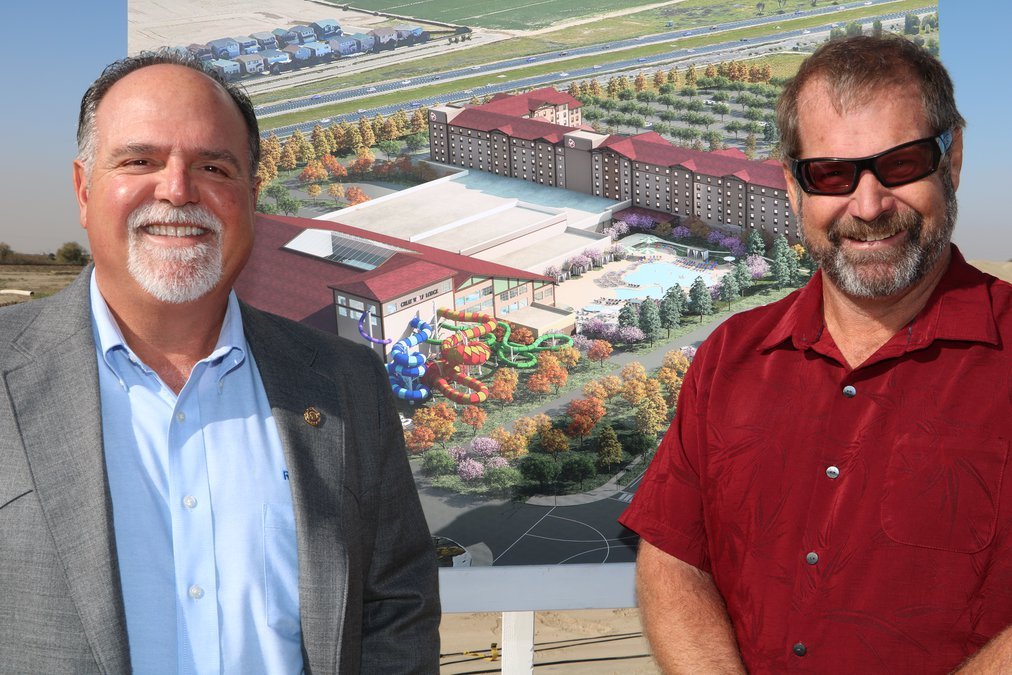
*Great Wolf, that based on current vacancy rates will net the general fund more than $130 million over the course of 25 years — $99.1 million projected on the original room tax split and pocketing 100 percent of the Measure J that was a 3 percent add-on room tax.
The key was being able to spend $12 million to get Daniels Street extended to McKinley Avenue as well as the accompanying underground infrastructure using residual redevelopment agency funds.
*The Stadium Retail was made possible — as well as access to the site where the city built the Big League Dreams sports complex — by spending $8 million in RDA funds installing the first Daniels Street extension west of Airport Way. Although it wasn’t on the radar at the time, it made it possible to secure Costco that had been pondering a second Modesto location or one in Lathrop along the Interstate 5 corridor
*Spreckels Business Park ‘s development beyond peripheral private sector projects bordering Yosemite Avenue and Moffat Boulevard was made possible by a $7 million RDA loan to a developer that was paid back ahead of time with interest to complete interior roads and infrastructure.
In terms of just the initial property tax value of private sector investment in distribution centers —along with Target, Staples and adjoining commercial — Manteca added more than $200 million to the property tax roll in addition to sales tax thanks to the $7 million loan.
The state pulled the plug on RDAs statewide in 2012. Manteca and other California cities lost a dedicated source of funds for economic development as well as affordable housing.
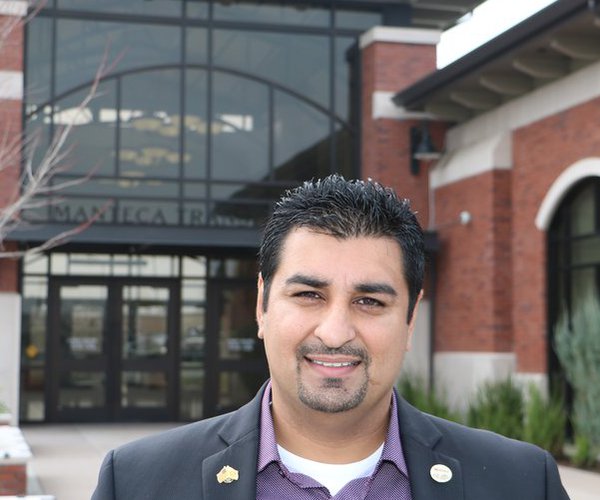
“(A portion of the) Measure Q sales tax can be a downpayment to generate more city revenue,” Mayor Gary Singh said after the meeting at the transit center.
Singh, during the meeting, also echoed Lackey’s stance that economic development should be the top priority followed closely by public safety.
“We can’t address all of our needs just with Measure Q,” the mayor said. “We need additional revenue.”
Singh said economic development could run the gamut from incentives for new businesses to efforts to help retain an expand existing businesses.
The city also could use to maximize efforts to develop its 100-acre family entertainment zone anchored by both BLD and Great Wolf.
Both Singh and Lackey — along with the rest of the council — made it clear, however, that the bulk off Measure Q funds need to provide tangible things that people can see where their money is going such as a new police station and new fire engines.
To contact Dennis Wyatt, email dwyatt@mantecabulletin.com