Manteca residents in 2020 generated 8.12 metric tons of carbon dioxide per capita.
Why that is important is simple.
The state is mandating all California cities to develop and implement strategies to get emissions to 40 percent below 1990 levels by 2030. It means reducing per capital pollution levels to 6 metric tons in less than 7 years
That’s for starters.
Then by 2050, Manteca per capita emissions must be down to 80 percent below 1990 levels.
It means Manteca can’t generate more than 2 metric tons per resident 27 years from now.
Manteca has hired the consulting firm of Raney Planning & Management in order to develop a game plan to comply with the state mandate.
The second Manteca Climate Action Plan Advisory Committee meeting was conducted last week to apprise the citizens panel of progress.
To reach the state mandate, the California Air Resources Board recommends local governments focus on three areas:
*Electrification of transportation.
*Reducing the vehicle miles driven per household.
*Building decarbonization.
Transportation electrification
The pending state mandate that requires all new vehicles purchased by the public starting in 2035 to be emission free is one way Manteca can reach that goal.
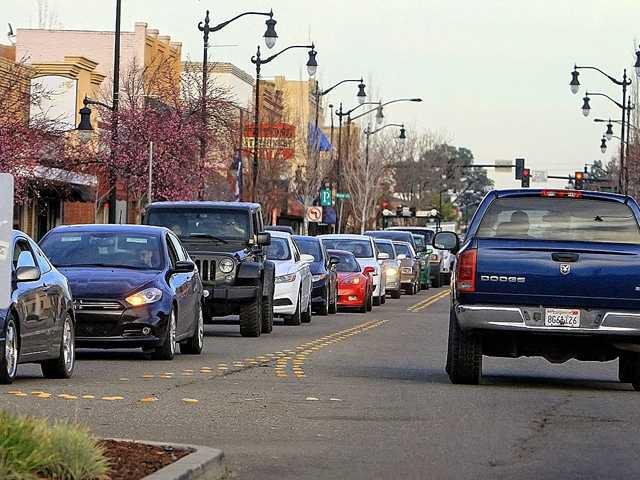
In the meantime, if the city even has a fighting chance of coming near the first benchmark in 2030, Manteca would need to replace the 400 plus vehicles in the municipal fleet that ranges from pickup trucks and police cars to fire engines and buses with electric-powered versions as they end their useful life.
The city already is taking steps to replace Manteca Transit Dial A Ride buses with Ford Transit EV vans.
The police fleet — that arguably generates the most emissions due to the need to keep vehicles idling on patrol when officers are out of vehicles due to the time it takes to power up support equipment and computers onboard — would be a logical “beachhead’ given the high turnover of vehicles.
There are electric motorcycles are the market that are suitable as well as EVs for police cars such as the new Ford Mustang EV that some police departments are starting to deploy.
The city is already requiring new commercial development — as state law dictates — to put in place the infrastructure for EV charging stations
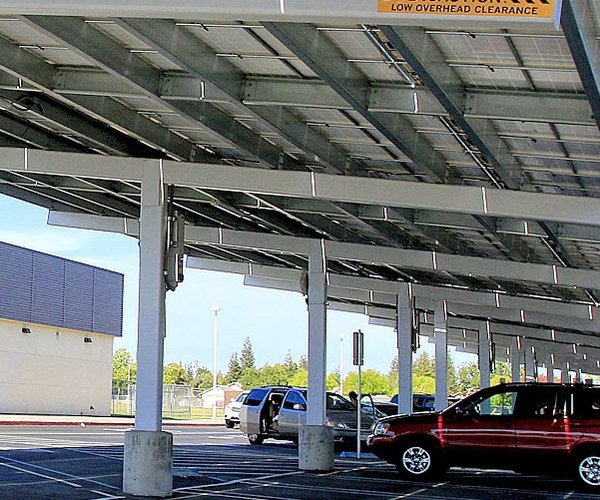
The Living Spaces parking lot on Atherton Drive at Union Road, as an example, has 456 spaces with 14 percent of them prewired to accommodate charging stations for electric vehicles.
Reducing vehicle miles
Reducing household vehicle miles driven is trickier.
There are two obvious ways to accomplish that goal.
One is to grow the community in a manner where it take less trips to drive to shopping and services as well as making cycling, walking or even public transportation a viable option.
Such an effort could happen at Orchard Valley.
The developer is exploring the idea of removing most of the inline tenant store space that is largely vacant and replacing it with apartments. They also may add townhouses in portions of the existing parking lot.
That is expected to encourage the development of more walk-to restaurants.
When combined with other apartments being built west of Union Road should developers in the same area snag a grocer such as Trader Joe’s it would mean between existing and future apartment dwellers as well as nearby homes that more than 4,000 people could be within a mile of a market.
Given Manteca is part of the fastest growing super-commuter region of people spending more than three hours a day going back and forth to work, reducing the time residents are commuting is critical.
That is where the ACE rail commuter service expansion to downtown Manteca comes into play.
Over the next 10 years, phased improvements will allow people to reach not just job centers in San Jose and the Santa Clara Valley as well as along the rail corridor in Livermore and Tracy but also Sacramento and even Oakland-San Francisco with perhaps the need only to make one train transfer.
Building decarbonization
It is unlikely the city will attempt to get ahead of the state on this one.
Besides solar power mandates by Sacramento for new housing coming into play, the state is taking other steps to alter energy use in a bid to reduce emissions.
Topping the list is eliminating natural gas to heat homes through a mandate that bans the installation of new natural gas furnaces even if they are replacing ones in existing use starting in 2030.
Manteca emissions inventory
Based on 2020 data, non-government sources in Manteca that includes residential, and commercial/business in an annual year generate:
*523,088 metric tons of emissions for transportation and motor vehicles.
*13,510 metric tons from residential electricity use.
*11,619 metric tons from commercial electricity use.
*57,761 metric tons from residential natural gas use.
*11,908 metric tons from commercial natural gas use.
*31,188 metric tons from overall solid waste generation.
*45,578 metric tons from ozone depleting substances.
To contact Dennis Wyatt, email dwyatt@mantecabulletin.com