Manteca could be consuming all of its first allocation of water supplies from the surface water treatment plant operated by South San Joaquin Irrigation District by 2030.
And based on current growth, the city could need all of the water that it is entitled to by 2040 from the second phase of the treatment plant expansion when it takes place.
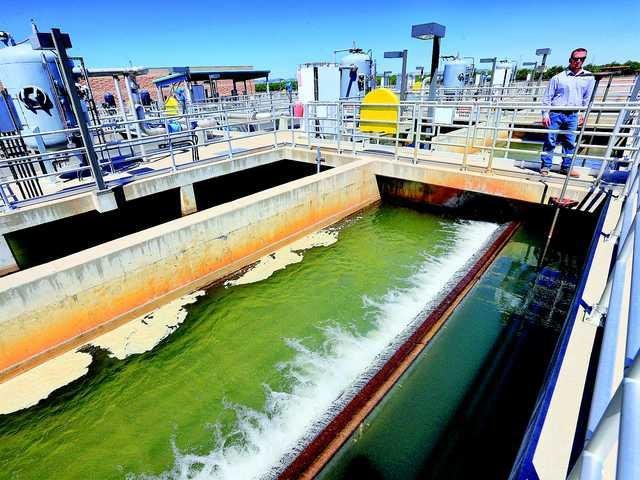
It is one of the factors that prompted the SSJID board to conduct a preliminary engineering report for expansion of the Nick DeGroot South County Surace Water Treatment Plan near Woodward Reservoir that went online in 2005.
The plant helps meet the water needs of more than 230,000 people in Manteca, Tracy, and Lathrop.
The board will be presented the preliminary engineering report when they meet Tuesday at 9 a.m. at the district office.
The current treatment plant capacity is 40 million gallon of water per day. The expansion would take it to 60 million gallons of water.
Growth is not the only factor that is playing a role in triggering the need for the second phase project.
Issues with groundwater also factor in.
The groundwater sustainability act that has to be implemented by 2045 requires that water pumping in any given year is replaced by an equal amount of water for replenishment of underground aquifers.
That in itself is not the issue.
Manteca, which aims for a 50-50 use of surface and ground water by relying on minimal surface water during the cooler wet season and larger amounts in summer, also uses surface water to dilute the impact of nitrate issues impacting many of the city’s 17 wells.
The process keeps the city’s nitrate levels within federal guidelines.
By the same token, salt intrusion is an issue for Tracy and Lathrop based on their proximity to the Delta. The treated surface water taken from the 300,000 acre feet the SSJID has in adjudicated water rights on the Stanislaus River watershed helps dilute salt as well and avoid costly treatment process for the two cities.
All three cities, for various reasons due to well issues, may have to rely on upping use of surface water to dilute issues with ground water.
How SSJID board opts to
approach expansion critical
Based on current trends that have growth in the three cities exceeding what a water management plan adopted in 2020 projected, the treatment plant could reach 80 to 90 percent of daily production capacity between 2026 to 2028.
It may take upwards of six years to get the entire next phase in place.
It is why the preliminary engineering report has three alternatives.
*Alternate 1: Early start of delivering the project and incremental second phase development.
This would break capacity expansion into two phases with 7 million gallons per day increased capacity available in 2032 if work starts in 2026. This would allow the second phase to be delayed until 2039 when water demand is expected to reach 50 million gallons a day. It carries a $256.4 million price tag.
*Alternate 2: Phase 1 optimization and reduced Phase 2 capacity.
Improvements to the infrastructure already in place as part of Phase 1 that was completed in 2005 could get 5 millions of gallons of water per day in additional capacity in place by 2028 as opposed to opposed to 2032. That, in turn, would reduce the capacity added by Phase 2 to 15 million gallons per day. It carries a $226.1million price tag.
*Alternate 3: Intermediate option with storage tank and booster pump.
A three million gallon treated water storage tank and booster pump that are master planned for the second phase would be built and could be ready by 2028. That would allow SSJID to meet an immediate demand. It carries a $43.5 million price tag.
The cost of all improvements would be borne by the cities proportionately from the water they will receive.
The cities, in turn, pass the cost onto development in the form of higher water connection fees.
To contact Dennis Wyatt, email dwyatt@mantecabulletin.com