
Manteca is securing the first three tiny modular housing units for The Way Veteran Center being pursued on an underutilized parking.
The City Council accepted $281,000 in Behavioral Health Bridge Housing funds from San Joaquin County after municipal staff learned a nearby city it was originally awarded to was not in a position to proceed.
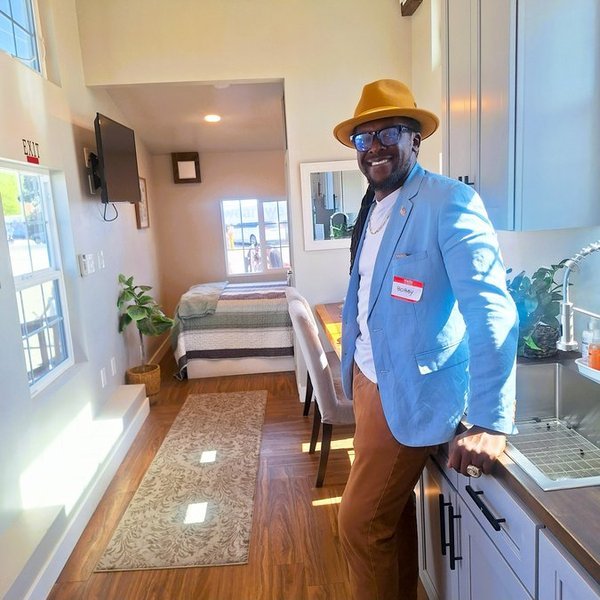
The funds will cover the cost of two single bed units and one double bed unit that are referred to as WellNest pods.
The smallest 200 square-foot house includes a bedroom, bathroom, and a living area with a kitchenette.
The WellNest pods are ADA-accessible with high ceilings and can be powered via solar battery.
The county, in addition to passing the funds on to the city to be used by its partnership with The Way Church, is also committing to providing the cost to cover the rent and making on-site mental health services available for at least five years.
“It’s great that we will be getting four Manteca homeless off the streets,” said City Manager Toni Lungren.
The Way Veteran Village is the vision of The Way Church for its parking lot on the northeast corner of North Street and Roosevelt Avenue in Central Manteca to help homeless veterans and those veterans at risk of being homeless.
It involves 12 to 15 tiny modular homes grouped together on under-utilized property belonging to The Way Church
The City of Manteca is supporting the church’s effort to apply for a $3.5 million Homekey+ grant to fund the project in collaboration with The WellNest Group.
Manteca is the lead applicant to the California Department of Housing and Community Development grant program.
The proposed development of modular homes is designed to be fully accessible for mobility, hearing, and vision disabilities.
The project site, a vacant parking lot of The Way Church located at 715 E. North Street, offers existing infrastructure connections and will be improved with grading, utility hookups, pathways, green space, and drought-tolerant landscaping.
The design encourages neighborhood interaction while ensuring privacy, incorporates sustainable stormwater management practices, and provides safe, energy-efficient lighting.
The tenants would be veterans that are now homeless as well as those who are underhoused, unsuitably housed, or facing eviction.
Eligibility requires that participants:
*being a veteran as defined by the Veterans Administration.
*having an active diagnosis of severe mental illness, substance use disorder, or co-morbidity,.
*fall in one or more of predefined housing insecurity categories.
The model being used in Manteca has more than 100 beneficiaries so far statewide.
It uses faith-based leadership, construction experts, ADU innovators, and nonprofit care providers to “united and empower local veterans.”
The last point in time count in Manteca showed there were just under 15 homeless veterans among the 238 homeless counted in January of 2024.
The 2026 homeless county takes place next week in Manteca.
The church hopes the community will work with them to get all homeless veterans in Manteca off the street.
They also hope other churches in Manteca with available land space might follow suit to build additional tiny homes for the homeless.
Since 2019, The Way church has been providing a safe parking program for the homeless, who can park overnight and sleep in their vehicles.
The City of Manteca is moving forward this year with the renovation of the former 57,000-square-foot Qualex photo processing building at 555 Industrial Drive to house a permanent homeless navigation center.
The city has operated an emergency shelter in the parking lot of the property since before the pandemic.
Behavioral Health Bridge Housing funds the city accepted are intended to support local jurisdictions in addressing homelessness among individuals with serious behavioral health needs.
Eligible uses of BHBH funds include navigation centers, respite crisis housing, emergency shelters, and other housing-related infrastructure and services that assist individuals experiencing homelessness or at risk of homelessness with serious mental illness and/or substance abuse issues.
To contact Dennis Wyatt, email dwyatt@mantecabulletin.com