San Francisco likes to say it has the crookedest street in the world.
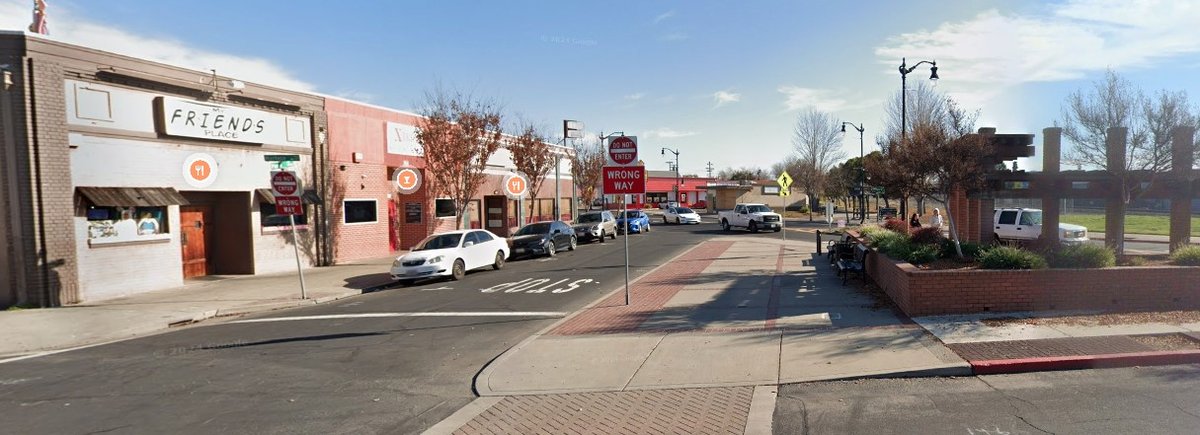
Manteca, though, could be in contention for the shortest street.
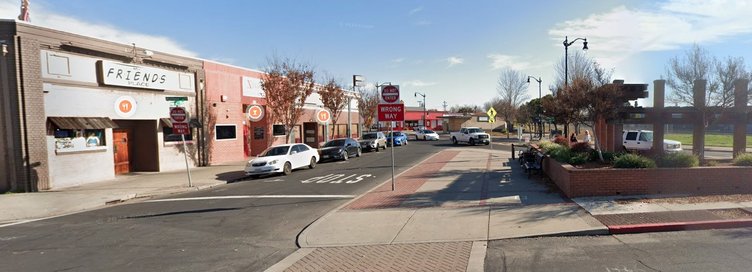
It’s Pierce Avenue.
It goes from Yosemite Avenue to Manteca Avenue in downtown.
You can park four cars on the street to access the three concerns fronting it along the north side. On the south is the triangle plaza the Tidewater Bikeway uses to bridge Manteca and Yosemite avenues.
While we’re on the subject of streets, what was the last street named for a Manteca mayor?
If you said it was Singh Street — the new connector street between East Atherton Drive and Austin Road — that would not be correct even though Gary Singh is the current mayor.
Singh Street was actually selected by the San Joaquin Council of Governments to honor Manteca’s growing Sikh community.
Sikh Guru Gobind Singh Ji — who lived from 1666 to 1708 — asked all Sikhs to adopt the name "Singh," which means "lion" in Punjabi.
He viewed the name as a way to demonstrate their courage, strength, and fearlessness.
By giving a common name to all male Sikhs, he sought to emphasize the principle of equality among his followers, regardless of their social status. Sikh males typically take Singh as a middle or surname.
Sikh women, by the same token, typically adopt Kaur as a middle name or surname.
Kaur means prince or princess in Punjabi.
It is meant to symbolize gender equality in the religion.
The last street specifically named after a mayor was Snyder Street for the late Jack Snyder.
When it comes to the sheer dropping of names of former civic leaders, no place is as concentrated as Mayor’s Park on the southwest corner of Louise Avenue and Union Road.
Fifteen former mayors are honored including Jack Snyder, William Phillips, Cliff Parr, Trena Kelley, Mark Oliver, John McFall, Ed Pitts, Chuck Shafer, Rick Wentworth and H.C. Buchannon. Actually Buchannon is misspelled. It should be “Buchannan.”
McFall, by the way, was also a Congressman and at one time held the second most powerful position in the Democratic leadership in the House of Representatives. His father was Hope McFall whose was the first Manteca man to fall in World War II and whose name graces the American Legion Post.
Switching to City
of Manteca parks
When it comes to parks, none of Manteca’s 77 and counting are smaller than Mini Park in the 200 block of Elm Street.
Wilson Park behind these downtown post office comes close as does Hildebrand Park just northeast of the central district.
Mini Park has room for a picnic table with a quasi-shade structure, a tree, and some grass.
There’s asphalt where a basketball court used to be.
The park was created because of how the neighborhood was parceled into lots and then a few years later was dissected by PG&E transmission line towers.
It essentially rendered the lot where the park is useless.
Another bit of Manteca trivia: Manteca’s first park was Baccillieri Park along Wetmore Street south of downtown.
It was donated 111 year ago to the Board of Trade, the precursor to the City Council that was established with incorporation in May of 2018, by A. Baccilieri who owned the waterworks at the time.
The park in the triangle formed by Wetmore, Stockton, and Vine streets was the site of a makeshift tent city of those turned out of work by the Great Depression in the early 1930s, one of many so-called Hoovervilles so named for President Herbert Hoover.
Some 59 years ago another Manteca park, the nearby Southside Park, was an overnight campsite for hundreds of United Farm Workers being led on a 355-mile march from Delano to Sacramento by Caesar Chavez in 1966.
Their goal was to secure fair labor contracts for grape pickers.
To contact Dennis Wyatt, email dwyatt@mantecabulletin.com