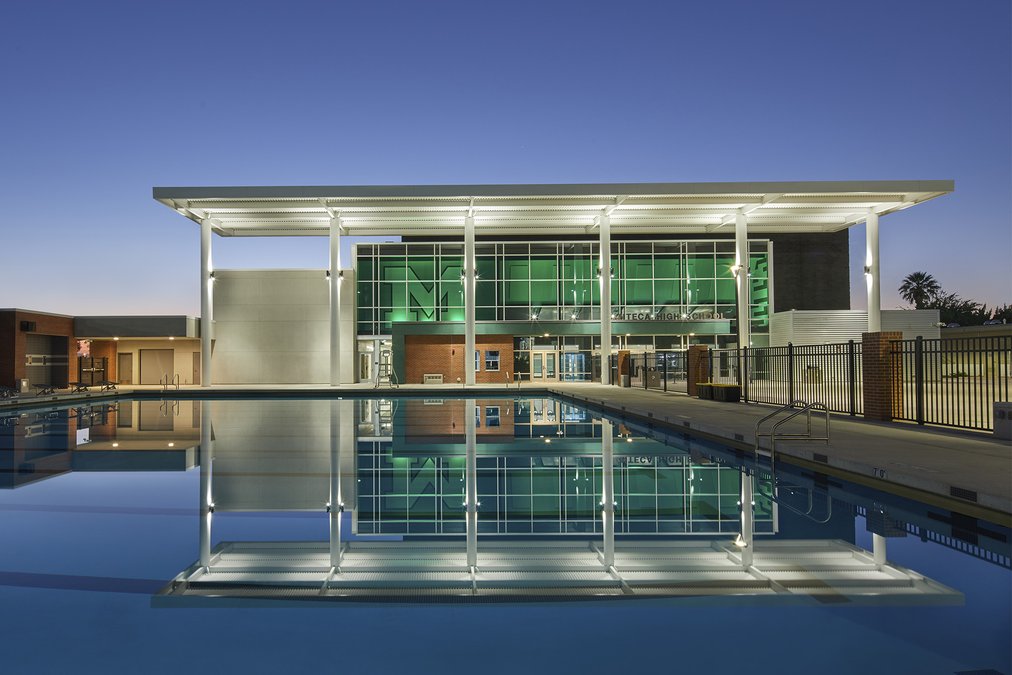
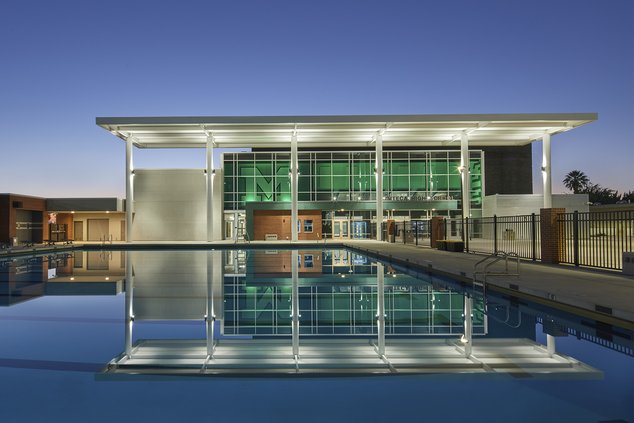
Students and teachers at Manteca High and East Union High made it clear what they wanted the makeover of Manteca Unified’s two oldest high school campuses to accomplish.
Can I learn here.
That input from almost a decade ago has been the key driving force behind the design of not just new high school classrooms funded by the $260 million Measure A bond, but in every conceivable place on the campuses.
“The goal was to squeeze out every ounce of learning space we can,” noted Aaron Bowers, the district’s director of facilities and operations.
The result is folding classroom walls that can accommodate teacher collaborations, a media center integrated into the heart of campuses, college-like learning stairs, outdoor classroom spaces, numerous outdoor areas where students can interact while plugging in devices, and even entire walls that do double duty as whiteboards.
But creating maximum space to learn wasn’t the only driving force.
Those collaborating teams at the start of the modernization process that also included community members wanted campuses that would inspire students that they and Manteca as a whole could take pride in.
Both were tempered by the school board directive to maximize every dollar and to create striking architectural touches without adding cost.
“It was not just to put a school in a school building,” said Assistant Superintendent Victoria Brunn. “We wanted to energize the space.”
Bowers noted the architect took the directive to use simple materials in innovative ways to heart.
It’s reflected in the new two story classroom buildings where structural elements are used as part of the design.
One such example is the two-story career education tech building along Mikesell Street at the Manteca High campus. Instead of stuccoing over the X-beams that are integral to the structures support, they left them exposed to do double duty as a design element.
It is a strategy that works well as an overall contemporary design for the two campuses.
The “ark” approach
to new classrooms
The districts refrained from the formula approach of building your basic standalone 960 square foot classroom in designing the new two-story classroom buildings. That includes the one completed at East Union as well as a two-story building along Mikesell on the Manteca High campus.
Instead, they have pairs of classrooms.
Each side of each pair is separated by a folding wall that allows for the two classroom spaces to be combined to accommodate collaborative teaching.
Those walls do double-duty as whiteboards that students can work on.
Bowers noted teachers will often dedicate sections of the wall for use in group projects.
The district extended the maximizing learning space edict to include the district wide classroom furniture refresh paid by one-time federal COVID funds.
The flexible — and ergonomic — tables, desks, and chairs that skew traditional school furniture design can create multiple smaller learning spaces in the classroom — have led to teachers reporting students as being more engaged.
It also has changed the comfort dynamics as there is less “fidgeting” allowing students to be better focused.
Bowers pointed out how the Manteca High CTE building has two adjoining media classes in one classroom pair.
That allows the creation of space for a larger learning venue for special projects.
How that can be applied to English classes that are paired, as an example, teachers could arrange for a speaker, such as an author, that could speak to two classrooms at one time.
Learning space
outside classrooms
The creation of campus amphitheaters and the learning stairs incorporated into the new two-story main classroom buildings are part of the campus learning space effort.
So are the placement of “benches” — primarily concrete features complete with electrical outlets and shade trees — throughout the campus.
Bowers said there are likely hundreds of outdoor outlets at the two campuses available at concrete benches, learning stairs, and even near the base of light poles.
It’s a nod to the fact devices are here to stay, that they are part of the learning process, and need to be kept charged.
The remodel of existing classrooms at East Union and the new classrooms built on campus were done with an emphasis of installing an electrical support system critical for a 21st century learning environment.
Bowers’ favorite part of the campus design is how the media centers are at the heart of the classrooms and not off to one side.
As such, he believes it will step up the resources that the media centers have to better augment what goes on in the classroom.
He also noted the design took other student needs to heart including the request for more drinking fountains/water bottle filling stations.
Campuses that help to
encourage collaboration
Brunn noted the incorporation of more areas with benches or the equivalent of standing counters, if you will, was designed to encourage student collaboration whether they are trying to work on an English assignment or determine the steps they will need to do a welding project.
“It’s an environment to foster learning,” Brunn said.
It is why the district added outdoor learning spaces complete with shade by the classroom wings that were remodeled at East Union High.
“It allows learning to spill outdoors,” Bowers said.
The district, when all is said and done, will have used $414 million between two local bond measures to leverage state matches that will allow Manteca Unified to address more than $550 million in campus modernization needs districtwide.
To contact Dennis Wyatt, email dwyatt@mantecabulletin.com