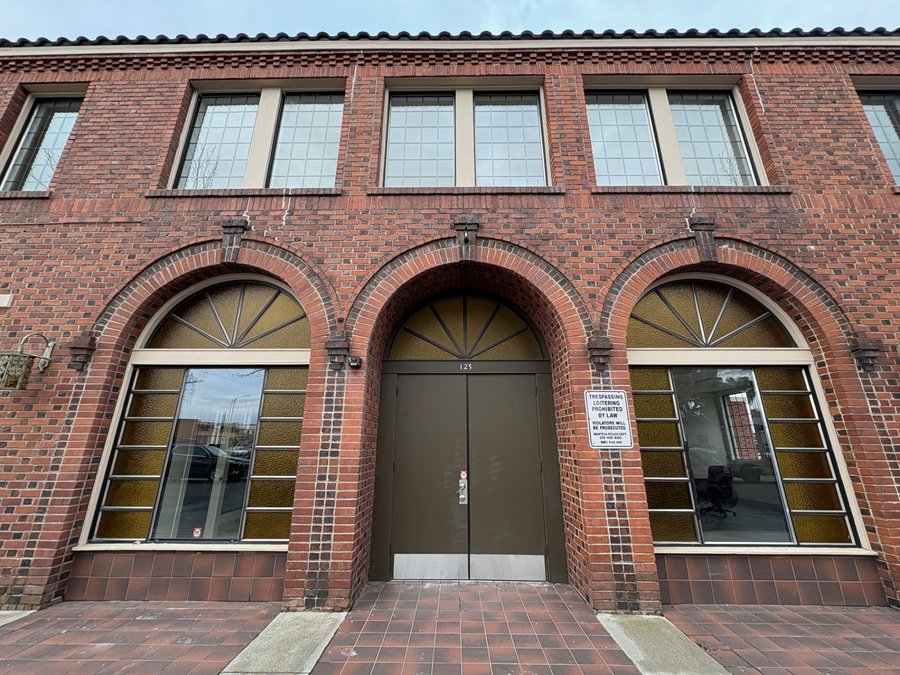
City of Manteca government offices 102 years ago this month moved into new offices with less space than the 8,500 square-foot Sizzler restaurant along Daniels Street east of Airport Way.
That may not sound like a lot of space for municipal offices, but at the time the city had roughly 1,400 residents.
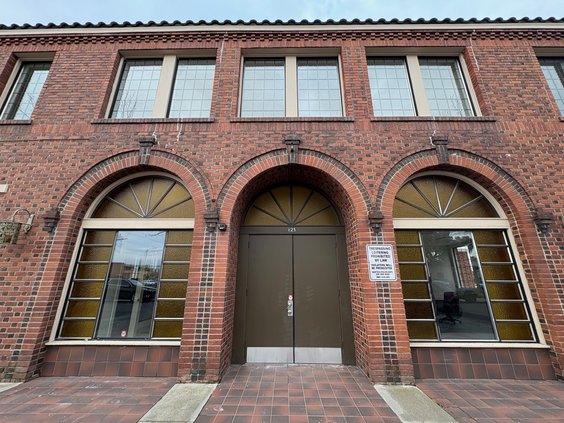
That said the new building — it stands today as a renovated structure in the 100 block of Sycamore Avenue with the owner actively seeking a restaurant for the ground floor and office users for the second floor — had 8,229 square feet.
And it was too much for city needs.
It is why the post office moved into the south half of the ground floor of the two-story brick building from rented space along Vine Street just across the tracks from downtown.
The northern half of the first floor housed the city clerk’s office and the city marshal’s office, the forerunner of the police department.
The area — according to the Manteca Bulletin published on Jan. 18, 1924 — contained a fire-proof vault.
To the rear, was the city jail containing three “burglar-proof” cells.
And on the west side of the building there was space to house the firefighting apparatus for the city’s all-volunteer fire department.
Stairs from that room led to the firemen’s club on the second floor directly above.
In that second floor space that was 38 feet by 40 feet was a dormitory, bathroom with shower, a small kitchen, and a big closet.
The firemen’s club space that was on the southwest corner of the second floor included a pole that firefighters could slide down to reach the engine room below.
The volunteer firefighters were given $300 by the city trustees to outfit the firemen’s club as they saw fit.
There was also a hose drying tower that extended to the roof.
On the southeast corner of the second floor was a “spacious room” that was 24 feet by 36 feet.
It did double duty as the justice court and city council chambers.
One room on the north side of the second floor was rented by the Manteca Chamber of Commerce.
The remaining two rooms were leased to the South San Joaquin Health Department.
The building took three months to build and cost $20,000.
It cost $6,000 to buy the land, $3,000 for the post office fixtures, and $1,000 for what additional furnishings the city clerk and constable needed.
The overall sum was $30,000. Compare that to the $100,000 the city spent on a consultant in 2019 just to assess city hall needs and then do nothing.
How the city — which had been renting office space since being incorporated in May of 1918 — paid for the endeavor was unique by today’s standards.
The actual structure costing $20,000 was financed by 20 local men who formed the Manteca Building Association.
The city paid off the building after 10 years using the $250 in monthly rent secured from the post office, chamber, and health department.
The city hall functions tied to the clerk’s office, managing the city, and issuing building permits eventually squeezed out other uses.
The building housed those “office” functions for 54 years until the Civic Center including a police station were built in 1978 at 1001 Center Street.
A subsequent phase included the senior center.
The master plan for the Civic Center site, that was never completed, included a performing arts center where the dog park is today.
Tidbits about the dedication
ceremonies for the city hall
The dedication ceremonies took place on Jan. 19, 1924 at 2:30 p.m.
The flag raising was accompanied by the Manteca Chamber of Commer band — yes, they organized a city band back then — playing “America.”
The Manteca Union High School Boys Glee Club then sang “A Creed for the City.”
It was followed by another selection by the band.
The first speaker that day wasn’t a city official or even a Manteca resident.
It was the Stockton Mayor Raymond Wheeler.
That was followed by a community sing-along led by song leader H.E. Dike.
The “Address of the Day” was delivered by Marion Woodward, also of Stockton.
The Bulletin noted Woodward, the assistant district attorney of San Joaquin County, “has the reputation of being an able speaker” and “will have something worthwhile to share.”
The chamber band played a third selection to end the dedication ceremonies.
Items in cornerstone
A cornerstone that had been previously placed at what is now referred to as “Old City Hall” included a variety of items.
The Bulletin at the time it was placed noted among the items placed in the cornerstone were various sketches and photos of Joshua Cowell who was 80 years old at the time of the ground breaking ceremonies.
Cowell had walked from the Carson Valley across the Sierra to what is present-day Manteca in 1861 and purchased 3,400 acres that today encompasses most of Central Manteca.
His ranch house once stood where Bank of America is now located on the southeast corner of Yosemite Avenue and Main Street.
Cowell, affectionately known at the time as “The Father of Manteca”, was the city’s first mayor following incorporation in 1918 just five years earlier.
There were dozens of other bits of history sealed in the cornerstone.
Included was a 1923 copy of the Manteca Union High School book “the Tower”, the Nov. 2, 1923 edition of the Manteca Bulletin, various directories such as the Manteca Telephone book as well as numerous sketches and information on various churches and associations of the day.
To contact Dennis Wyatt, email dwyatt@mantecabulletin.com