A park is within a 10-minute walking distance of 86 percent of Manteca’s residents.
That snippet of data gleaned from the Trust for Public Land is contained in the updated Parks & Recreation Master Plan being presented to the City Council when they meet tonight at 6 p.m.
By comparison, the 10-minute walk to a park goal is at 92 percent for all Tracy residents, 84 percent for all Lodi residents, and 74 percent for all Lathrop residents.
Manteca has a general plan goal — the document that serves as a blueprint for growth — of every household being within a quarter mile of a park. That is reflected as being within a 10-minute walking distance.
The study inventories existing facilities and identified current “deficits” as well as needs based on a projected population of 206,882 in 2040.
Those “deficits” are based on general park planning standards.
The master plan developed by LPA also took a stab at trying to gauge “wants” of the community through three community workshops as well as three focus groups — one for senior and volunteer organizations, one for business and special events, and one for sports organizations.
The survey determined that a gym/multi-use recreation center plus a swimming pool/aquatics center were the top wants of the three stakeholder groups and the input received at community workshops.
The next set of identified priorities was to maintain exiting facilities as well as improve safety and accessibility as well as add more pickleball courts.
The third tier of goals was more funding ad additional tennis courts.
Lumped together on the fourth tier was better city communications, city programs for youth and seniors, a roller arena, skate park, theater arts, as well as trails and open space.
LPA used population data, standard ratios of recreation facilities and park acreage per 1,000 residents, as well as community/stakeholder input to determine what Manteca should aim for by the year 20240.
It came up with a plan that would cost the city $930 million in today’s dollars to implement
The $250,000 plan by LPA is an update of the initial master plan costing $475,00 developed by RJM Design in 2017.
And it is on top of $185,000 spent in 2018 having LDA Partners conduct a feasibility study and devise a conceptual plan for an aquatics center, community center, along with open play fields.
The $640,000 the city spent in 2017 and 2018 have little to show for the expenditure except for continuing with neighborhood park development that has been in place the 1990s.
The city has enhanced or reconfigured existing park facilities since then — making Center Street tennis courts available for pickleball as well, adding a cricket pitch to Doxey Park and adding light to Woodward Park basketball courts and the Center Street tennis courts.
Those — along with the new community garden in Center Street and the splash pad now under construction at Woodward Park — are the only park and recreational facilities additions of note in the past 10 years.
Part of the reason for slow progress is the city has had no funding source to wed with growth-related fees for park acquisition and improvements that are being collected.
There is a need to update those fees based on rising costs and other amenities that may be needed.
But growth fees alone can’t cover costs.
That’s because state law prohibits cities from charging new growth more than their fair share of needed recreational facilities.
The situation has changed to a degree with passage of Measure Q in November 2024.
Measure Q might be able to leverage growth fees — there was a balance of $25.4 million in the fund as of June 30, 2025 — to leverage bonding for one or two projects.
The city is working on developer fees and/or agreements — different than growth fees assessed per household — to secure some items on the master plan list of needs including buying a new community park site.
That said, elected city leaders will have to decide how to start tackling the list.
And even that isn’t straightforward.
Replacement swimming
pool & an aquatics center
An example is the swimming pool/aquatics center that is listed as a priority by those participating in the community workshops and stakeholders’ meetings.
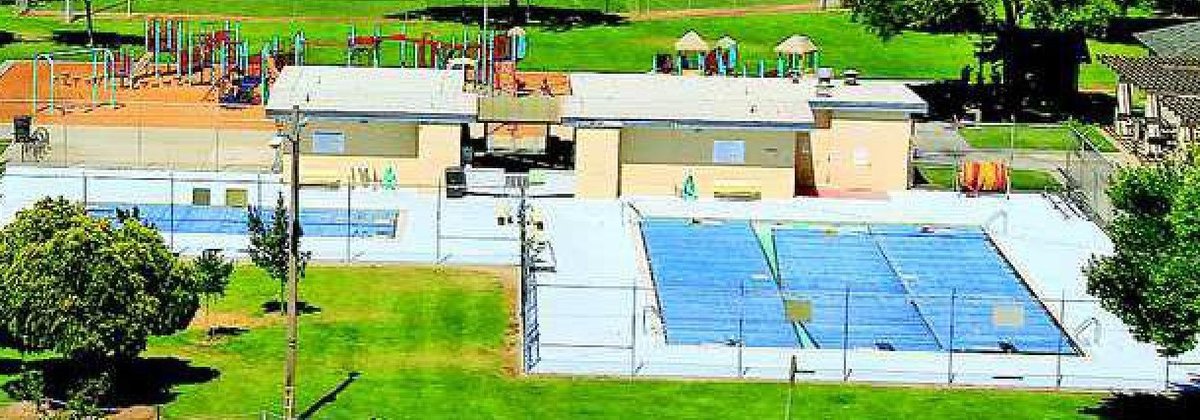
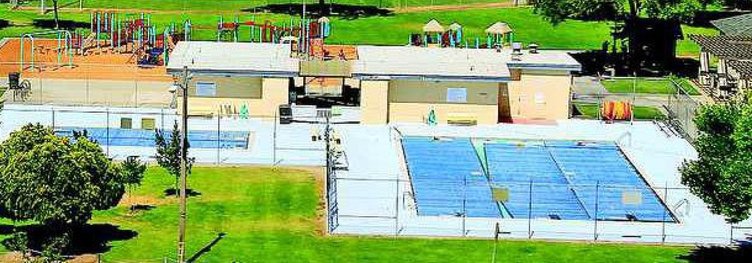
The masterplan calls for replacing facilities at the Marion Elliott Park swimming pool on Powers Avenue plus a new aquatics center elsewhere.
The city clearly can’t do both during the next 5 to 25 year horizon without ignoring a lot of other recreational needs and wants.
The $24.9 million replacement project at Marion Elliott Park would include a 25 yard by 35 meter lap pool, a recreational pool, locker building, and associated improvements.
A five acre site would be need for an aquatics facility to meet recreation and completive swimming needs of the community and the region
A new 50 meter pool would accommodate recreational swim programs, competitive swimming, and water polo.
The center would also include a recreational pool for community use, a pool house, equipment room, and other improvements.
The aquatics center carries a price tag of $47.4 million.
The first question the council would need to decide is whether to move ahead first with swimming pool improvements/aquatics center.
The second question is which goes first: the replacement pool or the aquatics center?
At the same time, the question of spending ongoing periodic upgrades within the existing swimming pool makes sense.
To contact Dennis Wyatt, email dwyatt@mantecabulletin.com