The sentiment in Sacramento was “tough luck” if gas reaches $7 a gallon just a few years back.
After all, it they said, it would force Californians out of their mobile planet killing machines powered by fossil fuels and into the anointed clean machines of the righteous green cabal that are also known as electric vehicles.
Now that $7 a gallon gas is a real possibility, true blue California politicians that were not only in lockstep with what might be called an overly aggressive green agenda but were passing laws and mandates to make it all happen, are retreating faster than the Arctic ice sheet.
Excuse the hyperbole, but just like with everything else, taking a moderate approach to adjusting for climate swings after you are told the world will be history by 2070 meant being slammed as either a denier or committing blasphemy.
Now many of those very same people are setting world speed records for backtracking on preaching climate doom and gloom.
The national political pundits argue that it’s a matter of affordability being the No. 1 public concern du jour that has beaten back talk about expensive climate change policies.
But this is not the case in California.
It goes way beyond affordability. It also involves being tired of the smoke and mirrors act.
That’s because consumers in the Golden State not only have had a front row seat for decades that they pay dearly for to fund climate change strategies rolling out of Sacramento, but they also know first-hand what works.
You will find people in California that understand why they are paying extra for reformulated gas.
They either know first-hand or can be shown proof that it has literally reduced certain forms of air pollution/smog by more than 50 percent over 1970 levels despite significantly more people and cars in California.
They also know greenhouse tax credits are an expensive charade that often fund out-of-state environmental projects that are paid for with state fees slapped on refineries that are collapsed into the price they pay for gas at the pump.
It is even worse than that.
The breaks you periodically enjoy on your highest-in-the-48-contiguous-states-electricity bills from PG&E is basically money you paid to purchase energy — gasoline or otherwise — for fees slapped on those generating power in the form of green credits they are forced to buy.
You can’t refine oil into gas cleaner than California does. So, in order for oil companies to refine oil into gas in the Golden State, they have to pay for the privilege to pollute.
It essentially takes a dollar out of one of your pockets and puts loose change back in the other.
You ever ask yourself why Governor Gavin Newsom really isn’t doing much talking these days about Darth Vader in DC to his carefully crafted persona of Luke Skywalker in Sacramento when it comes to the federal government taking away California’s ability to mandate no fossil fueled new car sales starting in 2035?
It’s because Trump did him a favor of sorts.
It has given Newsom cover as he does close to a 180 degree when it comes to fighting climate change.
Newsom gave new life to Diablo Canyon after years of pushing to close the nuclear power plant down.
It’s amazing how the potential loss of just 9 percent of all electricity used daily in California that PG&E produces at Diablo Canyon can cause a man who wants to move into 1600 Pennsylvania Ave. on Jan. 20, 2029 to change his tune.
Newsom is no longer leading the green agenda charge but retreating as he doesn’t want the economic reality of supply and demand to derail his presidential aspirations.
His change of heart on Diablo Canyon may have avoided sending PG&E rates all the way to the moon instead of just into the stratosphere.
But the proverbial iceberg he needs to avoiding hitting is gas prices channeling a Space-X rocket going sky high.
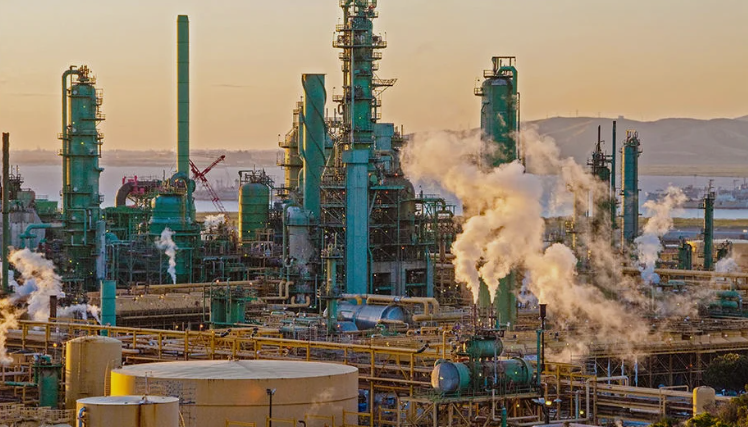
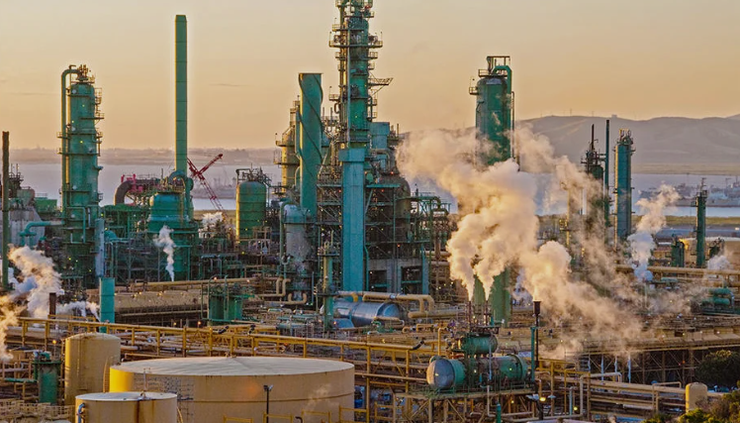
Phillips 66 is closing a Los Angeles refinery by year’s end.
Valero is pulling the plug on its Benicia refinery by April 26.
Between the two, it represents 139,000 thousand barrels oil refined on an average day in California. That’s out of 1.6 million barrels a day.
That means just under 12 percent of the Golden State’s gas supply will be history within five months.
No big deal, right?
They’ll just ship it in from out of state.
But this is California.
The reformulated gas we use — which is a proven way to effectively combat greenhouse gas emissions — is only refined in California.
It would require extensive retrofitting of refineries not located within the state to produce it outside of California. It would also require expensive shipping to get it here.
Even if it could be done, it wouldn’t happen fast enough to blunt the tourniquet effect of the loss of refining capacity.
Gas may not reach $7 a gallon by the 2028 primaries, but even if it approaches $6 a gallon it will paint a big target on Newsom who can’t escape people connecting the dots.
That is especially true given his White House strategy until about a year ago was to tell the world California was leading the climate change fight on his watch.
The facts and perception of what has happened can be lethal at the ballot box.
Political seers might see the governor’s political future in simplistic terms.
uThose on his left flank that say $7 gas be damned clearly won’t be thrilled by Newsom trying to portray himself as the Anti-Greta Thunberg.
uThose on his right flank will see Newsom as the creator of climate panic policies that sent energy costs soaring.
They don’t give much thought to the middle because, again, no one does these days.
If one were to pause and weigh what is at stake, it seems clear more moderate and measured climate policies are long overdue.
But what is happening is a wholesale retreat that is just as bad as going full-speed ahead with the more severe aspects of the hardcore greenie agenda.
The proverbial green in our pockets is important to Californians as is reasonable and effective protection of environment with measures that are not devised in a political vacuum outside of reality.
This column is the opinion of editor, Dennis Wyatt, and does not necessarily represent the opinions of The Bulletin or 209 Multimedia. He can be reached at dwyatt@mantecabulletin.com