Tracy Hills is not exactly what the name implies.
It is mostly flat.
The “hills” part comes from the western edge of the 1,850 acres in the planned community being nestled up against the Altamont Hills,
Earlier this year, Tracy Hills was placed into a high risk zone by Cal Fire.
It’s because it’s location based on geology and prevailing winds create conditions that make it a strong candidate for a major wildfire over a 30 to 50 year period if steps aren’t taken to reduce the odds.
So far, roughly 1,500 of the 6,000 homes planned in South Tracy near the Interstate 580 corridor have been built.
It is the second largest planned community in the South County besides the 15,001 home River Islands at Lathrop.
Why this should concern you is simple.
The high risk designation for Tracy Hills could accelerate growth in Manteca.
It could also make homes on the resale market less affordable.
And it has all to do with what some reference as the “silent” monthly cost of home ownership — insurance.
Wildfire losses clearly are a major issue for insurers when it comes to California.
Those living in “true” hills such as where my sister lives in the Sierra foothills of Placer County east of Lincoln have seen insurance premiums skyrocket — assuming they can secure coverage — even if they aren’t in an area that has experienced a significant fire where more than one home is lost.
In my sister’s case, she is now paying in excess of $10,000 a year for fire insurance.
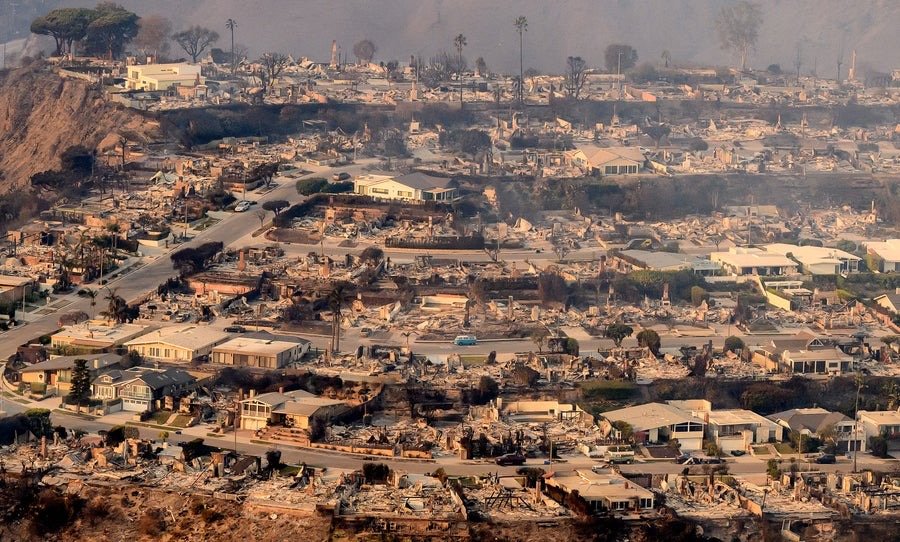
California insurance regulators in December — a month before the devastating Los Angeles wildfires — threw insurance companies a bone or a life jacket, depending on your perspective.
The state put in place a rule that allows insurers to spread the cost of covering high risk areas over policy holders that reside in lower risk areas.
The goal was to stop companies from no longer issuing policies in high risk areas or avoiding firms setting the premiums so high that almost no one could afford coverage except through the last resort insurance the state offers.
Placing Tracy Hills in a high risk zone puts everyone on notice from homeowners, local jurisdictions overseeing planning and construction, local fire agencies, and insurance companies.
Rest assured insurance companies will take steps to reduce their exposure as it is their proverbial bread and butter.
What whether everyone else involved takes steps to reduce the risk from homeowners to cities depends on their attention span, commitment, and money.
The insurance dynamics will have an impact on the local regional housing market given there are 1,500 existing homes and 4,500 future homes in play in Tracy Hills.
Between Manteca, Lathrop, Mountain House, and Tracy there are easily 30,000 housing units in the entitlement pipeline from being ready to build or at the beginning of the planning gauntlet that can take years.
If there are sharp premium raises in Tracy Hills, it will eat away at how much house buyers can afford to buy.
Unless there are triple digit increases, it won’t turn Tracy Hills into a dead zone for resales or new sales given the lead role South San Joaquin County takes in addressing the Bay Area affordable housing problem.
The Bay Area housing problem grows with every surge in technology given developable land west of the Altamont for housing is close to zilch.
Keep in mind that Mountain House has ongoing tax burdens basically at 2 percent — the state max for property tax. River Islands is close behind.
Those increased burdens deliver amenities quicker and that are more robust than Manteca offers.
The trade-off is Manteca is more affordable.
Should insurance premiums in Tracy Hills spike way beyond what everyone else is now experiencing in non-high risk fire areas, it will push more buyers this way.
Some correctly have noted all of California is at a risk for wildfires. If the conditions were right, Manteca could easily lose three dozen or so homes to a rapidly moving vegetation fire thanks to wind-blown embers just like happened in Stockton 17 years ago.
But the reality is there are areas more prone to wildfires.
The updated high risk fire maps puts Tracy Hills under the microscope of insurance company personnel that weighs risks and develop insurance rates accordingly.
The number of national builders now plying their trade in Manteca has already changed the home building dynamic.
If it suddenly costs $5,000 more a year to insure a new home in Tracy, that will change current home buying patterns.
The question is to what degree?
That said, it will have a positive impact from a Manteca builder’s perspective whether it increases sales in good times or buffers the drop off in less than stellar times.
There is also the long-range impact.
Insurance rates always go up if for no other reasons than inflation.
Mega-losses by catastrophic events such as major wildfires take insurance rate hikes into the stratosphere.
Insurance is like property taxes.
They are not a “fixed cost” per se although they are treated as such during a mortgage loan application.
In California, homebuyers are assured property taxes will never increase more than 2 percent annually.
There is no such guarantee for insurance.
And if the past five years are any indication, buyers sooner than later will start steering away from homes located in high risk areas that carry higher premiums.
The kicker is the series of major wildfires throughout California in high risk and very high risk areas has had the effect of putting the foot down harder on the pedal that drives premium hikes.
Developing homes, or reselling them, in a high risk zone isn’t going to plummet to zero.
But it certainly will have an impact of fair significance on sales.
As such, Tracy Hills being in a high risk zone offers an opportunity for other new home builders in the South County to capitalize on.
This column is the opinion of editor, Dennis Wyatt, and does not necessarily represent the opinions of The Bulletin or 209 Multimedia. He can be reached at dwyatt@mantecabulletin.com