Don’t think much about Ukraine or Russia?
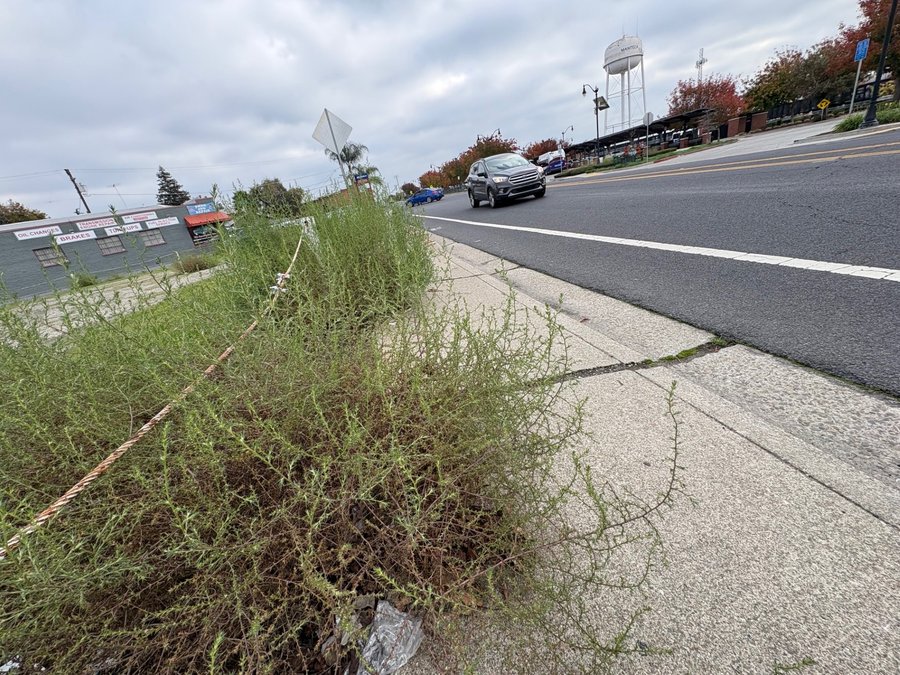
Then how about tumbleweeds?
The roots of the West’s tumbleweed problem can be traced back to the dry steppes of Ukraine where among the grasslands and shrubs the plant known by its scientific name of Salsola tragus was known to exist.
That all changed in 1879.
It’s when scientists and historians believe a farmer by the name of Henry Schatz unwittingly introduced what today is known as Russian thistle given its seeds were shipped from Tsarist Ukraine inadvertently in a 100-pound sack of flax seeds.
Schatz was trying to find a crop that would flourish in the low rolling hills of Bon Homme County of what was then South Dakota territory.
The flax — a cousin of wheat — did OK
But it was nothing compared to Russian thistle that spread like an uncontrollable wildfire.
It was a small part of the 19th century Ukraine ecological system.
But it thrived beyond belief in the arid Great Plains thanks to the region’s powerful winds and a helping hand from railroads — particularly livestock cars.
Within a decade, Russian thistle was found in much of the western United States, a testament to the fact it thrives in loose soil and the fact it makes rabbits look like rank amateurs when it comes to reproducing.
Each Russian thistle can produce upwards of 200,000 seeds.
You can now find tumbleweeds in every state but Florida and Alaska.
What beings this up is the fact we’re on the threshold of “the” tumbleweed season in California.
The season starts in late fall and runs through early winter — roughly between now and mid-January — when the bulk of it breaks off from its stem.
Russian thistle is particularly fond of the dry summers and wet winters that California offers especially here in the San Joaquin Valley with its abundance of sandy loam.
Manteca today has more than its fair share of tumbleweeds.
But it was nothing compared to up until the early 1990s when tumbleweeds would blow across the 120 Bypass when it was one lane in each direction with alternating passing lanes.
The concrete K-rail barriers put in place within two years of the Bypass opening after impatient drivers turned the passing lanes into “suicide lanes” led to 37 deaths in head-in collisions in 18 months would stop the wind-blown progress of tumbleweeds.
Caltrans crews were tasked with routinely removing tumbleweeds from the barriers so they would not impede traffic.
If the sound of fingernails dragged across a chalkboard can send your nerves into orbit, it is nothing like the sound of a tumbleweed getting caught in the undercarriage of a car driving 60 mph.
The tumbleweeds along the Bypass have been tamed just as the thickness of the tule fog that made the visibility so treacherous on the seven-mile segment of highway that it was only topped by a stretch of Highway 99 near Fresno.
It is why the Bypass was the second location in California where a fog alert visibility system tied into message boards was deployed in the Golden State.
The fog has toned down considerably over the past three decades for the same reason Manteca’s tumbleweed “harvest” has — development.
Vast areas of sandy loam soil immediately south of the Bypass, that was devoid of tract homes until the first was built in 1998, had open fields and areas wedged between orchards and such where Russian thistle grew.
The loose soil of sandy loam coupled with the bowl-like geography surrounding the Central Valley along with specific weather conditions and a dose of atmospheric pollutants creates the unique radiating fog from the ground that is known as tule fog.
Cleaner air has helped reduce it, but by and large less area for the fog to germinate — where sandy loam has been “developed” with everything from houses, streets, and sidewalks to lawns and parks — being taken out of the equation is a big reason for the decline in intensity and frequency in Manteca.
The same is true of Russian thistle.
Go back into the 1990s in then new neighborhoods such as Chadwick Square in northwest Manteca, tumbleweeds rolling down streets were a fairly regular occurrence thanks to large swaths of farmland along the Airport Way corridor where nary a crop was grown.
This is where the Great Dust Storms of Manteca occurred in 2002 during dry winds while much of the land that is now covered with houses east of Airport Way.
Dust had been a problem for years but four different developers preparing land to build homes that required all vegetation to be stripped for grading, put the dust problem on steroids and then some.
Dust storms reduced visibility on segments of Airport Way and Union Road down to less than an eighth of a mile on mid-summer afternoons without a cloud in the sky.
Roofs were crusted with dust. Swimming pool filters had to get changed on a weekly basis. Those with homes nearest for the area kept their houses locked up knowing an open window would create a clean-up headache.
It also made for perfect conditions to generate a bumper crop of tumbleweeds when early winter rolled around.
Manteca in 1999 had an unwelcome reminder of how tumbleweeds can multiple on untended ground even in the heart of the city.
For years, the abandoned Tidewater Southern Railway spur that ran parallel to today’s Union Pacific line when it reached downtown and ending just south of Moffat Boulevard, was a weed-infested dumping ground for garbage and a place for homeless to camp.
And it has a fair share of tumbleweeds.
City crews periodically cleared out tumbleweeds and sprayed to reduce the potential for future crops.
It is where the 3.7-mile stretch of the Tidewater Bikeway runs today.
Back in 1999, it had just been graded and paved to create a new bike path.
Landscaping was in a future phase.
That was to become a huge problem. The city ran into issues with the contractor and refused to accept the work as completed.
The contractor countered the work was done as the city specified.
Meanwhile, no one was maintaining the corridor. The city was worried if they did, they would be accepting the project as complete and would lose any leverage of getting corrections made by being able to withhold final payment.
The public, however, had started to use the trail.
The dispute dragged on for almost two years.
But the city ended up “cleaning” up the Tidewater before settling their dispute with the contractor.
That’s was because tumbleweeds, that can range from 18 inches to six feet across if conditions are perfect, starting popping and piling up like there was no tomorrow. Segments of the Tidewater became impassable.
The city’s clean-up, which enlisted honor farm crews, took a week.
Not only are tumbleweeds thorny and extremely flammable, but they are close to impossible to crush even in solid waste trucks.
And the reason why they had to be landfilled and not composted is clear from the original 1879 sin when likely less than a handful of Russian thistle seeds were inadvertently planted on five acres along with 100 pounds of flax seed.
This column is the opinion of editor, Dennis Wyatt, and does not necessarily represent the opinions of The Bulletin or 209 Multimedia. He can be reached at dwyatt@mantecabulletin.com