Here’s a $1.3 billion question.
Who is a better guardian of your family’s financial interests?
Is it PG&E or the State of California as governed by Gavin Newsom and the green-at-all-cost foot soldiers he’s appointed over the years to state regulatory agencies?
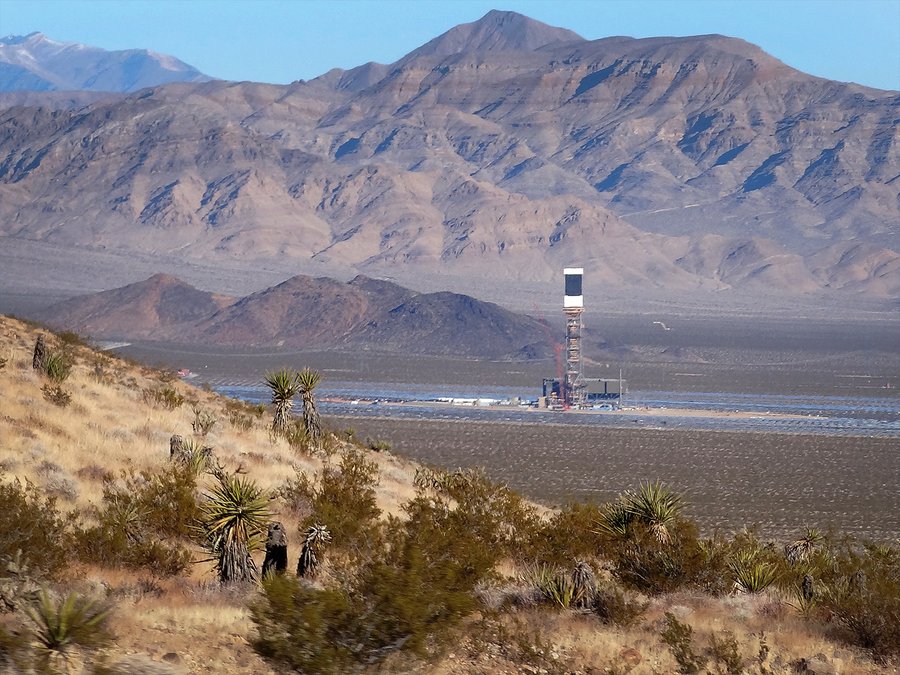
Answer: PG&E, at least in the case of the world’s largest bird fryer on five square miles in San Bernardino County near a wide spot in the road known as Ivanpah.
The California Public Utilities Commission was formed to supposedly make sure consumers were protected against the worst impulses of corporate concerns controlling everything from retail electricity sales to telecommunications.
Over the years it has, with a large degree of accuracy, been more of a lapdog for the utilities it regulates than a watchdog for consumers.
Now apparently it kowtows first and foremost to the creature from the “green” lagoon — or that cesspool — better known as Sacramento.
The CPUC on Dec. 4 refused PG&E’s request to break its contract signed with NRG Energy as it requested to do so by 2026.
Instead, it will stay in effect until 2039.
By not breaking the contract, energy experts say PG&E customers will be stuck paying a minimum of $100 million more a year through 2039 for electricity from the solar plant built at a cost of $2.2 billion that started operating in 2014.
That works out to $5 a year for every man, woman and child served by PG&E for the next 13 years.
Ok, that’s a little dramatic.
But is it really?
There are 16 million PG&E customers, of which many are commercial accounts as well as users such as schools.
That said, the impact per year on a capita basis for residents who also pay indirectly for commercial and government PG&E bills through goods and services they buy plus taxes they pay will be out $5 per person a year for the next 13 years.
The Ivanpah Solar Electricity Generation Project produces solar energy at twice the cost of current photovoltaic technology.
The 386-megawatt plant uses 350,000 mirrors the size of a garage door to focus the sun’s rays on three 459-foot towers to boil water that creates steam to power turbines.
It is enough to power 140,000 typical households.
Costs have not gone down nor have efficiencies in the technology evolved.
The opposite is true of photovoltaic tech.
The 386 megawatts can be generated and be more effective harnessed using battery pack storage at half the cost.
NRG Energy, for its part, was looking at repurposing the site with photovoltaic tech assuming the CPUC would do the obvious.
The problem is California has created a green monster in its version of the DC swamp, the Sacramento lagoon.
The CPUC, in its decision, indicated taking the Ivanpah plant off line was a non-starter given the need to meet zero emission energy production in California by 2045.
They also fretted about stranding $333 million in assets paid for ratepayers in the form of transmission lines to the remote generating facility in the Mojave Desert National Preserve.
So you understand the math, the CPUC essentially wants PG&E ratepayers already on the hook for $333 million in transmission facilities to spend another $1.3 billion over the next 13 years paying too much for electricity so that $333 million asset isn’t “stranded.”
It should give you an insight to the green-at-all-cost mindset powering the mother-of-all government boondoggles, the California High Speed Rail Project.
Every Californian could sign a pledge never to ride the trains and every economist on the face of the earth could do studies that all conclude it is the ultimate definition of a bottomless money pit, and still high-speed rail will move forward.
After all, one can’t jettison assets that are weighing down households struggling to keep their proverbial financial heads above water that are served by PG&E or send money to “Tax-ramento.”
The original sin, of course, was the CPUC mandating for-profit utilities to meet certain “green energy” benchmarks when there were limited options available and the technology had yet to evolve.
PG&E et al had no choice in the matter.
Besides, the CPUC allows utilities to pass on 100 percent of the cost plus a guaranteed profit pushing 11 percent.
One of the reasons — although not the only one — why PG&E has the highest electricity costs in the continental United States is due to mandates legislators, the governor, and the CPUC mandate with little, if any, regard to consumer cost.
That has forced PG&E et al to enter into solar and wind long-term contracts that end up costing significantly more.
The response of the green-at-all-cost folks?
Stop whining. It’s the cost you are obligated to pay for California being a pioneer in the Don Quixote fight against climate change.
How about a little honestly for a change?
Californians are paying a hefty price for hardcore green ideology based on a climate apocalypse being a reality as early as 2050.
If that is the case, why are the same people who made paying twice as much for solar power a burden PG&E ratepayers have to bear, now act like the real threat to humanity’s existence is affordability?
Two years ago, Sacramento greenies were chirping happily that closing refineries would mean $7 a gas that would force everyone to go electric.
Two years ago, the Diablo Canyon nuclear power plant had to shut down by 2030.
Now those same people are horrified two oil refineries will be closed by April, cutting gas supply capacity by 16 percent and sending gas toward the $7 mark just like they wanted.
They also, thanks to Newsom, blessed a deal to keep PG&E up and running beyond 2030 with a nearly $1 billion deal that will have a large chunk of the cost coming from state taxpayers.
Diablo delivers 10 percent of the state’s overall electric power and 20 percent of its clean power.
How can that be? The same green-at-all-costs folks have been assuring us for the past five years that California is ahead of its renewable energy portfolio goals sans nuclear power.
Now the politicians that implemented the green-at-all-cost strategy in California that is delivering body blows to household finances at the gas pump and via monthly heart attack inducing bills from PG&E are backtracking.
That’s because the green success story engineered by Sacramento channels the Ivanpah solar energy flop.
It’s nothing but a bunch of mirrors and smoke.
But instead of the smoke coming from the smell of thousands of birds flying into the Ivanpah death rays becoming toast, it’s the hole being burnt in the proverbial pocketbook of Californians.
This column is the opinion of editor, Dennis Wyatt, and does not necessarily represent the opinions of The Bulletin or 209 Multimedia. He can be reached at dwyatt@manteca