There’s something new you might learn that could change your perceptions if you venture to the corner of Yosemite and Sequoia avenues — named after two of California’s national parks.
On the southwest corner is the Manteca Museum that is open Sundays and Wednesdays from 1 to 4 p.m.
Although I’d argue it is one of the most robust museums in terms of its collection and displays for a community the size of Manteca and is worth more than one trip soaking up Manteca’s past, that’s not the place that is likely to change your perceptions.
The place is on the southeast corner of the intersection.
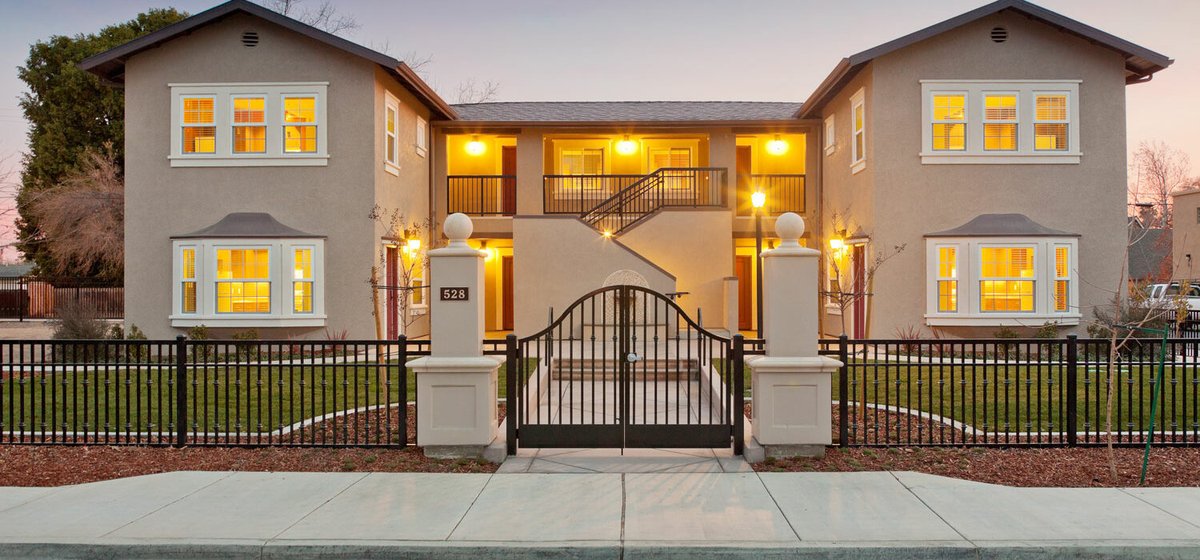
It is a well-kept, painstakingly modernized version of the original structure built in 1919.
As much, it is one of a handful of century-old plus buildings in Manteca that employ more than ho-hum architecture.
More than a few people, especially if they walk by it for the first time, are impressed about how the apartment complex is tidy and quaint.
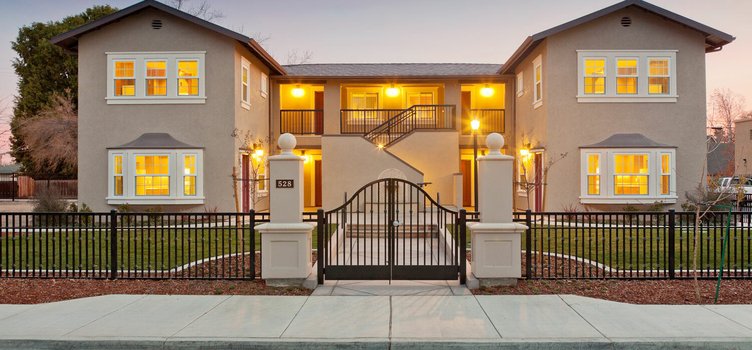
It includes a decorative wrought iron fence with an arched gate between two decorative gate pillars that gives the entry from the sidewalk an estate-like feel.
It has a courtyard with a decorative planter in front of a stairwell that zigs then zags to the second floor.
The stairwell — with enclosed stucco sides that flow into the building’s walls — adds to the look as do the bay windows on the ground floor.
The landscaping is well kept as well as is the playground and outdoor patio area in the side yard,
It’s a nice home, sweet, home vibe.
The makeover was so impressive it earned LDA Partners Designers & Architects an honor award for Excellent in Design from the American Institute of Architects’ Sierra Valley chapter.
Not bad for a small eight unit apartment complex.
One small detail. It is not an apartment complex, per se.
It’s a family homeless shelter.
But it comes across as a very desirable place to live to the point people looking for apartments have knocked on the office door to see if any units are available.
The complex is one of three homeless shelters operated by HOPE Ministries.
The one in the 500 block of West Yosemite is the family shelter.
The others are transitional housing on North Street near Doctors hospital and single mother and children shelter in a former convalescent hospital on Union Road.
The transition housing was provided to the non-profit by Toni and Bob Raymus, the siblings that own Raymus Homes.
The convalescent home was bought by their late father — developer Antone Raymus — who gifted it to the HOPE Ministerial Association.
The building on West Yosemite originally opened in 1919 as the city’s first hospital after the Great Flu Epidemic and closed several years later.
From that time until 1992, it was operated as an apartment complex.
The city, through grants, helped the association acquire the building.
It was done clearly out of a concern to help families that found themselves homeless.
But it is what the city did in 2012 that set a tone that is arguably unique among nonprofit homeless shelters.
The City of Manteca dedicated $1.2 million in redevelopment agency funds to completely gut the structure to bring it up to modern standards so that it would continue serving homeless families for generations to come.
But that wasn’t all city leaders did.
They wanted to preserve — and actually improve — on the late 1910s architecture.
The goal was to make it a building the community would be proud of especially given it was on the city’s key east-west arterial at the time and was a short walk from downtown.
The city — as well as the HOPE Ministries — wanted it to blend into the community.
The message was simple. The community cared about homeless families. And they wanted homeless families to feel they belong.
Having a shelter that wasn’t in disrepair clearly set the stage for it to be used to successfully help homeless families for generations to come
It might sound nutso, but the fact the shelter was renovated as it was on the exterior has likely played a role in HOPE Family Shelter’s success.
Do not misunderstand.
The high 72 percent rate of families being able to secure housing and manage their finances to keep it after typically spending three months at the shelter is primarily the effort of the programming.
That covers for everything from well-being and financial acumen to tackling steps needed to secure gainful employment for those that weren’t working when they arrived at the shelter.
But the tone the shelter sets overall plays a role as well.
That is shown through various groups and businesses that adopt a room at both the family shelter and in the single mom’s shelter.
The annual commitment typically reflects a $3,000 per room investment when it comes to everything from furnishings, bedding, towels, dishware, and such to painting and other touches such as rugs and pictures on the wall.
Some groups even go as far as provide toy chests filled to the brim and bookshelves filled with children’s books.
The message is clear.
Those who end up at the shelter to work to get their lives back on track aren’t discards and are not treated as such.
The city, the community, and volunteers take pride in 528 West Yosemite Ave, and the effort to help struggling families through the auspices of the HOPE Ministries.
It shows not just in the shelter’s almost 72 percent success rate compared to the typical 9 to 15 percent for housing placement but in the quality of the actual physical shelter the community has helped provide.
This column is the opinion of editor, Dennis Wyatt, and does not necessarily represent the opinions of The Bulletin or 209 Multimedia. He can be reached at dwyatt@mantecabulletin.com