Let’s say you have a one-story building.
It’s 50 years old.
Since it was built, construction standards have changed.
The piping and wiring is near the end of its life expectancy
There are old age problems throughout the structure
It is against this background you want to add a second story.
Your plan is to piggyback on the wiring and plumbing that is in place.
Such a move defies common sense.
It also would ignore California standards designed to protect public safety and assure the reliability of construction..
Yet, state lawmakers have put California on a path just like that when it comes to adding onto the electrical grid.
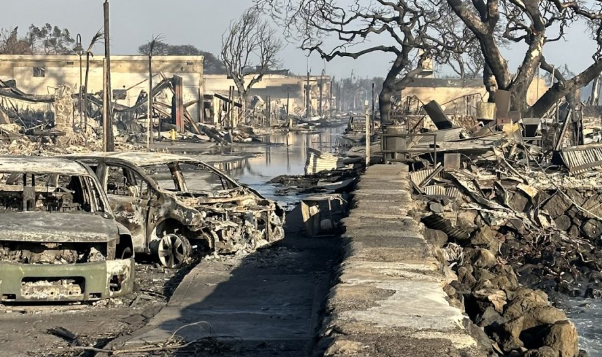
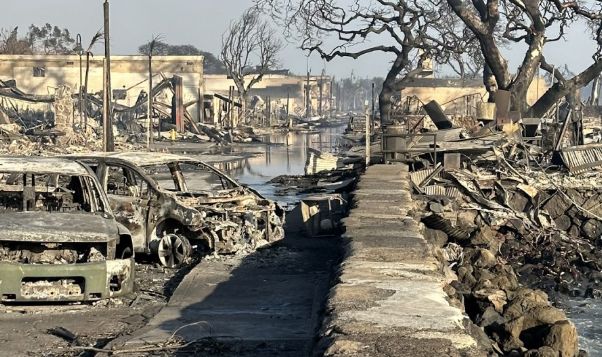
The wildfire disaster in Maui should give pause to those in government power greenlighting the rush to renewable energy pause.
That’s because Hawaiian Electric has been doing the bidding of state policy makers in Honolulu, just like PG&E et al in California are following their masters in Sacramento.
Hawaii has mandated 100 percent of the state’s electricity be renewable generation by 2045.
Sound familiar?
It is also what Sacramento mandated.
Based on per kilowatt hour, electricity in Hawaii is the most expensive in the United States at 43.18 cents per kilowatt hour as of March 2023.
The Aloha State leaves California in the dust.
Caledonia comes in at fifth at 29.54 cents per kilowatt hour.
North Dakota is around 10 cents per kilowatt hour.
Then why, you night ask, are California overall power bills higher than almost anywhere else?
It’s because the actual cost of generating the electricity you use isn’t the entirety of your PG&E bill.
It also includes state mandated programs requiring PG&E to pay what is now above-market rates buying excess electricity from people whom installed solar panels.
It also includes paying back damages from wildfires.
PG&E — which has made more than its share of bonehead moves fueled by a desire of those in the corporate suite to chuck slow and steady profit increases to mirror the pillage investing mentality “disruptive” tech stocks have inspired — can’t do the tango by itself.
It takes two.
In the case of the Golden State, it’s the California Public Utilities Commission.
And the CPUC’s dance instructors are the folks who make the laws up in Sacramento.
Hawaiian Electric launched an aggressive renewable energy strategy — just like PG&E was forced to do — in a bid to meet government edicts.
The main components impacting power bills are:
*heavily subsidizing roof-top solar and batteries..
* entering into long-term contacts for renewable power at elevated prices.
*absorbing the losses of decommissioning fossil-fuel plants ahead of “payback” time for the initial investment that wastes sunken capital.
The last point means Hawaiian Electric — just like PG&E — must deal with paying off investments in fossil fuels that often have 30 to 40 year financing. That, in turn, impacts their ability to re-invest in ongoing basic needs.
Those ongoing basic needs are what can lead to wildfires such as in paradise — whether it is Maui or the Northern California community that carries the name.
It is the same basic needs required not only to transmit replacement renewable power but new renewable power to meet future electricity needs driven by the switch to electric vehicles and emerging technologies surrounding artificial intelligent.
The key to electric vehicles is not taking place in a vacuum.
Emerging technologies such as crypto currency not even on the radar when the government stampede to EVs started, will create power needs not currently anticipated.
The White House, in a fact sheet released in September 2022 on the climate and energy implications, noted the global usage for crypto assets is between 120 and 240 billion kilowatt hours per year.
That is more electricity usage than entire individual countries such as Australia or Argentina.
What this means is simple.
Aging power transmission equipment that is getting blamed for wildfires — and rightfully so — is the same equipment that must handle new power generation needs dictated by growth, the switch to EVs, and whatever other needs come up that we don’t know about yet.
The electricity infrastructure based on numbers think tanks, power industry consultants and the government itself shows:
*More than 60 percent of the distribution lines in the United States have surpassed their 50-year planned life span.
*Power transformers have an average age of 40 years or double their life expectancy
*It will cost north of $700 billion to address existing power grid transmission line in order to maintain reliability.
A Princeton University research paper estimated a $2.5 trillion bill over the next 25 years is needed to replace existing fossil fuel power generation as well as upgrade transmission lines. That is not increasing power capacity — it is replacing existing power sources and replacing transmission lines.
Hawaiian Electric — well aware of wildfire concerns outlined in a report issued by Aloha State bureaucrats a decade back — opted to divert what capital they had into meeting the mandate the state backed up with the proverbial loaded gun.
As for wildfire reduction projects on Maui, they have spent less than $60,000 a year since 2017.
Yes, PG&E and Hawaii Electric made the final call.
But it was a decision they were forced into by utility’s commissions that no longer focus on their core mission — public safety.
Yes, climate change can be painted as a public safety issue,
But when push came to shove, the CPUC pointed the proverbial gun at PG&E and other for-profit power providers to invest heavily in renewables on mandated timelines and let the safety of existing transmission lines go to the wayside.
That $2 replacement hook that failed and had been in use since before World War I on on a Butte County transmission line that led to the deaths of 85 people in the Paradise fire and the overused — in terms of pressure — of the San Bruno natural gas pipeline that killed 8 others is a direct result of the CPUC not doing its duty.
Today, the CPUC is nothing but a conduit for green policies that ultimately sacrifices lives and property the commission was created to protect from corporations with captive customer bases — the little people.
The CPUC — as well as their counterparts in Hawaii — clearly prioritize the green agenda over public safety.
This column is the opinion of editor, Dennis Wyatt, and does not necessarily represent the opinions of The Bulletin or 209 Multimedia. He can be reached at dwyatt@mantecabulletin.com