By allowing ads to appear on this site, you support the local businesses who, in turn, support great journalism.
Manteca didn’t allow Yellow Freight turn city’s future into roadkill for a short term gain
PERSPECTIVE
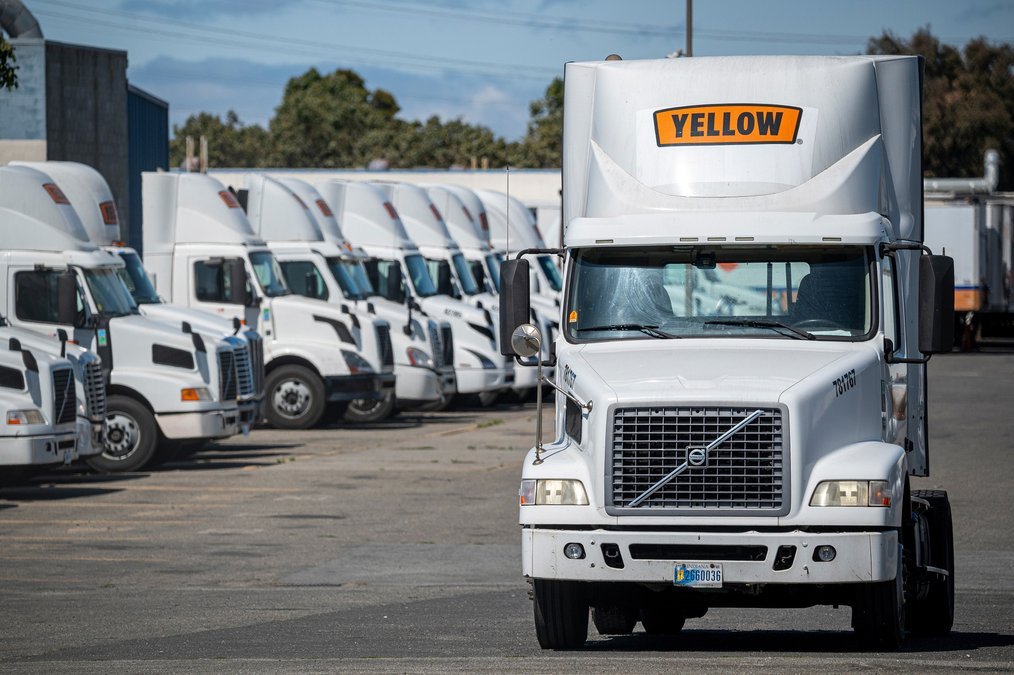
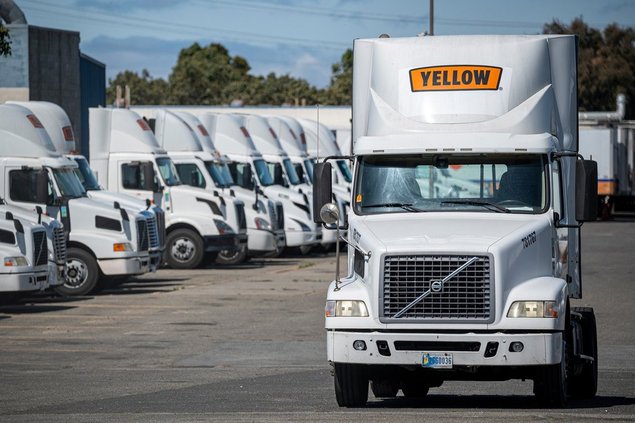
yrellow freight
Yellow Freight built a terminal in Tracy after Manteca said no.

 Some of life’s greatest gifts are unanswered prayers.

The groundbreaking Tuesday for the new Save Mart anchoring the Marketplace @ Main shopping center is proof of such.
It wouldn’t have happened, nor would Manteca south of the 120 Bypass be home to tens of thousands of people and growing, had the largest truck terminal ever built in San Joaquin County been placed 37 years ago kitty corner from where the Save Mart is going at Atherton Drive and South Main.

It was Yellow Freight’s first choice for a Northern San Joaquin Valley truck terminal snuggled against the southeast quadrant of the Main Street and 120 Bypass interchange.

The iconic trucking firm — after proponents lost one of the most brutal political fights in city history that created deep divisions in Manteca that lingered for years — opted for Tracy despite a bid by some city leaders to locate on municipal property where the Big League Dreams complex is today near the Airport Way and 120 Bypass interchange.

It was a decision that literally changed the course of growth in Manteca..

The trucking firm  ended its 99-year run in 2023 with 30,000 people losing their jobs. Some of those jobs cost people in Manteca.

Yellow Freight is more than just a small footnote in Manteca’s history.

It was more than like a whole chapter.

The story starts in the late 1980s.

Manteca had 36,000 residents — 59,000 less than it was today.

And like any Manteca story worth its salt, Yellow Freight was seared into Manteca’s political vernacular not as a proper noun but as an action verb.

There were two distinct factions. It had everything to do with how Manteca was growing. More precisely, it was the direction Manteca planned to grow.

Sound familiar?

The storyline included this well-worn phrase — “jobs, jobs, jobs.” Yes, that is “jobs, jobs, jobs” with quotes.

That phrase was used as a verbal sledge hammer to pound those on the other side into submission. Anytime someone questioned the wisdom of what Yellow Freight wanted at a planning or council meeting, they were greeted with that chant.

The bizarre thing was that both sides wanted  the same thing — more jobs in Manteca.

They just disagreed where the source of the jobs should be located. Same song as today, but a different tune.

Yellow Freight sought out Manteca because of its location. They believed it was the ideal location for a less than truckload carrier to build a freight terminal. It was equal distance from Sacramento, San Francisco, and San Jose — and just a tad longer to Fresno.

Yellow Freight had a specific location in mind.

Keep in mind this was 1989. There was no Walmart in Manteca. There were no tract homes south of the 120 Bypass.

Sierra High wasn’t even a twinkle in the eyes of Manteca Unified School District board members. Manteca had only one McDonald’s. Spreckels Sugar was still a sweet employer for Manteca. Costco wouldn’t become a reality for almost 20 years.

Yellow Freight wanted to build a terminal on the southeast corner of the 120 Bypass and Main Street. That’s right. The company wanted to build a freight terminal in what was to become 12 years later the gateway to Manteca’s ground zero for residential development for the past two and a half decades.

There was no crystal ball. That said, the majority of the council at the time thought it was a bad idea.

Not that Yellow Freight locate in Manteca, but where Yellow Freight wanted to locate.

They believed a better spot was at Airport Way and the 120 Bypass. So, they tried to persuade Yellow Freight to locate a little bit farther down the road.

Yellow Freight threw down the gauntlet.

It was Main Street and the 120 Bypass or they’d hit the highway to Tracy,

The final showdown came. The Manteca City Council vote was 3 against the Main and 120 Bypass site and 2 for it.

Yellow Freight did what it threatened to do. They fled to Tracy.

And with all the squawking about Manteca chasing away good paying jobs, on an answer to a question posed by the Bulletin in 1993, Yellow Freight shared almost 1 in every 4 drivers working out of the Tracy terminal lived in Manteca. It was a 15-minute drive one-way from Manteca.

But reality often doesn’t carry much weight in the world of Manteca politics.

The die was cast. The minority that was on the losing side painted Manteca as anti-jobs at every turn they could.

It caught fire with some outside the city that crossed Manteca off its list of potential locations. They viewed the city as anti-business. But a funny thing. To many other firms, it meant Manteca wasn’t willing to rollover and play dead to get into bed with any employers.

And that’s not a bad thing if you want to grow without turning a city into a sprawling blob.

Manteca’s leaders — and those that supported that majority — had a vision for the future.

The unfortunate collateral damage by the heavy divisive split on the council came less than eight years after the successful recall of three council members. That election tore apart the community.

It was the second wave, so to speak, of the tectonic event that the recall was ended up reverberating through Manteca politics for close to a quarter  of a century.

That meant city staff became overly cautious, even tepid in some ways.

It took almost a full decade after Yellow Freight for the city to get moving on  addressing infrastructure investments. We’re talking the backbone you don’t see. Expanded wastewater treatment plant designed to add on to. Securing surface water. The boring stuff that you can’t see.

Yes, adequate streets are important but they aren’t as critical to a city’s future as being able to flush toilets and have water running out of a faucet.

While all of that is true, the real killer was the constant infighting,.

Every issue in Manteca triggered battles that often flared into all out wars.

Growth forces got their way through the 1990s as city leaders flinched repeatedly at making the hard and decisive calls to avoid triggering a repeat of the Yellow Freight  debacle.

A debacle not based on the firm going to Tracy, but how a fight about how to grow tore at the very fabric holding the community together.

Things were allowed to slip through the cracks.

And while a trio of local developers took a  risk that no bank would touch when they stepped up to stop the closure of Spreckels Sugar from turning into a death spiral and put economic growth on track by converting the shuttered factory into a multi-use development, there was still a huge hole that Manteca had dug itself.

All of that said — and all that it cost — just saying no to Yellow Freight meant  Manteca didn’t literally turn its Main Street into ground zero for trucks.

As such, it allowed the vision that included Woodward Park and surrounding neighborhoods become a reality.

Nothing says “don’t live here” as much as driving by a major truck terminal each day going to and from your home.


To contact Dennis Wyatt, email dwyatt@mantecabulletin.com