It is the ultimate “bad trip” for the American taxpayer.
And once you take the drive, you’ll be asking what kind of drug-induced trip were the people on that came up with a novel way to waste $3.4 million in federal tax dollars.
On this trip, you will pass two areas of ultimate ‘green waste’. One is where trees you zip by at 65 mph ended up costing just over $150 apiece when they were planted.
The other is at slower speeds as you are transitioning from freeway to freeway or exiting/entering one. There the trees you see cost a federal bargain basement price of $100 each.
To enjoy this scenic byway seeded with $3.4 million in 2010, just get on Highway 99 south bound at Yosemite Avenue, merge on to the 120 Bypass, and exit at Airport Way.
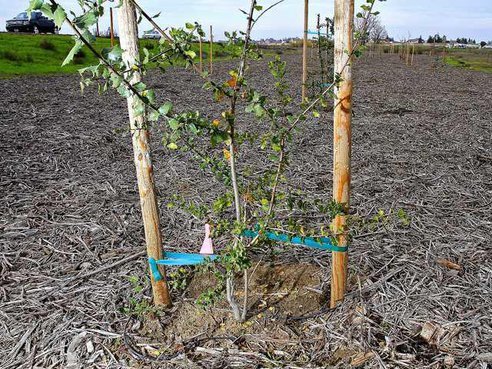
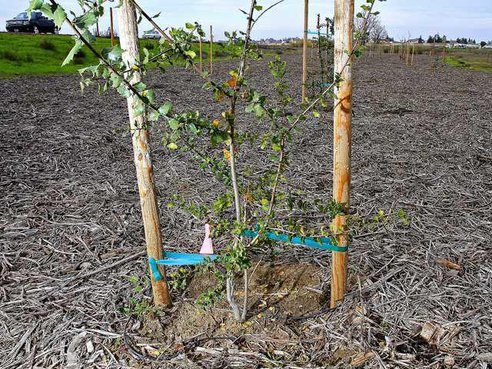
The freeway is lined with 7,100 trees, 3,900 shrubs, and lush grass.
No, I am not on drugs.
That was the promise made back in 2010 by, get ready for the drum roll, bureaucrats and consultants.
It was a heady time for those dispensing federal funds.
And it was a warm up for the Mother-of-All Government Waste Era, federal COVID relief, that was still a decade or so away.
At least back when the American Recovery Act was shoveling money out by the truckload in 2010 in a bid to fight the liar loan pandemic that fueled the Great Recession and the housing market crash, there was at least a sliver of accountability.
We are still learning from the pandemic fiasco that Uncle Sam was like a possessed Energy Bunny on steroids chugging Red Bull when he was trying to stuff as much money into the pockets of Americans that things like accountability weren’t even an afterthought.
To be clear, when the Manteca City Council in place back then took the bite, they did so for all the right reasons.
The goal was to beautify the 120 Bypass and a segment of Highway 99 at no cost to local taxpayers per se. (Of course, local taxpayers are also state and federal taxpayers).
The transportation infrastructure money made available from Washington, D.C., had to follow adopted allocations.
That meant 2 percent of the billions being doled out had to go to highway beautification programs. It could not be used for anything else, period.
There was also a tight application deadline.
Manteca with the help of the San Joaquin Council of Governments was able to identify the money. It was also noted hardly any applications were being made for California’s share of the federal highway beautification money.
So far so good.
What happened next wasn’t.
Sacramento bureaucrats took the lead in designing the landscaping.
What they came up with might as well as have been proposed to be done on Mars.https://www.mantecabulletin.com/admin/pages/add/swagnews/articlepage/38/
They ignored everything from the region’s microclimate to soil conditions.
And they also bought into the fantasy that contracts for the landscaping with a three-year requirement of periodic irrigation by water truck work would be enough to firmly establish trees and shrubs before the whims of nature took over.
In fairness, one elected leader —Steve DeBrum who was on the Manteca City Council at the time — openly questioned two things.
The first, was the rationale that planting 7,100 trees and 3,900 shrubs in the middle of the Central Valley and just assuring they’d be watered for three years even sane?
Try to do the same with an almond orchard or even a sycamore tree in your front yard.
Second, who in their right mind thought twice a week irrigation by a water truck even would be effective for three years?
Long story short, most shrub and tree die out started long before the three years were up.
Then Manteca and the rest of California entered a sustained string of drought years.
The most oversold and undelivered landscape masterpiece likely in Caltrans history was the “urban woodlands” proposal for 1,400 trees in the “sub-project” involving the Highway 99 interchanges at Yosemite Avenue and the120 Bypass.
The Bypass/99 interchange project was off the hook when it came to disconnecting from reality.
It envisioned and elaborate layering of trees.
Redwoods would be in the back with various autumn-color friendly tree species next, and then a selection of native trees, before flowing into smaller ornamental-style trees.
One bureaucrat even predicted as the urban woodlands planted within the interchange matured, it would become a tourist attraction of sorts as a “scenic byway.”
They could have used proven trees such as California peppers as well as a host of valley oak species and such and had what semi-resembled a woodland.
Keep in mind thick woodlands didn’t ever exist in the valley expect near rivers.
And trees near rivers or creeks and elsewhere survived because they could go from April to October without barely a raindrop or even measurable moisture in the air.
The project did involve hydro seeding long stretches along the freeways with grass.
After one year with the aid of water truck irrigation, the only thing that flourished was weeds.
When you take that drive, keep one thing in mind.
Perhaps less than percent of the shrubs and trees you will see today were the result of the $3.4 million the federal government poured into the project.
Most are native, imagine that.
And no, the tall trees on the south side of the 120 Bypass between Union Road and Airport Way are not courtesy of what was called Obama Bucks at the time. Mother Nature provided them at no cost to taxpayers.
An unintended consequence was addressing the affordable housing crisis in a round-about way.
A number of the shrub plantings that survived eventually became the anchors for illegal camping by homeless just yards from freeway traffic whizzing by at 65 mph.
This of course led to countless clean up endeavors that included severe trimming or removal of the planting project.
Manteca has perhaps 250 trees and shrubs out of 10,000 still alive 15 years after the $3.4 million expenditure.
That comes to $13,600 apiece.
When asked about it five years later, a bureaucrat said you had to look at it based on the jobs it created and then you realized it accomplished its goal.
Kind of sounds like the rationale Sacramento is using these days to justify another “transportation endeavor” they dreamed up and engineered — the California High Speed Rail Project.
This column is the opinion of editor, Dennis Wyatt, and does not necessarily represent the opinions of The Bulletin or 209 Multimedia. He can be reached at dwyatt@mantecabulletin.com