Obnoxious, as well as excessive noise, is in the ear of the beholder. Or is it?
Manteca officialdom is trying to determine whether the live bands at the city’s official Park-a-Palooza earlier this month were too loud after receiving a citizen’s complaint.
Yes, there is the little detail about people intentionally buying homes near Woodward Park or even churches and schools.
But then there is the ink that is printed on what might be the most worthless paper in Manteca, the municipal code.
More specifically, it is the section regarding public peace, morals, and welfare.
Guess what one of the items it deals with?
Noise.
Guess what rarely gets cited or prosecuted?
Noise.
Guess what is impossible to enforce?
Noise.
Let’s start with some perfunctory language.
Between the hours of 10 p.m. and 8 a.m. one is not supposed to hear a radio, a band practicing, stereo speaker blaring or the noise of someone working on an engine when they are standing at a property line, and in some instances, the public right-of-way.
Now let’s go to 2019.
In the middle of PG&E turning out the lights every time the wind whips up in dry tinder conditions, there was a rush of people running out and buying emergency generators.
The city, when there 60 applications for installing emergency generators at city hall, a previous council adopted decibel limits for such devices.
The limits was set at 76 decibels.
At the time, it referenced acceptable residential noise levels couldn’t exceed decibel levels of 60 decibels between 7 a.m. and 10 p.m. and 50 decibels between 10 p.m. and 7 a.m.
So does the city enforce those rules?
They will tell you the act on citizen complaints.
Fair enough. No one in their right mind believes Manteca has the resources to “pro-actively” to nab every stop sign runner in Manteca or enforce 90 percent of the municipal code, let alone noise violations.
And let’s be clear.
Manteca Police, when they are available and not on a higher priority call, do respond to noise complaints.
In most cases, they issues a warning. And in most cases, people comply.
This brings us to the burning question: Does Manteca have equipment that would allow them to actually enforce their ordinances? If so, do they use it?
Let’s say they did.
Do they have the manpower to do so?
Better yet, is there a political will or, perhaps more appropriate, the insanity to enforce the ordinances as written?
Does Manteca want noise cops?
Be careful for what you ask.
Let’s go 3,000 or so more miles to the east in Newport, Rhode Island.
The city is on the next frontier of automated traffic enforcement and, by default noise pollution, if you will.
Red light cameras are old hat. Speed cameras are catching on in states that allow it.
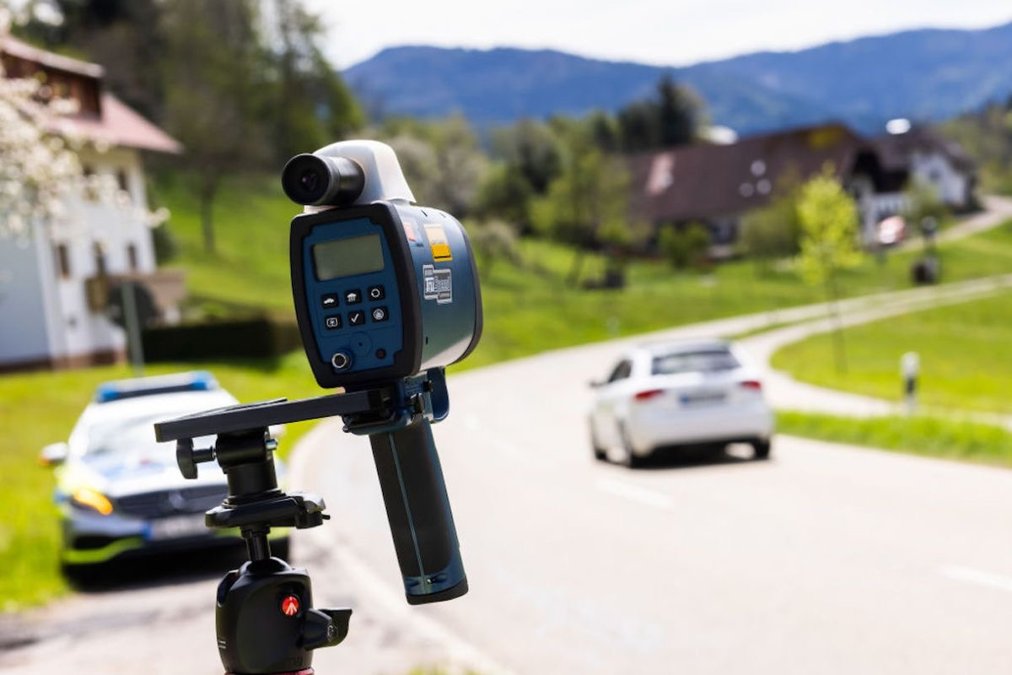
But the new cutting edge is noise cameras.
Newport has a decibel limit of 83.
To give you an idea of what that is, sounds that fall into the 80 to 89 decibel range are gas powered lawn mowers, window air conditioning, heavy traffic, and a noisy restaurant.
A sports crowd or rock concerts fall between 120 and 129 decibels, stock car races 130 decibels, and 140 decibels for a gun shot or siren at 100 feet
Newport, and other cities, use noise cameras to go after revving engines, honking horns, ear-splitting mufflers, and blaring stereos.
Newport gave each of their police officers hand held monitors. They were virtually ineffective
The city is using two noise cameras on loan from Sorama.
They connected them to license plate readers and were then placed on portable trailers. It uses a 65-microphone array that, based on what Newport officials have said, can detect the origin of the offending sound.
Now let’s circle back to Manteca.
The city ordinance is more specific about residential noise, regardless of the fact it can never be robustly enforced.
As for concerts at Woodward Park, the only “restriction” the city places is hours that amplified sound can be used.
Is it practical to place a decibel limit on concerts?
A person who is pragmatic — and honest with themselves — will say no.
Will the city buy the necessary equipment to monitor noise?
Perhaps.
Will the city dedicate the manpower to use said equipment on a routine basis?
There’s a more appropriate question.
Do you want the city to go down such a path?
Ever play your music too loud?
Ever rock out at a park concert?
Ever rev your engine?
Red light cameras are reasonable as they address a clear public safety issue.
So do speed cameras.
This year, San Francisco installed 33 speed cameras as one of six select cities in California allowed to do so under Assembly Bill 645 signed into law last fall to allow a pilot program.
Los Angeles is installing them next year with San Jose, Oakland, Long Beach, and Glendale to follow.
They can be deployed only on city streets to target speeding in school zones or sections of roadway with an established pattern of drag racing or crashes.
As for noise cameras, California is in the middle of a pilot program in six cities that uses them to issue tickets to cars that exceed the 95 decibel level and motorcycles that break for 80 decibel ceiling.
One was Sacramento that ended a 12-month pilot program this year.
Whether they go forward to the point they are allowed universally in California has yet to be seen.
But vehicle noise is, by far, much more prevalent than concert noise and more instructive overall.
Most people might likely agree excessive exhaust sounds should be targeted along with car sound systems vibrating other vehicles windows, although they aren’t included in the pilot program.
But going after concerts?
Or aggressive targeting of general residential noise?
Does anyone really want to go that route?
Stay tuned.
But you might want to keep the volume down, just in case.
This column is the opinion of editor, Dennis Wyatt, and does not necessarily represent the opinions of The Bulletin or 209 Multimedia. He can be reached at dwyatt@mantecabulletin.com