It was late January 2007.
Jerry McNerney was the newly minted 11th District representative in Congress having defeated Richard Pombo more than two months earlier.
His aides had arranged a press conference at one of the two Big League Dreams sports complex restaurants in Manteca.
McNerney, with an engineering background, had a reputation as an environmentalist, having served as an alternative energy consultant to PG&E and the likes and working as CEO of the Horizontal Axis Wind Turbine Power startup prior to his election.
I happened to be getting out of the 2006 Ford Escape hybrid I was driving at the time as McNerney and his aide pulled up in a boat of a full-sized Chevrolet Impala.
I couldn’t resist making an off-the-cuff remark that it was ironic for someone who ran heavily on environmental concerns was driving a large car that wasn’t exactly the epitome of environmentalism.
His aide was quick to note it was the vehicle that Pombo had driven and that McNerney would soon by driving a Prius as his official district car.
His first district press conference was dominated almost 100 percent by questions from TV and print reporters about the war in Iraq. President George W. Bush had just started his troop surge the week prior.
I say almost because the question I asked had nothing to do with the war and it had everything to do with a federal water proposal that would have a major impact on San Joaquin County that consisted of the bulk of his district.
It wasn’t a “gotcha question” but it was one that impacted every one of his constituents whether they were a resident using water, farmed, or were an environmentalist concerned about fish flows.
His answer was candid, but unimpressive as he admitted he did not have a lot of water expertise and that he’d “work to get up to speed.”
And to be honest, it was unnerving if you lived in San Joaquin County.
That’s because two thirds of California’s water flows through the Delta and San Joaquin is by far the largest county within its boundaries in terms of land area, population, and farming.
The federal and state governments have an oversized role in determining water flows and such as well as having jurisdiction over levees.
Not having a representative in Congress well versed in water issues and committed to pursuing solutions that take into account local concerns puts San Joaquin County at a huge disadvantage.
That’s because the majority of the state’s DC delegation represents Southern California and coastal interests that have historically worked toward water policies that hurt the Northern San Joaquin Valley region.
McNerney eventually did step up his game, working with Josh Harder and John Garamendi on Delta related-bills in Congress aimed at striking a balance in water policy that didn’t gloss over Delta needs and concerns.
McNerney’s efforts in Congress until the time he left in 2023 when it came to federal water issues impacting San Joaquin County was clearly supportive but it wasn’t blazing any new trails to change the game.
It was simply an extension of the same-old, same-old with someone else leading the way.
Fast-forward to 2026.
McNerney, two months into his second year as a California State Senator, has crafted and rolled out a plan that could effectively change the myopic focus on the tunnel project that is not friendly to the Delta ecological system, will put some of the world’s most productive farmland out of production due to salinity issues, and hurt local cities.
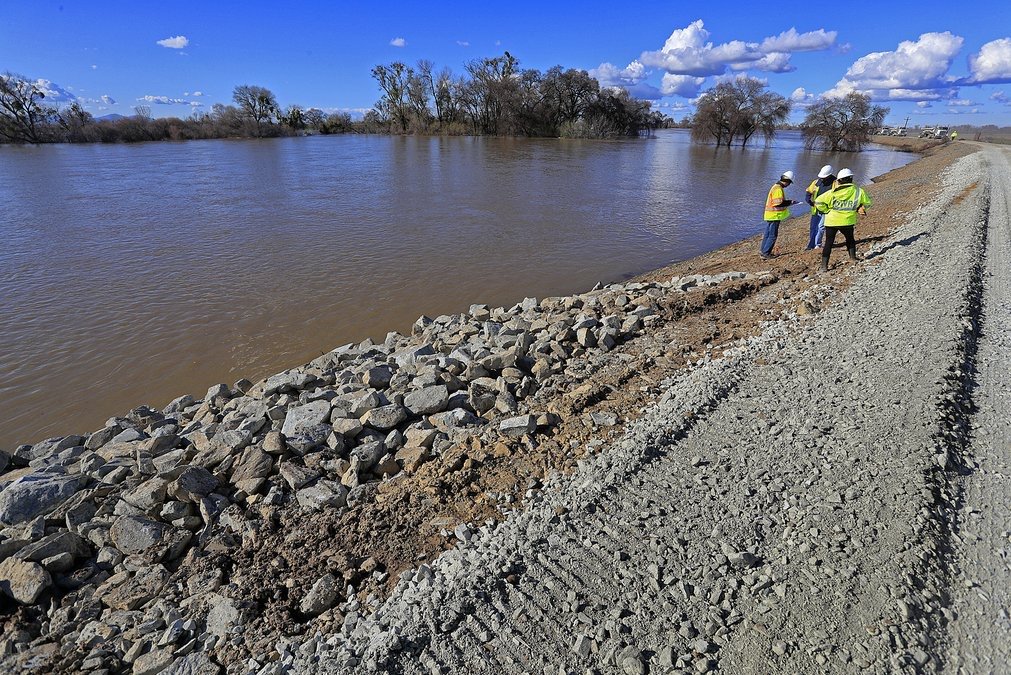
McNerney’s Senate Bill 872 addresses dicey levee stability — a longtime core argument to build a Delta tunnel to help assure water deliveries to 27 million Californians in the aftermath of a catastrophic seismic event.
And it does two other things that the Delta Tunnel project doesn’t do:
uIt addresses subsidence issues that have substantially reduced the capacity of the California Aqueduct by as much as 40 percent in spots such as near Mendota.
uIt gets Delta water users, environmentalists, and 27 State Water Contractors providing water to 27 million people and 750,000 acres of farmland on the same page.
Subsidence issues involving the aqueduct through the San Joaquin Valley imperil water deliveries to the same 27 million people as well as agricultural users.
It directs $300 million annually from greenhouse gas reduction fees slapped on polluters for the next 20 years to protect the reliability of California’s primary water source for decades to come.
That includes:
u$150 million annually to the Delta Conservancy for levee improvements, including projects that restore habitat.
u$150 million annually to the Department of Water Resources for subsidence repairs along State Water Project canals.
The tunnel project would have significant impacts on San Joaquin County given 55 percent of the 1,153 square miles that constitute the Delta are within the county.
It is also where the largest chunk of Delta farm production — 60 percent of $432 million — occurs.
San Joaquin County is the seventh most productive county for agriculture in both California and the United States.
Environmentalists — plus the five counties where the Delta is located — oppose the tunnel project while the 27 public water agencies that compose the state water contractors support the buried conveyance system.
The basic premises driving the backers of SB 872 are:
uSubsidence of water infrastructure is one of the biggest threats to Californians’ water security — more than 200 miles of the State Water Project have been impacted and require significant repairs as soon as possible, or else there is a risk of an 87% reduction in delivery capability.
uThe Delta is the largest and most important estuary on the West Coast. It consists of 1,100 miles of levees that protect farms, ecosystems and freshwater from saltwater intrusion and provide essential flood protection for the region, including for more than 500,000 people, along with farms, businesses, and historic resources.
uMany of the Delta’s critical levees date back to the 1800s and no longer meet the US Army Corp of Engineers safety standards. The levees are at risk of breaching.
The Delta Stewardship Council estimates that necessary levee improvements will cost, in total, about $3.24 billion, but will protect $22 billion in state assets.
Repairs caused by subsidence – the collapse of land due to groundwater over drafting — are estimated to cost $3 billion over the next 20 years according to the State Water Project.
In a nutshell, McNerney’s bill brings opposing water interests to the table to support a viable and more cost effective alternative to the Delta tunnel.
And— if it passes and gets signed into law — it will be a generational game changer in the realm of California water politics.
This column is the opinion of editor, Dennis Wyatt, and does not necessarily represent the opinions of The Bulletin or 209 Multimedia. He can be reached at dwyatt@mantecabulletin.com