What would Joshua Cowell think?
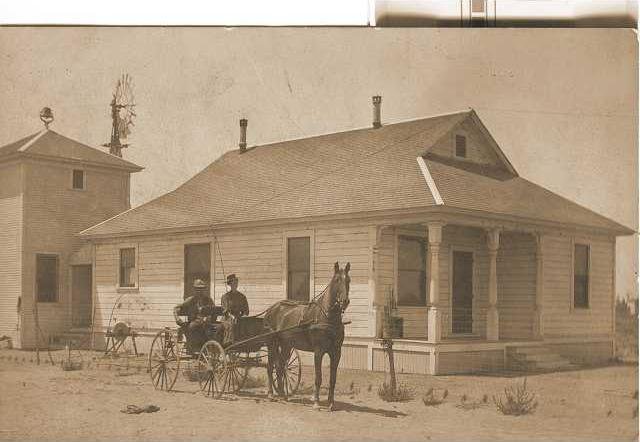
On Thursday, four dozen people gathered in what was once Cowell’s backyard where it faded into the proverbial “south 40” of his farm.
Cowell, for those unfamiliar with him, is the man who was the ultimate power walker.
He literally walked on foot in 1872 across the Sierra from Nevada’s Carson Valley where he had stayed for a spell after a cross-country migration to reach a sandy plain that one day would be known as Manteca.
Land that he secured for his farm in the middle of what was then literally nowhere was where the seeds were planted for today’s city of 97,000 just two years away or so from crossing the 100,000 population mark.
So, who were those four dozen people?
They are today’s management team for the city that emerged from the townsite that Cowell created in all four directions from what is today’s the intersection of Yosemite Avenue and Main Street. His farmhouse once stood where the lobby of today’s Bank of America’s now stands.
That is in addition to five elected council members that are now at the helm of building on what Cowell started in 154 years ago.
Among those was one of Cowell’s successors when he sat down in 1918 to preside over Manteca’s first council meeting as mayor.
Today, Gary Singh is the mayor.
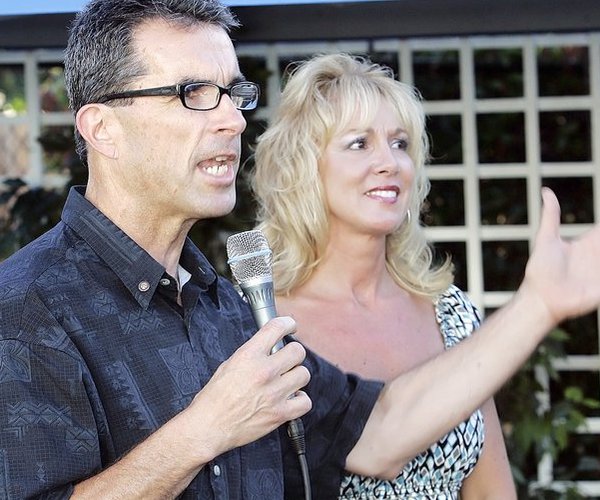
And the meeting he presided over was the Manteca City Council’s goal setting workshop for the upcoming fiscal year starting July 1.
It took place in the Manteca Transit Center built along the same tracks that cut across the land Cowell bought in 1872.
Why the big buildup before getting to the point of this column?
Actually, it is part of the point.
Everything that is in place today and taking shape for the future is being built on the foundation that was put in place 154 years ago.
So, what would Cowell see today if he was able to sit on the front porch of where his house once stood or stepped out his back door?
First, he’d recognize the IOOF Hall he built in 1913 that was the premier downtown landmark of its day.
The odds are he thought it would stand the test of time.
It is why he’d likely be pleased that Manteca is taking an active role in breathing new life into it and the adjoining asphalt as a community gathering place instead of risk seeing it not just become blighted but to have uses that may not allow the IOOF Hall circa 2026 help uplift downtown.
He might marvel at the city’s handiwork that has paved over the dusty Yosemite Avenue and Hogan Road (Main Street), with the most recent upgrades having been put in place over the past five years.
Literally a stone’s throw away to the southeast from where his barn once stood, he’d be pleased to know that passenger train service is returning to Manteca in 2027 with the establishment of the ACE commuter line stop.
Looking to the southwest, he might weigh into the debate about the arch being built this year over South Main Street adjacent to the animal shelter the city is now working on expanding.
There is little doubt he’d favor it given boosterism of the community was clearly something near and dear to his heart as someone who devoted his life to putting Manteca on the proverbial map to draw make residents and development.
And community arches in his day were the source of community pride and identity, something the city wants to foster today.
What might really astound the heralded “Father of Manteca” is what he can’t see from his backyard where the council and city management team met in the iconic transit center that is a far cry from Manteca’s first train station/depot — a repurposed boxcar.
Cowell’s farmhouse, barn, and windmill did double duty for a lot of civic needs in Manteca’s early days.
His parlor, for example, was used for a number of funerals.
The windmill was where the fire bell was mounted that alerted volunteers of an emergency.
Manteca’s first organized firefighter endeavor literally was built around buckets.
And the first fire engine housed at his barn was a 1910s era used Ford pumper that was on a chassis slightly smaller than a 2026 Ford F-150 crew cab.
Imagine what Cowell might think if he saw the $1.8 million tiller truck Manteca took delivery of over a year ago responding to a fire.
Then there are the things he can’t see.
As Manteca grew, so did its problems with the disposing of wastewater done via “pits” or primitive septic systems.
It got to the point it was imperiling the city’s groundwater supply that was critical for drinking.
The first “wastewater treatment” system consisted of pipelines that took raw sewage by pipe to the west of town where it was spread across farmland.
As to the location of the city’s land disposal system that would give today’s state water quality control officials massive coronaries, there is a reason why the grass is so green at the municipal golf course.
Today, the city operates a wastewater plant that returns treated water to the San Joaquin River that is significantly cleaner than the water it joins.
Manteca is also in the middle of tweaking the plant to increase its current capacity while proceeding with engineering work for a major expansion.
Manteca has come a long way in the past 108 years since the successful incorporation vote to address basic needs that individuals acting alone can’t do.
And the basic need that spurred Manteca’s incorporation was heath concerns connected with the need to put in place a wastewater treatment system.
Cowell was always looking forward to the future.
He had active roles in housing development, retail growth, establishing a bank, promoting business, and organizing community groups that did everything from working with youth to putting in place those that address social interaction among residents.
In that sense, what “Team Manteca” was doing Thursday was simply an extension of what Cowell started in 1872.
This column is the opinion of editor, Dennis Wyatt, and does not necessarily represent the opinions of The Bulletin or 209 Multimedia. He can be reached at dwyatt@mantecabulletin.