Are Manteca residents really upset about the fact there are 10 more gas stations in various stages of the entitlement process that could be added to the 29 existing fueling stations?
Or was the direction to staff by the City Council to research and present options for them to consider adopting a possible gas station moratorium simply a knee jerk reaction to incessant whining on social media?
Gas stations, in the world according to social media malcontents, are convenient targets because they aren’t coming with a Winco, Trader Joe’s, or an insane fantasy of a Cheesecake Factory for a market like Manteca.
It is why everyone needs to take a deep breath.
And in doing so, do they really back a moratorium or are they frustrated Manteca doesn’t have such and such or they don’t want them in certain areas.
You will notice those that control California up in Sacramento that like to portray policy decrees that they say are at the forefront of global climate activism have never dipped their toes into the issue of a statewide gas station moratorium.
Clearly the reaction to gas stations seemingly multiply like jackrabbits on the sandy plains of Manteca did a century ago that devoured row crops isn’t an overwhelming concern about climate change.
That is not the case in Novato, a city of 52,000 in the North Bay county of Marin.
Novato in 2022 followed the lead of the nearby city of Petaluma that was the first in the nation to ban new gas stations.
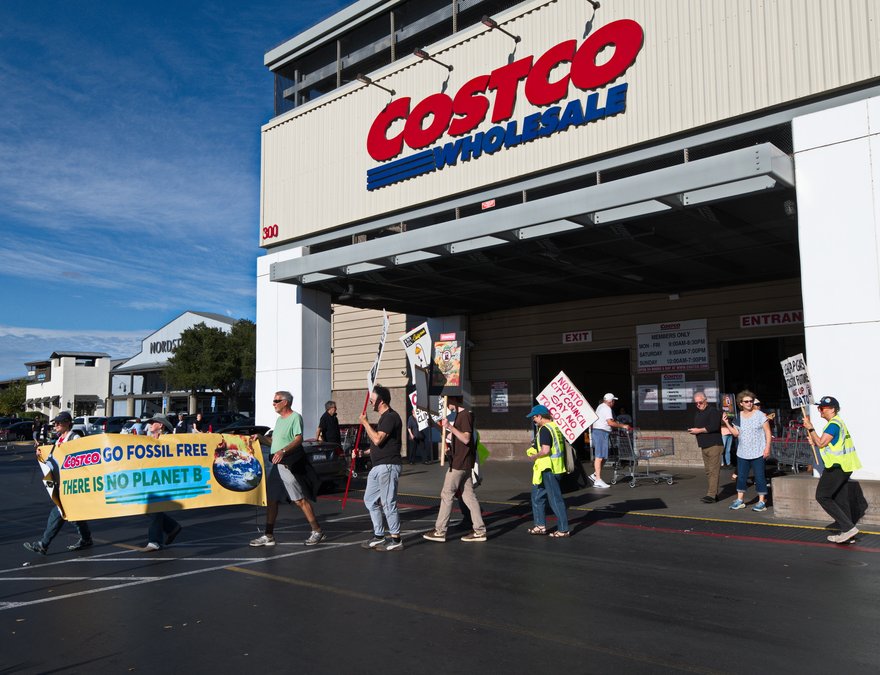
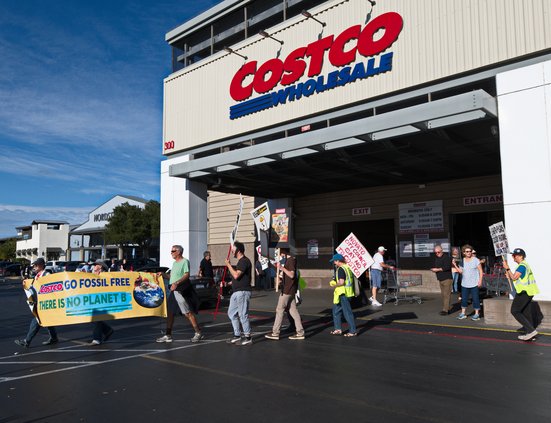
Costco is in the process of trying to move forward with 14 fueling stations they had approved by Novato prior to the 2022 ban going into effect.
That isn’t sitting well with a large number of Novato residents.
They have been fighting tooth and nail to find a way to stop Costco from proceeding.
By contrast, besides social media squawking, Manteca residents seem to be about as interested in a local gas station moratorium as they are being selected to serve on a jury trial for an insurance fraud case expected to take 15 weeks.
Odds are if you mention the words “the city’s climate action plan”, the vast majority of Manteca residents won’t know what you’re talking about.
That’s not the case in Novato.
Residents there quote that city’s climate action plan as it were the green equivalent of the holy bible.
They could care less about the rights Costco has to install the 14 fuel pumps that the courts have determined can’t be taken away retroactively.
They see it as a betrayal of Novato’s state-mandated climate action plan to achieve carbon neutrality in California by 2045.
And perhaps it is.
But that is not the way the lack of clamor is playing out about a gas station moratorium in Manteca.
Novato and Manteca, on the driving issues behind the idea of gas moratoriums, are as different as Death Valley and Yosemite.
And the communities are as different as the San Francisco Bay Area and the Northern San Joaquin Valley.
Based on 2023 Census Bureau, Novato’s median house price of $1 million with a median household income of $112,193.
Manteca, on the other hand, had a medium house price of $561,000 with a median household income of $94,718.
Another tidbit of information: Anti-gas station advocates cite data that shows 40 percent of the cars in Novato are electric vehicles.
Novato is also on one of the most robust commuter rail lines in California — SMART or Sonoma-Marin Area Rail Trail.
Last year, the 45-mile commuter line has over 1 million riders or in excess of 4,500 boardinghouse every weekday.
There clearly is a different mindset. Perhaps Manteca will get there, perhaps it won’t.
So then, what should Manteca do?
Drop the moratorium talk.
Instead, focus on the real problem.
It can be described in three words: Location, location, location.
People in Manteca are not wild about gas stations being in neighborhoods or next to homes.
Clearly, it is people in neighborhoods who bought homes next to vacant parcels zoned to allow them and not those buying homes next to existing homes.
That is the case for 4 of the 29 existing gas stations in Manteca.
But are they against gas stations at interchanges surrounded by commercial enterprises or perhaps a truck at stop at a future interchange such as the proposed one at Roth Road and Highway 99 designed to access a planned major industrial area?
The right solution for Manteca is to change the zoning codes and add language about how close a gas station can be built to housing.
The wrong solution is to adopt a moratorium with an asterisk.
That asterisk, as some on the City Council have suggested, is to have a loophole that would allow for an annual review on the proposed gas station moratorium.
Nothing tells the retail world that a city is open for business than slapping a moratorium on business.
After all, gas stations today perhaps fast-food places, supermarkets, car washes, neighborhood grocery stores, convenience stores, coffee shops, and used car lots tomorrow.
Manteca’s current elected leadership, with the exception of Councilwoman Regina Lackey, didn’t view gas stations as an imminent threat to the health and safety of Manteca residents and contrary to state mandates as Lackey pointed out when they adopted the climate action plan update in November.
Staff said delaying the climate action plan’s adoption wouldn’t be cool to do given the time put into it and the pending state deadline.
They even suggested a gas station moratorium could be considered in the next city climate action plan update scheduled for 2030.
Then less than 20 days later in December, all of a sudden nine proposed gas stations in the queue became a critical matter that the council had to start giving serious consideration to putting a moratorium in place.
Perhaps the climate change that is on everyone’s mind in Manteca is political.
This column is the opinion of editor, Dennis Wyatt, and does not necessarily represent the opinions of The Bulletin or 209 Multimedia. He can be reached at dwyatt@mantecabulletin.com