Governor Gavin Newsom is coming after gas tax money that helps fund street repairs in Manteca, Ripon, Lathrop, and all other California cities.
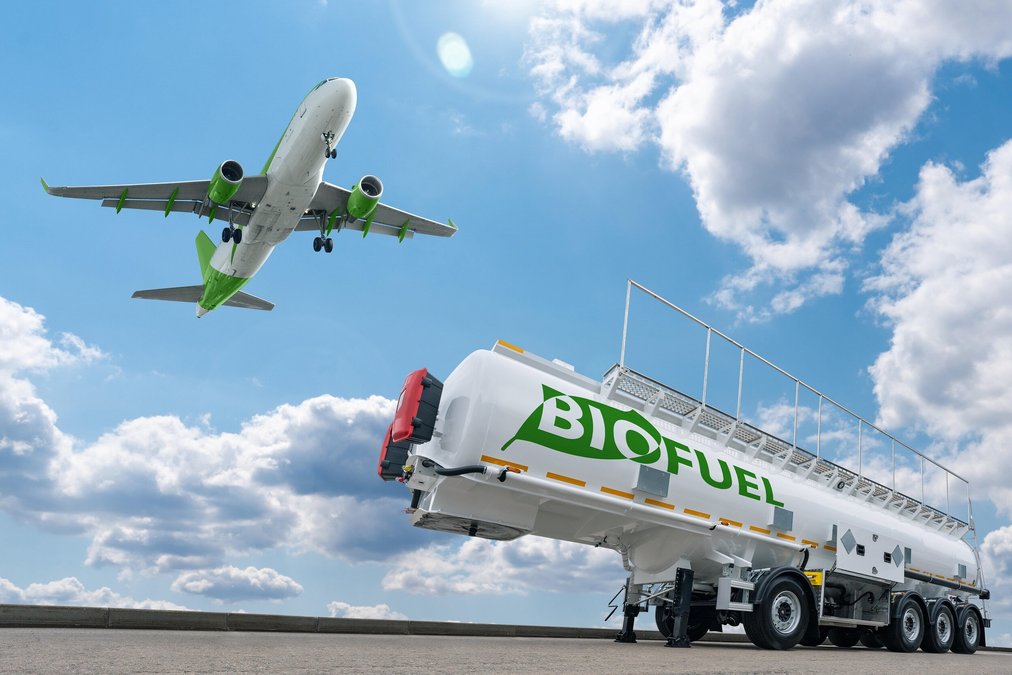
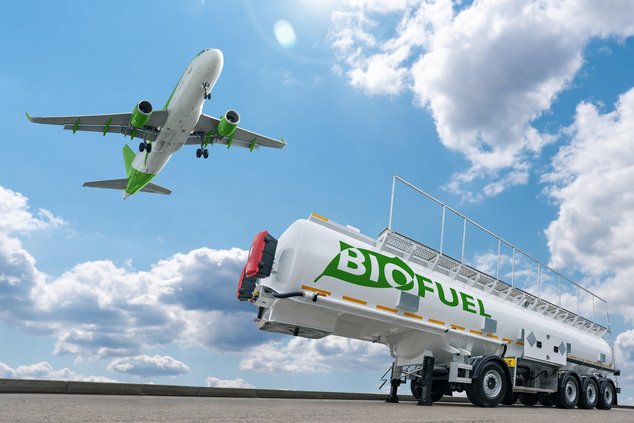
He wants to divert gas tax that is earmarked for local streets to fund the production of extremely expensive jet biofuels by showering oil companies with generous credits that would make Daddy Warbucks come across as a miser.
The non-partisan legislative analyst warns Newsom’s estimate of the credit cost of $165 million to $300 million is about as accurate of the original claim high speed rail would connect Los Angeles and San Francisco for $32 billion.
And economists at the University of California at Berkeley — an institution that is friendly to green initiatives — have concluded the move will ultimately increase gasoline prices in California.
Worst yet, Newsom’s plan would tank upwards of 75 percent of the state’s revenue on diesel.
That’s because mandating airlines that fuel up at California airports to use biofuel that is so heavily subsidized by the state would reduce diesel use by 75 percent, the amount of “the diesel fuel pie” aircraft use.
That, of course, is exactly what Newsom wants.
Although it might not be his intended message, it means he could care less if less potholes get fixed on city streets or more local roads deteriorate.
Forcing the use of less fossil fuel no matter the cost allows a presidential candidate crisscrossing the country in jets look like the green savior to voting blocks that Newsom needs in 2028.
And he can do it on the back of Californians who are about as likely to give a Republican running for the White House their collective electoral votes in 2028 as they will be able to ride high speed rail from SF to LA in 2032.
How devastating of a hit would Newsom’s latest gargantuan green subsidy program be for the state’s finances?
You likely know the state gasoline excise tax is 61.2 cents per gallon.
The diesel excise tax is 46.6 cents per gallon.
It isn’t as much, right? Wrong.
There is a special statewide diesel surcharge tax on every dollar of diesel pumped on top of the base tax rate of 7.25 percent that is even higher in jurisdictions such as Manteca and Lathrop that have imposed special local sales taxes.
It is effectively a minimum 13 percent sales tax on diesel fuel statewide in addition to the 46.6 cent per gallon diesel excise tax.
Apply that 13 percent sales on a purchase of 100 to 200 gallons of diesel and you might get an inkling of the financial pain independent truckers and trucking firms are under to keep goods moving to market in California.
Newsom’s biofuel proposal doesn’t affect truckers. But the financial hit they are taking should give you an idea about how much revenue the state takes in from aviation fuel sales that are categorized with diesel fuel.
Proponents argue that the pain Newsom’s plan would create — whether it’s his lowball of $300 million or the $1 billion number other economic analysis project between late 2027 and 2035 when the credit would be in effect — is minuscule.
That’s because it would be spread across the pocketbooks of California’s 27 million drivers.
However, experts contend Newsom scheme is not cost effective in terms of how much green benefit would be gained from the dollars spent.
That’s because price of sustainable fuel at West Coast airports this week was $10.20 a gallon versus conventional jet fuel at $5.48 a gallon.
It’s a gap that’s twice the price of conventional jet fuel that Newsom’s proposed credit would be subsidizing if it were in effect today.
However, that is not an accurate comparison.
Conventional jet fuel before the current Iran conflict was right around $2.50 a gallon.
Based on that, biofuel for jets is basically four times more expensive.
A lot of green advocates admit that is too high of a price to pay.
Consider the words Christina Scaringe as quoted by CalMatters.
She’s the California climate policy director at the Center for Biological Diversify.
Scaringe points out, “We’re not funding the low-hanging fruit. There’s just a very basic argument that we don’t have a lot of money.”
Scaringe and other environmentalists argue California would be better off subsidizing proven and effective emission cutting initiatives.
Those include electric cars, mass transit, and electric trucks.
Newsom and his supporters for the jet biofuel credits don’t frame the issue in terms of the best bang for limited bucks.
Lawmakers in the California Legislature that like biofuel for jets compare it to wind and solar power when they were in their early stages.
They believe California “must act boldly now” to prop up sustainable aviation fuel.
The idea Californians have to bear the brunt of being on the cutting of green technology just so politicians can have bragging rights is exactly why we are enjoying the highest electrical rates in the continental United States despite having the biggest portfolio of wind and solar power.
Mandates that forced PG&E et al to lock into long-term contacts for green energy before the technology evolved enough to bring down the cost is why we are paying higher for solar power than other states.
Sacramento also has a nasty habit of starting endeavors and then not adequately funding them because they get distracted by a new bauble dangling in front of them they just have to pursue.
High speed rail us one of them.
It is being done by siphoning off money that could have funded mass transit on key commuter corridors up and down the state that could reduce more emissions at a lower cost.
But we can’t do that, can we?
It’s all about political upmanship on the world stage.
Why else does Newsom take trips on jets using conventional fuel to fly to Europe to brag California is a world leader in being green?
Kermit had it wrong.
It’s not “it isn’t easy being green.”
It’s more like it’s expensive as hades being green.
But then again, Californians are playing the frog to Newsom’s role as a political prince.
This column is the opinion of editor, Dennis Wyatt, and does not necessarily represent the opinions of The Bulletin or 209 Multimedia. He can be reached at dwyatt@mantecabulletin.com