Remember the good old days?
Refrigerators were refrigerators and nothing else.
They evolved from old-fashioned kitchen ice boxes — insulated wooden cabinets lined with tin or zinc — that required a 25-pound of ice to be delivered.
Electric powered compression miracles were a real innovation.
So were the advent of ice makers and cold water dispensed through the door.
Ads were found on either TV or billboards or in newspapers or magazines.
They were not on pro team uniforms or T-shirts people pay $35 a pop for the honor to wear as if they were Depression-era human billboards.
The real crap was in the form of junk mail that was no more intrusive than being stuffed in your mailbox and usually went directly into the garbage can.
Today ads are everywhere.
Computer screens, smartphones, texts, and even gas pumps.
And now even streaming firms — that built their business model to lure tens of millions of customers willing to forsake free TV and pay monthly fees in order to view ad free shows and movies — are now rolling out packages with ads for a lower monthly subscription cost.
If you haven’t noted, the first two letters in the word “addiction” are “ad.”
It’s little wonder.
Close to $500 billion a year is spent on advertising in the United States.
If the money is the mother’s milk of politics, then advertising is the drug of choice for tech companies.
You might think nothing is sacred when it comes to tech and advertising.
But then again, you might also think a refrigerator is a refrigerator.
It might surprise you to know Samsung, that prides itself in “smart” refrigerators, proudly made an announcement recently that they were giving those that shelled out $1,800 a pop for their product the option to turn off advertising on their refrigerator.
That’s right. Advertising on their refrigerator.
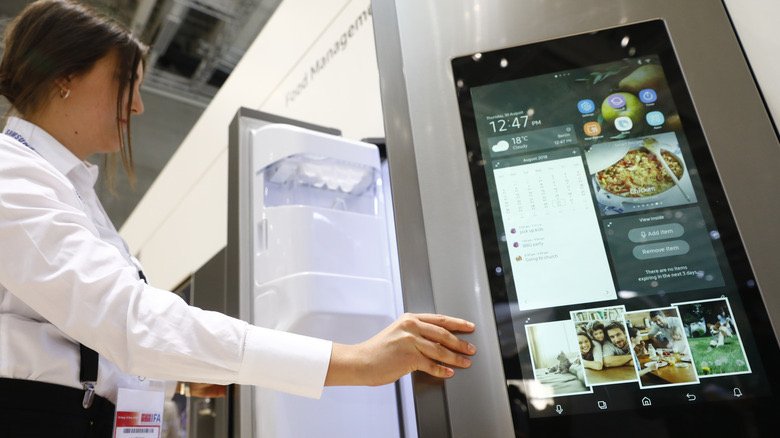
The Samsung model has a touch screen computer known as the “family hub.”
It was sold as a way to scan the internet for recipients, upload family photos instead of cluttering up the door and sides with magnets, call up a calendar, or make a grocery list.
It even channels Bob Barker because it knows what is behind door No. 1 (the refrigerator) and door No. 2 (the freezer).
It can do so thanks to cameras inside that let you scan the contents without opening the door.
Just what American families needed.
No need to open the door and stand there gawking at Uber Eats, leftovers between impromptu science projects, and the week’s offering from Hello Fresh.
Spending $1,800 is worth making sure you’re not nickeled and dimed to death by PG&E by your teen standing for five minutes at a time with the door open trying to decide what to eat.
Samsung’s money grabbers, I mean the corporate suite, weren’t just satisfied making a killing convincing a buyer to fork out $600 or so more than they needed for a device to keep food from spoiling
They decided that wasn’t enough.
They needed to squeeze more out of the turnip, better known as marks.
So, they did what anyone enamored more with Madison Avenue as opposed to the Silicon Valley — they added advertising to the family hub.
And they did what anybody making a living in a world with incessant robocalls, never ending robocalls, and pop-up ads would do.
They made it so ads would appear on your refrigerator door on a 21.5-inch screen and there was nothing you could do to turn them off.
That was in September.
By November, people who were buying the smart refrigerators with the hidden surprise of being able to enjoy advertising while they were in the kitchen to grab a midnight snack were threatening to return them and get another model.
Samsung backtracked.
They made it possible for unsuspecting customers to have the option that their grandparents had which is a kitchen free of advertising beamed to their refrigerator door.
Given the 2026 election is going to apparently be all about affordability, the Samsung folks are missing out on the opportunity of a lifetime to siphon in money by the boatload from politicians.
Imagine politicians reminding you the price of eggs went up to $9.99 on their opponent’s watch when you go to grab a couple of eggs in the morning to crack open for breakfast.
Or perhaps PG&E could target customers with advertising about reducing power use during peak hours by perhaps going with energy efficient appliances minus unnecessary electricity consuming ad-ons.
Then there is the Waymo question.
What’s that you ask?
It’s whether all the fancy bells and whistles will disable the reason you have a mechanical device in the first place as the massive power outage did this past weekend with all the Waymo robotaxis in San Francisco.
Imagine some hacker getting into your refrigerator and turning it off.
There’s also the chance they could take over your screen and convince you to order groceries you don’t need.
After all, anything is possible given Samsung is working with Instacart to prompt you to order groceries via the app when the smart refrigerator using artificial intelligence determines you are running low on certain items.
Of course, Instacart will have it delivered to you at the lowest price possible and Samsung won’t get a cut of the action.
It’s because when you dangle technology gadgetry in front of many consumers today the odds of them being smart about whether the investment makes sense is nil to none.
Call it tech lust.
It is what prompts people to spend between $66 and $499 for a smart toaster that takes more steps to use, doesn’t shorten the time and — compared to most “stupid” toasters for $25 or less — offers no different outcome for whatever you are toasting.
The worst part is a simple process has been significantly complicated which means more things can go on the fritz.
A $20 toaster stops working after five or so years and you buy another $20 toaster.
The $75 smart toaster stops working after five years and if that exceeded the time limit of the $40 extended warranty you were convinced to buy, you will have to spend probably $110 for the next model that has a built-in morning play list.
Appliances that do what they did 20 years ago may not actually be getting “smarter” in terms of their basic functions.
That’s why the razzle dazzle is added by companies counting on new tech lust to blind consumers to the point they might be making unwise purchases.
This column is the opinion of editor, Dennis Wyatt, and does not necessarily represent the opinions of The Bulletin or 209 Multimedia. He can be reached at dwyatt@mantecabulletin.com
Remember the good old days?
Refrigerators were refrigerators and nothing else.
They evolved from old-fashioned kitchen ice boxes — insulated wooden cabinets lined with tin or zinc — that required a 25-pound of ice to be delivered.
Electric powered compression miracles were a real innovation.
So were the advent of ice makers and cold water dispensed through the door.
Ads were found on either TV or billboards or in newspapers or magazines.
They were not on pro team uniforms or T-shirts people pay $35 a pop for the honor to wear as if they were Depression-era human billboards.
The real crap was in the form of junk mail that was no more intrusive than being stuffed in your mailbox and usually went directly into the garbage can.
Today ads are everywhere.
Computer screens, smartphones, texts, and even gas pumps.
And now even streaming firms — that built their business model to lure tens of millions of customers willing to forsake free TV and pay monthly fees in order to view ad free shows and movies — are now rolling out packages with ads for a lower monthly subscription cost.
If you haven’t noted, the first two letters in the word “addiction” are “ad.”
It’s little wonder.
Close to $500 billion a year is spent on advertising in the United States.
If the money is the mother’s milk of politics, then advertising is the drug of choice for tech companies.
You might think nothing is sacred when it comes to tech and advertising.
But then again, you might also think a refrigerator is a refrigerator.
It might surprise you to know Samsung, that prides itself in “smart” refrigerators, proudly made an announcement recently that they were giving those that shelled out $1,800 a pop for their product the option to turn off advertising on their refrigerator.
That’s right. Advertising on their refrigerator.
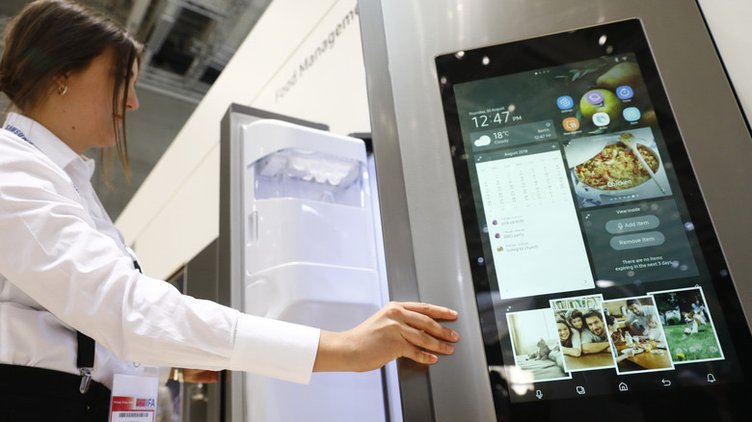
The Samsung model has a touch screen computer known as the “family hub.”
It was sold as a way to scan the internet for recipients, upload family photos instead of cluttering up the door and sides with magnets, call up a calendar, or make a grocery list.
It even channels Bob Barker because it knows what is behind door No. 1 (the refrigerator) and door No. 2 (the freezer).
It can do so thanks to cameras inside that let you scan the contents without opening the door.
Just what American families needed.
No need to open the door and stand there gawking at Uber Eats, leftovers between impromptu science projects, and the week’s offering from Hello Fresh.
Spending $1,800 is worth making sure you’re not nickeled and dimed to death by PG&E by your teen standing for five minutes at a time with the door open trying to decide what to eat.
Samsung’s money grabbers, I mean the corporate suite, weren’t just satisfied making a killing convincing a buyer to fork out $600 or so more than they needed for a device to keep food from spoiling
They decided that wasn’t enough.
They needed to squeeze more out of the turnip, better known as marks.
So, they did what anyone enamored more with Madison Avenue as opposed to the Silicon Valley — they added advertising to the family hub.
And they did what anybody making a living in a world with incessant robocalls, never ending robocalls, and pop-up ads would do.
They made it so ads would appear on your refrigerator door on a 21.5-inch screen and there was nothing you could do to turn them off.
That was in September.
By November, people who were buying the smart refrigerators with the hidden surprise of being able to enjoy advertising while they were in the kitchen to grab a midnight snack were threatening to return them and get another model.
Samsung backtracked.
They made it possible for unsuspecting customers to have the option that their grandparents had which is a kitchen free of advertising beamed to their refrigerator door.
Given the 2026 election is going to apparently be all about affordability, the Samsung folks are missing out on the opportunity of a lifetime to siphon in money by the boatload from politicians.
Imagine politicians reminding you the price of eggs went up to $9.99 on their opponent’s watch when you go to grab a couple of eggs in the morning to crack open for breakfast.
Or perhaps PG&E could target customers with advertising about reducing power use during peak hours by perhaps going with energy efficient appliances minus unnecessary electricity consuming ad-ons.
Then there is the Waymo question.
What’s that you ask?
It’s whether all the fancy bells and whistles will disable the reason you have a mechanical device in the first place as the massive power outage did this past weekend with all the Waymo robotaxis in San Francisco.
Imagine some hacker getting into your refrigerator and turning it off.
There’s also the chance they could take over your screen and convince you to order groceries you don’t need.
After all, anything is possible given Samsung is working with Instacart to prompt you to order groceries via the app when the smart refrigerator using artificial intelligence determines you are running low on certain items.
Of course, Instacart will have it delivered to you at the lowest price possible and Samsung won’t get a cut of the action.
It’s because when you dangle technology gadgetry in front of many consumers today the odds of them being smart about whether the investment makes sense is nil to none.
Call it tech lust.
It is what prompts people to spend between $66 and $499 for a smart toaster that takes more steps to use, doesn’t shorten the time and — compared to most “stupid” toasters for $25 or less — offers no different outcome for whatever you are toasting.
The worst part is a simple process has been significantly complicated which means more things can go on the fritz.
A $20 toaster stops working after five or so years and you buy another $20 toaster.
The $75 smart toaster stops working after five years and if that exceeded the time limit of the $40 extended warranty you were convinced to buy, you will have to spend probably $110 for the next model that has a built-in morning play list.
Appliances that do what they did 20 years ago may not actually be getting “smarter” in terms of their basic functions.
That’s why the razzle dazzle is added by companies counting on new tech lust to blind consumers to the point they might be making unwise purchases.
This column is the opinion of editor, Dennis Wyatt, and does not necessarily represent the opinions of The Bulletin or 209 Multimedia. He can be reached at dwyatt@mantecabulletin.com