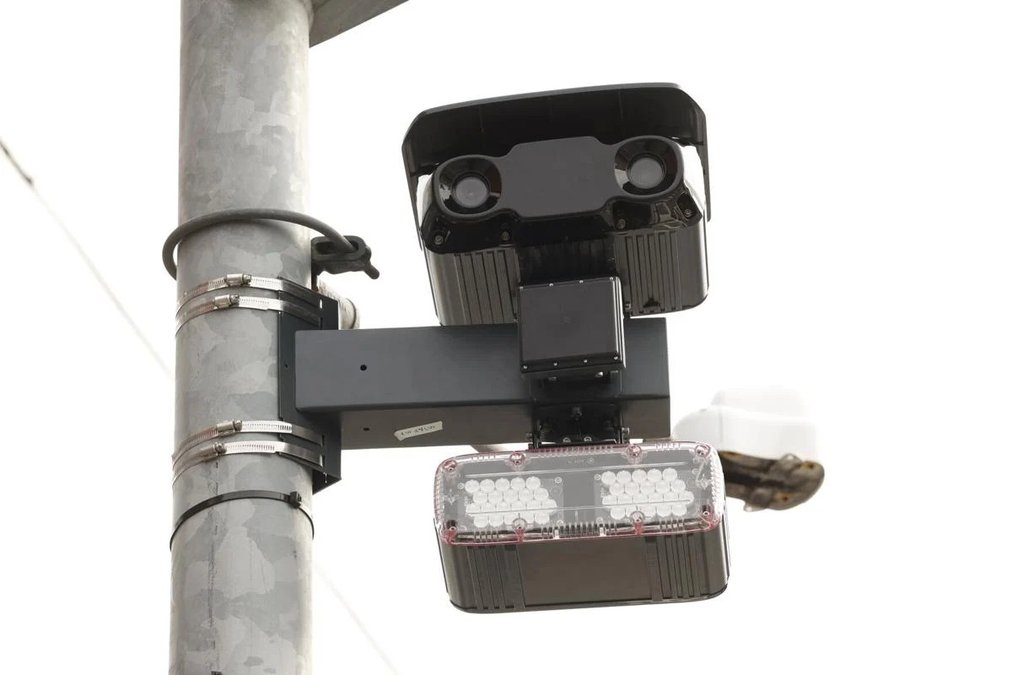
Take a wild stab at how many motorists in San Francisco are caught by speed cameras going 11 mph or faster above the speed limit at 56 select locations on city streets.
It’s more than 1,000 on an average day.
And you thought Manteca issuing 9,825 red light camera tickets at six intersections in less than nine months was insane.
San Francisco is one of less than a dozen cities statewide approved to participate in a pilot program deploying speed cameras on select city streets that meet specific criteria.
The city has speed cameras at 56 locations. During the first 30 days of operation of each camera when courtesy notices and not fines were issued, there were more than 400,000 warnings.
But that is only part of the story.
Under the California law authorizing the pilot program, jurisdictions can only issue speed camera tickets for those caught exceeding the speed limit by at least 11 mph.
This clearly isn’t a “gotcha” ploy.
The speed cameras can only go in particularly dicey locations near schools, parks, commercial districts, senior center, and similar locations or on roadway segments where there is data that demonstrates it is a stretch with a high traffic rate, high fatality rate, or both.
Speeding and red light running rank as the leading contributing cause of traffic accidents in California.
How bad is speeding in California?
In a typical month, the CHP chases down and issues 1,600 tickets for speeders traveling in excess of 100 mph.
People seem to treat speed limits as suggestions.
As for red lights, it’s akin to a matador waving a cape in front of bulls to get them to charge full speed ahead.
Speeding tickets are issued to the registered owners of the vehicle.
Citation amounts were set by the state.
If someone is caught going between 11 mph and 15 mph above the speed limit they get a $50 fine.
If they get caught going 16 mph to 25 mph over the speed limit, it’s a $100 fine.
The fine jumps to $200 for going above 25 mph beyond the speed limit.
For those clocked at 100 mph or more, it’s a $500 fine.
Studies have shown speed cameras deployed in places like Washington, D.C., London, and New York City have led to speeding violations dropping by 30 to 70 percent in the first year.
That, by the way, is the bottom line that will determine whether the speed cameras will go beyond being a pilot program and become a universal tool to make California’s streets safer.
It goes without saying that the flood of tickets the speed cameras unleash will generate a lot of cash.
Some might call it a money grab, but it won’t be so by any measure.
It is why the state law authorizing the pilot program explicitly requires any revenue a city receives after the state and court system takes their cut of the fine and the cost of operating the cameras are covered, can only be spent on traffic calming measures.
That runs the gamut from speed lumps, high profile crosswalks include improvements such as the HAWK pedestrian signals installed at Edison Street and North Main, traffic signals, and more.
Oakland is another pilot program city with 33 speed camera locations.
One of the locations they selected, within a 24-hour period when a survey was done, recorded more than 10,000 drivers that exceeded the speed limit by at least 11 mph.
Naturally, there are those that contend the speed cameras disproportionately affect low-income communities.
Oakland Mayor Barbara Lee dismisses such concerns.
First, she notes the speed cameras don’t discriminate.
Second, Lee pointed out slower speeds benefit minority communities, especially Black residents who are more likely to suffer a serious injury from collisions than any other demographic group.
And as far as the cost of the tickets, those that are low income can ask for a 50 percent reduction in the fine as well as a payment plan.
As an added bonus, besides more effectively snagging speeders, it frees up police personnel to address traffic safety issues at other locations as well as to deal with other crimes.
Speeding clearly is a problem in Manteca.
If you doubt that, ask the Manteca Police that are vastly outnumbered with 83 officers including a dedicated five-officer traffic unit to cover seven days a week, we hours a day.
How bad can it get?
Back in April during the grace period for the red light cameras installed at North Main Street and Northgate Drive, a motorist was caught barreling through the intersection at 81 mph or twice the posted speed limit.
The driver didn’t get a ticket for the red light running due to the 30-day warning period.
And for the speeding, they wouldn’t have gotten a ticket even if it was after the first 30 days as the technology for red light cameras — that includes radar — are not authorized by the state for the purpose of writing speeding tickets.
Wanton speeders, and other motoring outlaws that bring mayhem to our streets, need to be tamed.
If it takes the fair and restrained use of technology allowed only in specific locations and complying with exacting restrictions, so be it.
You could hire 1,000 officers and put them on the streets in Manteca and they still couldn’t be as effective as the red light camera systems now in place at six intersections in the city.
With a little luck, a department with 1,000 officers might come close to issuing 9,825 red light running tickets a year, but it would take $200 million in annual payroll costs.
Technology levels the playing field somewhat.
And, based, on studies where speed radar cameras have been in place for a number of years, they prompt the vast majority of people to be better drivers overall.
It is likely that a small percentage of drivers will never get the message.
In that case, they deserve to pay every cent of the fines they are slapped with for their wantonly reckless and self-centered driving behavior.
This column is the opinion of editor, Dennis Wyatt, and does not necessarily represent the opinions of The Bulletin or 209 Multimedia. He can be reached at dwyatt@mantecabulletin.com