By allowing ads to appear on this site, you support the local businesses who, in turn, support great journalism.
Somewhere along the way in last 107 years Manteca’s 9 p.m. curfew went to the wayside
PERSPECTIVE
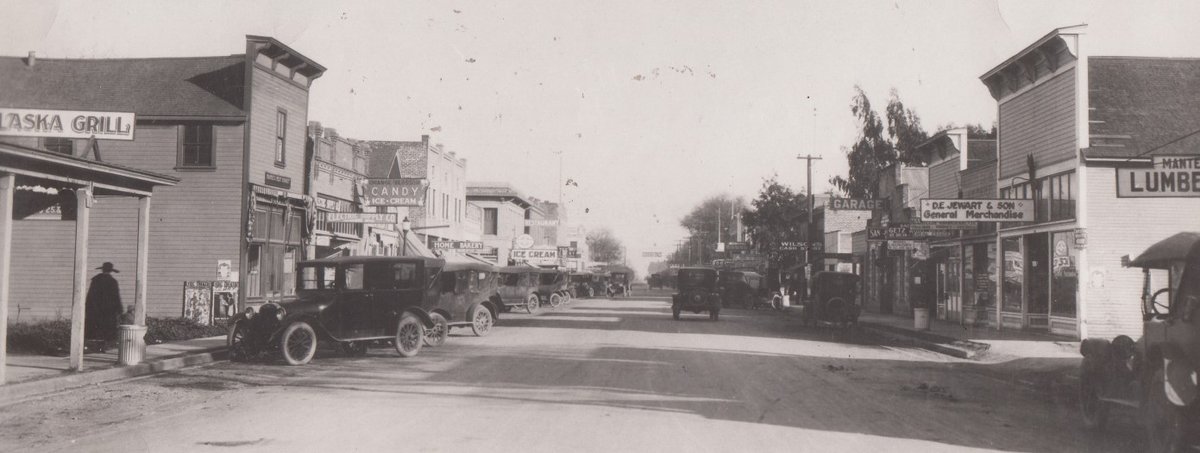
yosemite avenue
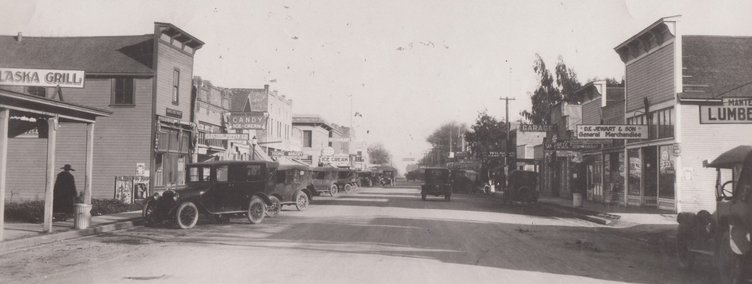
A street scene on Yosemite Avenue looking east from the railroad tracks taken in the 1910s.

Manteca had its first City Council meeting 107 years ago this month.

It came after the community of 200 or so people at the time voted to incorporate on May 18, 1918.

The first meeting on June 11, 1918 came three days after the Certificate of Incorporation was issued by the San Joaquin County Clerk tackled the nuts and bolts of setting a city up.

The rest of the summer literally set the tone for what was to come.

The community wanted and/or needed several major issues addressed that everyone seemed to be pressing the newly minted council to do something about although more than a few did not want to have to pay any more than their minimum property taxes to get them handled.

The issues included:

*Traffic.

*Fire protection.

*The need for a well-maintained sewer system.

*The condition of streets.

*Secured water.

The traffic issue was Yosemite Avenue.

People were irked those driving motorized vehicles were exceeding the 5 mph (that’s as in 1-2-3-3-4-5) speed limit as they were spooking horses and creating dust.

Potholes as we now know them weren’t a problem yet but even packed dirt can have ruts and such.

Congestion was also an issue.

Council members had their ears bent by residents angry when vehicles “parked” in the middle of the street when their drivers ran errands making it difficult to maneuver down Yosemite Avenue. Perhaps the drivers were channeling Amazon delivery employees a century or so into the future.

Intersections were a free-for-all as drivers, or to borrow a term aptly used by former Manteca Mayor Ben Cantu to describe the mentality of many of today’s motorists in Manteca, were in wild, wild West mode.

The initial solutions saw Hogan Road (soon-to-be-rechristened as Main Street) as well as Yosemite Avenue paved the next year.

Stop signs were installed for the first time on all corners.

Signs were posted at city limits warning, unless otherwise marked, that the speed limit was 15 mph on Manteca streets and that motorists needed to “close your mufflers.”

The first marshal (police chief) the city hired was Mario Litchfield.

His original salary was a whopping $100 a month.

Whopping compared to the city attorney that got $30 a month, the city recorder $25 a month, and the city engineer $15 a month.

A couple months into the city’s existence, Manteca hired a woman as an assistant marshal (police officer) to increase the law enforcement payroll to two.

At the same time, the marshal’s salary was changed to half of all he collected in traffic fines.

Either the incentive did not work or it worked too well and people complained as two months later the marshal was back to a monthly salary.

The city passed an ordinance to stop the running of large animals on city streets and removed all hitching posts.

Dog licenses were required; $2 for males and $4 for females.

All city streets were lighted.

Someone was also hired to clean city streets.

Curbs and gutters were also installed.

Fire was a major concern.

Property owners were fined for not promptly clearing their weeds.

A fire bell was installed on the original water tower.

It did double duty as the 9 p.m. curfew siren.

Concerned about inadequate fire protection, one of the first orders of business was to purchase a dozen more buckets for the volunteer fire department.

In 1920, the city bought a new motorized fire engine at a cost of $3,800.

That’s a far cry from the $1.8 million tiller/ladder truck the city would take delivery of 102 years later.

The city at the same time they bought the fire engine in 1920, purchased a Chevrolet pickup for $716.32 for city use in maintaining streets and such.

Outhouses weren’t cutting it any more nor were open sewage ditches.

The city issued $21,406.11 in sewer bonds to put a sewer pipe system in.

Sewage was transported by pipe away from the city with minimum treatment at its destination.

In that first year, the council directed that a city jail be built.

Fast forward to today.

The basic issues are the same.

The City Council has committed to building a new police station for sworn and non-sworn staff whose current ranks number 120 more than Manteca’s first year as a city.

The city attorney makes more than $200,000 a year as opposed to $360 back in 1918.

People speeding at 17 mph has given way to people caught on a red light camera going 81 mph through an intersection.

Loud mufflers have been replaced by boom box style thumper music.

Volunteers scrambling to grab fire buckets have been replaced with professional paid personnel responding with $1.4 million fire engines.

The city is expanding its wastewater treatment system.

Sewage is being treated to the point it is just one process short of being drinkable and the treated water significantly cleaner than the water it joins in the San Joaquin River.

Streets are still breaking down from wear and tear and city leaders are still trying to find ways to repair them.

In city governance, as well as life itself, it is true that the more things change the more they stay the same.

This is not meant to defend or take away from current city leaders.

It is to stress two points.

*Basic needs are why we need cities.

*The problems they were elected to deal with are, at the core, no different than what their predecessors were faced with 107 years ago.

Mayor Gary Singh along with council members Regina Lackey, Dave Breitenbucher, Mike Morowit and Charlie Halford are building on the foundation laid 107 years ago by Mayor Joshua Cowell and council members Andrew Veach, C.E. Littlejohn, F.M. Cowell, and Henry S. Erstad.

And instead of overseeing basic needs of the community for just 200 people that individuals acting alone can’t provide, the current council is addressing the needs and wants of 93,800 more people.                                                                                                                     


This column is the opinion of editor, Dennis Wyatt, and does not necessarily represent the opinions of The Bulletin or 209 Multimedia. He can be reached at dwyatt@mantecabulletin.com