Take a drive down Veterans Street in southeast Manteca.
You will find more than a few homes of 3,000 square feet plus that prompted many people 28 years ago to hang the moniker “McMansion” on the tract housing Atherton Homes was the first to build south of the 120 Bypass.
It’s a nice street in a newer neighborhood.
You will find a mixture of SUVs, Teslas, and pick-up trucks that probably cost 10 times what the owners’ grandparents paid for their first house.
Many of the breadwinners head west across the Altamont chasing paychecks.
Rare are the homes where only one parent works.
More than a few have likely tried their hand at a side gig.
These are not people that rub elbows with Leonardo DiCaprio on his private island or know Sundar Pichai of Alphabet/Google fame on a first name basis.
You won’t find them dining at the French Laundry with Gov. Gavin Newsom but they do partake liberally of UberEats and DoorDash.
They are hardworking Manteca residents with most raising families.
Welcome to Veterans Street, Manteca’s millionaire row.
Yes, millionaires.
How can that be since most likely have combined household incomes in the $100,000 to $150,000 range?
Based on the underlying principle of the proposed 2026 Billionaire Tax Act that is trying to open the door in California by taxing ownership, and not income, they are indeed millionaires.
Such a taxing strategy turns middle class neighborhoods such as Veterans Street and countless similar streets in Manteca and throughout the Northern San Joaquin Valley into millionaire enclaves.
Combine housing appreciation with stocks — think retirement 401k accounts — and even vehicles, and such, and there are a lot of Californians that could be deemed millionaires.
The Billionaire Tax Act is being pushed by the Service Employees International Union-United Healthcare Workers West primarily to pump more money into Medi-Cal.
They are spending $14 million to collect the signatures of 875,000 registered California voters by June 24 to qualify the measure for the November ballot.
Supporters frame it as a “one-time” tax of 5 percent on the wealth of billionaires to generate a projected $100 billion paid over five years.
The money would be split between healthcare (90 percent) and education (10 percent). And it would only apply to an estimated 200 Californians that qualify as billionaires.
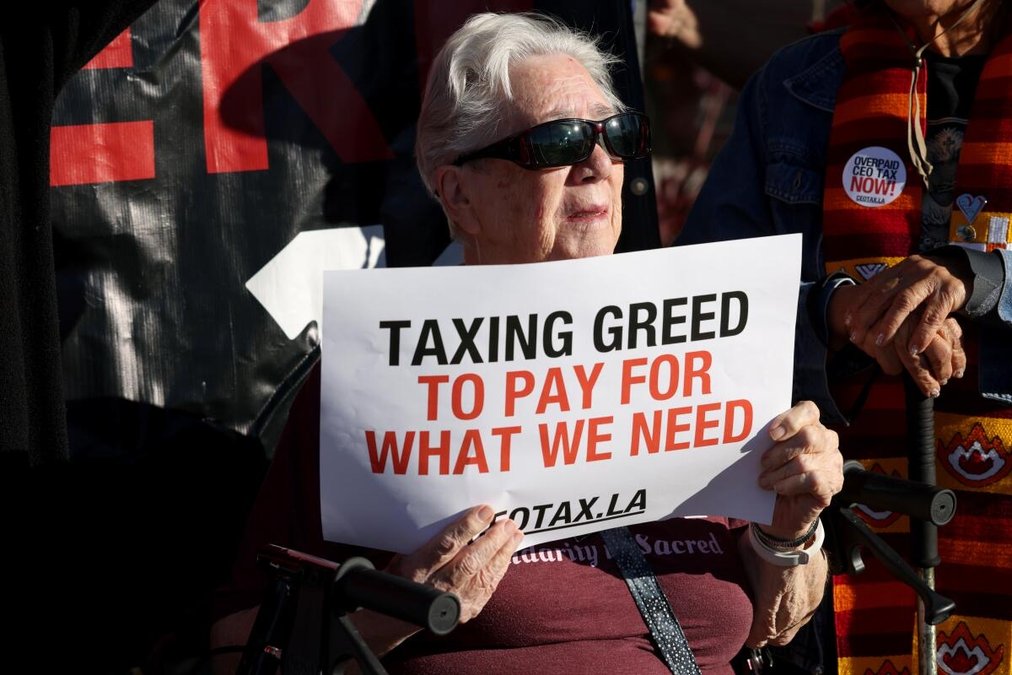
Snappy slogans like “tax greed to pay for what we need” mask the real pitfalls of slicing and dicing the geese that lay golden eggs for a one feast of taxing gluttony.
First, there is what drives Gavin Newsom and more moderate Democratic Party leaders in California such as San Jose Mayor Matt Mahan to sound the alarm.
Credit Newsom for understanding what fills the largest chunk of the general fund coffers of the state he has been running for the last seven plus years.
One percent of the taxpayers in California in any given year pay 40 to 50 percent of the income tax that the state budget’s general fund relies on.
California also already has the highest income tax rates among the 50 states at 13.3 percent.
This column is the opinion of editor, Dennis Wyatt, and does not necessarily represent the opinions of The Bulletin or 209 Multimedia. He can be reached at dwyatt@mantecabulletin.com
Newsom is rightfully concerned that passage would lead to an exodus of sorts of billionaires from California and make others classified as such from setting up shop here.
Billionaires almost all make their wealth from companies that employ people.
But jobs aide, the bottom line is their “wealth.”
When they go to sell stocks such as those in tech concerns that take off into the stratosphere to convert value into cash, the tax on the income swells California’s general fund budget.
The sell off creates surpluses such as the $97.5 million one in 2021 that the state legislature managed to use to spend the state down into a $31 billion deficit within two years.
The billionaire tax act would have the chilling effect of not only reducing the size of future surpluses even if only a dozen or so billionaires load up their Lear Jets and flee from Beverly Hills, but also tax receipts in other years.
Proponents say that wouldn’t happen as they are making the tax retroactive to the start of 2026, if it passes, and it is only a “one-time thing.”
That is those two assertions - given that one the door is open it established precedent - that should concern the “millionaires” on Veterans Street and elsewhere who are not even aware they are millionaires.
Assuming the act is approved by voters and passes constitutional muster, Sacramento is going to have no choice at coming after them in future rounds.
If it is legal to tax wealth of billionaire, rest assured everyone else’s wealth is fair game for taxing.
It is a given even if the “one-time tax” does indeed generate $100 billion, Sacramento will blow through it in no time at all. And unless billionaires are stupid a whole, not very many of them are going to chance sticking around California to take second, third, fourth, and fifth hits and so on.
It means less income tax collected across the board through good, normal, and bad times.
The only option is for Sacramento to set its sights lower.
Now let’s go back to Veterans Street or even Lassen Avenue in the Shasta Park neighborhood built in the 1970s.
Homes are much like stocks. They appreciate in value and add to wealth but none of that appreciation is in the form of disposal cash until they are sold.
A house on Veterans Street bought for $650,000 four years ago has a market value of $900,000 today while a Placer Avenue home bought new in the 1970s has quadrupled in value to $565,000.
Treat that value on paper the same way the billionaire tax treats stocks and other assets ranging from collectibles to tangible assets, and pretty soon commuter havens such as Manteca are jammed full of millionaires.
If you think that those willing to go after billionaires by taxing wealth instead of income won’t start lowering the threshold to satisfy their ever growing appetite to have government providing everything under the sun, then you may want to go back to California taxation pre-1978.
That was when a de facto wealth tax — assessing homes from property tax based on market price even if the homeowner had lived there for 20 years and had intention of moving — spurred a revolt known as Proposition 13.
This column is the opinion of editor, Dennis Wyatt, and does not necessarily represent the opinions of The Bulletin or 209 Multimedia. He can be reached at dwyatt@mantecabulletin.com