Bristle, if you will, but you and I are the reason we pay as much as we do for sewer service.
The pending Manteca sewer rate hike going from the current $43.40 a month in four annual steps to $72.50 by 2029 is not the result of government waste or excess.
It is the result of our collective waste — figuratively and literally — and excess.
Let’s start with 1887 in a place called Medford, Mass.
It was the first city to have a biological treatment system, as primitive as it was, using sand to filter wastewater.
The most technically advanced cities at the time had both open sewer ditches and pipes that carried the No. 1 and No. 2 along with household wastewater and storm runoff through a system that separated solids into a massive pit and sent the untreated liquid sludge into nearby rivers.
By the time 1900 rolled around, there were 60 municipal sewer systems using sand to filter waste. They served 1 million of the nation’s 76 million residents at the time.
Cities up until a few years prior were free to dump sewer water into rivers. They still dumped untreated or minimally treated wastewater into rivers for decades afterwards, but they had to get an Army Corps of Engineers permit to do so.
It wasn’t until 1960 that half of the nation’s population was served by a modern sewer treatment system.
The rest were not necessarily on septic tanks.
We take running water for granted but indoor plumbing was far from universal for much of the 20th century.
As an aside, it wasn’t until my mom was 16 and had moved to town from a working ranch in a remote area of the Nevada County foothills where she walked four miles to a one-room schoolhouse, that she even used a modern toilet.
The reason why this tidbit of information is shared is my grandmother admonished her kids, just as the school teacher did her students, not to put drop any foreign objects down the toilet hole (pit).
The reason was simple. It would fill up the hole quicker.
The No. 2 would decompose to a degree, but sooner or later a new toilet hole would need to be dug and the outhouse relocated.
Pages from the proverbial used Sears catalogue were OK as paper broke down. Not so much liquor bottles that found their way into the toilet hole to effectively hide evidence of the consumption of the contents.
Modern wastewater treatment plants are much like toilet pits.
There are rendered less effective and have reduced capacity beyond the No. 1, No. 2, bath/shower water, sink use, and clothes washing water we send down the drain.
Treating the No. 1 and No. 2 is fairly straightforward.
And to be honest, that process is expensive enough.
But we send a lot of other stuff down the kitchen sink as well as the toilet that can create havoc with the treatment process and raises the cost of both treatment and even keeping sewer flowing to plants.
Garbage disposals send organic waste and even ground up bones from food into the sewer.
There are prohibitions against pouring certain chemicals into drains as well as flushing medications that are no longer needed.
There are people who still do both. Those items must be removed from the water before it is, in Manteca’s case, returned to the river.
Baby wipes, feminine products, condoms and such do not dissolve and breakdown like toilet paper. Those items and more have to be dealt with.
If wastewater treatment plants had to only deal with the No. 1 and No. 2 and naturally occurring issues as salinity they wouldn’t require more intense treatment that adds to the cost.
And since everybody seems to be having a cow over basic vaccinations that have reduced the mortality rate and crippling impacts of a number of diseases over for the past century or so, let’s look at the value for the $130 or so a month we send to the city for water, sewer, and garbage service before actual water consumption is added to the bill.
The biggest strides in human health, lifespan expectancy, and quality of life over the past 200 years have come from three things — clean and reliable water, regular trash removal, and modern wastewater treatment.
That $130 a month is an effective investment in your health, and that of your loved ones, of your neighbors, and of your community.
Do not misunderstand.
This is not in defense of the city, although one would be hard-pressed to make an argument that after 15 years and how costs have gone up and how existing lines and treatment infrastructure has aged and worn down that the rate hikes aren’t justified.
Human waste spreads disease.
Untreated water carries disease.
Garbage attracts rodents and insects that can transfer disease.
There is a higher price we will pay if our water, wastewater, and solid waste systems aren’t functioning properly.
The ease in which we disregard, or lose interest, in how we collectively have gotten as a society or even as mankind as a whole where we are today is stunning.
Cursing the internal combustion engine as the ultimate anti-green villain glosses over not only the Herculean role it has played in improving the quality of life but ignores the fact it was once hailed as the savior of the environment.
While fossil fueled vehicles’ days are logically numbered, they are credited with helping clean up many of the very cities that are at the forefront of waging the war on greenhouse emissions.
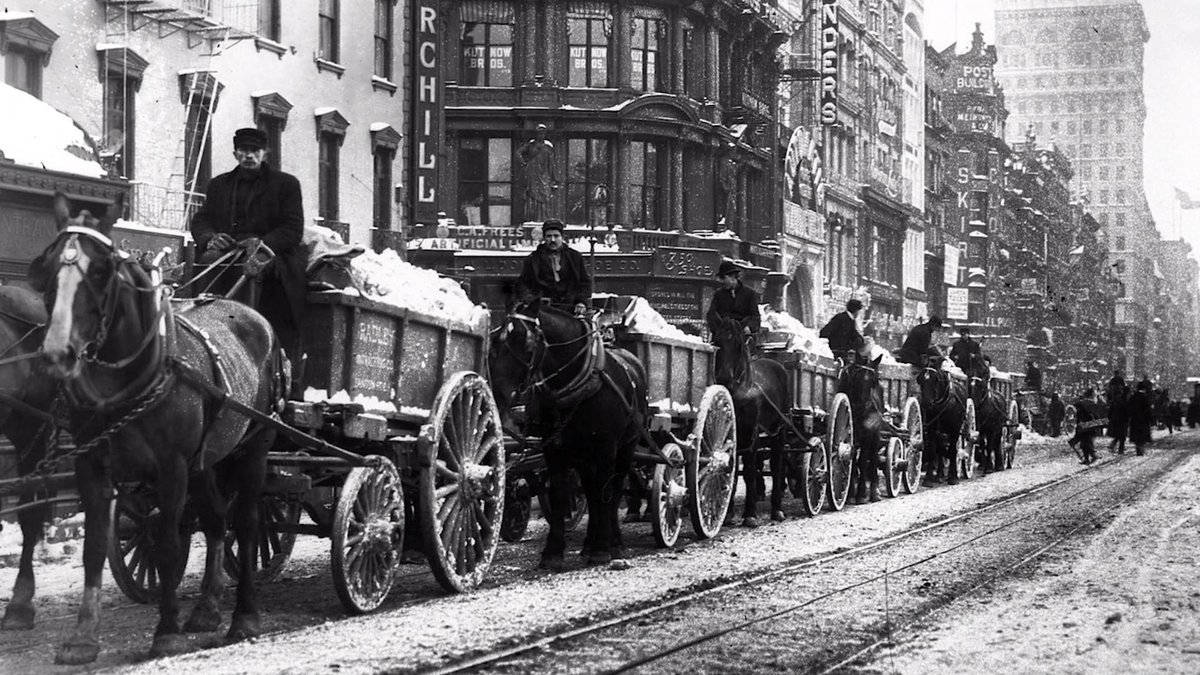
The massive dung piles created by constantly clearing the streets of horse “pucky” that were a common sight in many cities at the dawn of the 20th century are barely a footnote in history.
Rest assured, though, the smell plus flies and general public health hazard was a significant problem.
None of this is meant to condemn anyone complaining about the pending rate hikes.
It’s just that we often bellyache about how bad things are that we fail to realize how good we have it.
This column is the opinion of editor, Dennis Wyatt, and does not necessarily represent the opinions of The Bulletin or 209 Multimedia. He can be reached at dwyatt@mantecabulletin.com