The water that comes from our faucets is safe to drink.
The toilets that we flush actually are part of a system that risks it miles away — depending upon where you live — and treats it so the water is safe and cleaner than what it joins in the San Joaquin River.
When we put the trash out, it is taken far away so rodents, odors, and flies don’t become the first thing we smell and deal with in the morning and the last thing we smell and deal with when we go to bed.
We take a lot for granted.
But boy, do we love to complain about the price we pay for having municipal services that are the envy of much of the world.
That said, I don’t doubt the pain of paying a minimum of $140 a month is a real struggle for some people.
The amount is the minimum you can get away with each month on your municipal utility bill. Start using a lot of water, toss in another green cart and you’re spending more than two C notes on water, sewer, and garbage.
You don’t need to be reminded Manteca hadn’t raised the sewer and water rates for 14 years, that the city’s costs for electricity, chemicals, and lanes have soared just like household expenses.
And yes, there is a lot of aging infrastructure that needs to be replaced before the things we take for granted start to fail.
Put all of that aside for a moment and appreciate what we are getting for our hard-earned dollars.
To be honest, until 1986 I didn’t really give much thought to how fortunate we are not just being in the United States but California that tends to push the envelope when it comes to worrying about the environment benefiting not just nature but each and every one of us.
That said, the folks who art in Sacramento have a hideous tendency to overshoot the runway and, at times, all reason.
The year 1986 was when I spent 10 days in Mexico on assignment for The Press-Tribune covering Roseville’s sister city trip to Chignahuapan some 96 miles southeast of Mexico City.
It was when I realized how lucky that we are that our sewage and garbage aren’t seen and we can use water coming from our taps not only to brush our teeth but to actually drink.
The first epiphany was aboard a charted bus that’s better days predated the Chevrolet Covair.
Not only were there holes in the floor and it belched diesel like there was no tomorrow, but the driver had four quart sized soda bottles sans caps filled with “emergency” diesel with small pieces of towels plugging the neck.
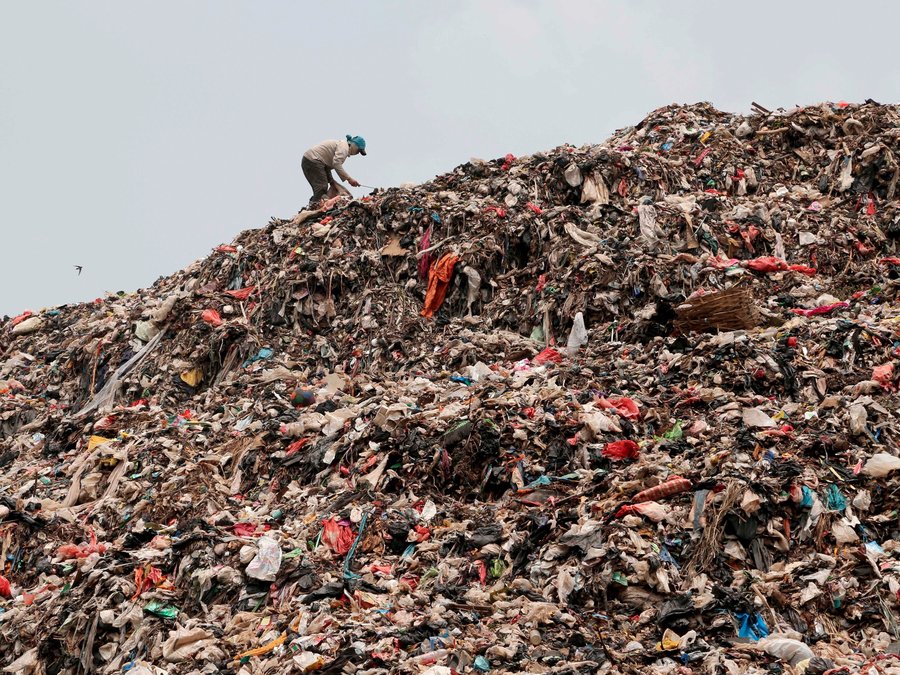
We were on the outskirts of Mexico City heading toward Puebla when we started passing what were literally humongous piles of garbage.
Then after a minute or so traveling at 50 mph, I realized the pile appeared never ending.
It went on for perhaps a half mile or more.
There were people who had set up tents near the highway’s edge.
They were foraging through the piles.
Later, one of our hosts explained, they were the poor looking for food and items they could salvage to sell for money.
I took away three thoughts from the scenes we past.
One, I was stunned by the endless sea of garbage.
Two, people were incredibly poor.
Third, despite being poor they worked hard to keep the tents and area around it near and as clean as possible.
Being poor clearly wasn’t an excuse for them not to have dignity.
In Chignahuapan, I was paired with Bob McCall who owned Roseville Travel.
We were staying with the owner, along with his family, of a factory that made air compressor pumps for Sears.
They were considered middle class by Mexico’s standards at the time.
It was an era when the middle class was basically non-existent in Mexico.
As such, he felt an incredible responsibility to his workers. When work was slow and he had no work for his employees, he continued to pay them.
We stayed at his home that was walled off from the street.
It wasn’t massive by American standards but it definitely was large by Chignahuapan standards.
The furnishings weren’t opulent but dignified. They had a maid.
Did I tell you what was running by his house before we turned into the compound?
It was a trench with raw sewage in it.
I accompanied the maid and two of his children one morning to the market in the central square to pick up ingredients for dinner.
I wish I was making up what you are about to read.
There were slabs of beef hanging in the open air with flies on them and buzzing them.
But that wasn’t the thing that shocked me, not by a long shot.
A dog just a few feet away had hiked its leg on a crate and urinating.
As this was going on, the maid told the merchant what cut of the beef she wanted without batting an eye.
It kind of made me appreciate California’s health and safety rules and the concept of public health department inspectors.
As for the safety of the water, I’m sure I’m not saying anything new.
Our hosts hammered home that we should not drink the water or use it to brush our teeth.
You should know I don’t drink, beer included.
So I ended up drinking the most available soda, Squirt, for 10 days.
Strike that, it wasn’t just Squirt.
It was Squirt served at room temperature, which was somewhere between 80 and 85 degrees.
But that wasn’t the worst.
I ended up brushing my teeth with Squirt, warm Squirt.
I can’t begin to tell you what that tasted like.
Thirty-nine years later, I still get a tad nauseous whenever I see a Squirt, especially if it is in a glass bottle.
And if I start having a pity party about how rough I have it forking over $140 a monthly to the City of Manteca for what we take for granted, I remember I’m fortunate to live in Manteca in the State of California and not in the City of Chignahuapan in the State of Puebla.
This column is the opinion of editor, Dennis Wyatt, and does not necessarily represent the opinions of The Bulletin or 209 Multimedia. He can be reached at dwyatt@mantecabulletin.com