There was a time I had a two-pack a day habit.
It was back in the 1960s.
They were definitely addictive.
That is true especially for a 9-year-old boy.
That’s the danger with consuming that much sugar.
Candy cigarettes are arguably one of the most bizarre “food” items ever created.
They are currently banned in Tennessee and a handful of countries.
The United States doesn’t outright ban them; they just can’t be called “cigarettes.”
Perhaps they should be banned.
A 1990 study found that sixth graders who ate candy cigarettes were twice as likely to smoke cigarettes as opposed to those that never opened a pack.
Then in 2007 a survey was conducted of 25,887 adults. The bottom line was candy cigarette consumption as a kid was reported by 88 percent of those that were current and former smokers as opposed to 78 percent of never smokers.
And your parents probably told you to take it easy on the cigarettes as they’d likely rot your teeth.
Then there were bubblegum cigars.
You’d be hard pressed to find any study linking chewing bubblegum cigars to getting hooked on high-end Cuban cigars.
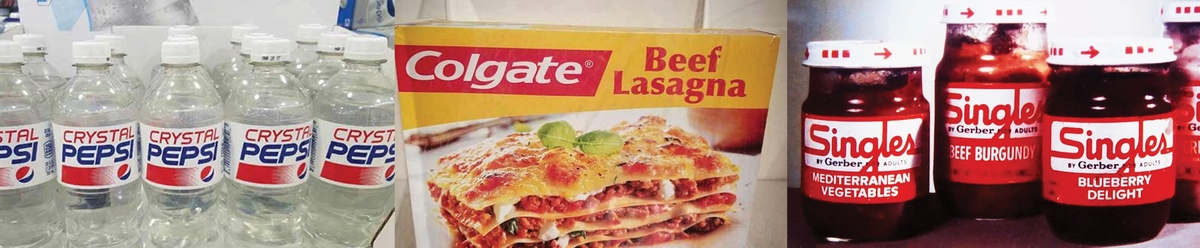
Then there was Crystal Pepsi.
Drinking it wasn’t necessarily a better alternative than chugging regular Pepsi.
Crystal Pepsi was clear instead of being made to look like cola using dyes. A 12-ounce bottle had 134 calories of Crystal Pepsi, 20 calories less than “regular” Pepsi.
Given “crystal” is also connected with things like meth, today it might not be all that it was cracked up to be as a name for a cola.
To be clear, pun intended, Pepsi’s roots can’t be traced back to having a dash of cocaine among its original ingredients as Coca-Cola does.
That doesn’t mean Pepsi didn’t come up with missteps.
One example is Pepsi AM rolled out in 1991 and discontinued shortly thereafter.
It was marketed as the ideal Pepsi to drink in the morning as it had 25 percent more calories than regular Pepsi.
Another is Pepsi Blue.
In case you never tried it, consider yourself lucky. It has a sweet berry, cotton candy taste. It vanished in 2004.
At least a Pepsi didn’t come out with a bacon soda to hop on the bacon mania bandwagon. Other soda firms did, and they all bombed. Soda that tastes like bacon, all the sweetness with none of the grease.
Coca-Cola, of course, had its own flops.
Remember Coca-Cola Blak?
It came out in the 2000s but lasted only 17 months before it was yanked from shelves.
What was it? A caffeine match made in soda hell. They mixed coffee and caffeine. Starbucks might want to bring it back.
It is far from the only food and/or soda that has been rolled out with big fanfare and flopped or was beloved and yanked from the shelves.
One of the former was the Choco Taco last made commercially by Klondike.
It was brought back last summer in test markets by Taco Bell that, contrary to what some might think, did not invent the Choco Taco.
For the record, the Choco Taco was commercially “invented” in 1983 in Philadelphia by a vendor for the Jack & Jill Ice Cream Co.
While on the subject of ice cream, let’s go to the flop category.
Johnston’s in the mid-1980s rolled out a leading candidate for the biggest ice cream flop.
It was called Hot Scoop.
You got two 6.5 ounce “cups” for $1.79.
They appeared in the frozen food section at some supermarkets before they disappeared within months.
And it wasn’t because they were a resounding success.
Hot Scoops are frozen sundaes complete with various ice cream sauces such as hot fudge and caramel.
In order to enjoy your sundae, you popped into the microwave for 30 seconds.
That’s right. Microwaved ice cream.
Besides the obvious question of what exactly did Johnston inject into the ice cream to keep it from completely melting, what would have prompted some to buy microwaveable ice cream?
Johnston thought it would be a big seller because people were impatient.
It turned out what they didn’t like was soggy ice cream.
Then there have been more than a few interesting candies.
Reese’s — on the 30th anniversary of Elvis Presley’s death — rolled out peanut butter and banana cream chocolates.
The package featured a picture of the King who was known to partake in peanut butter and banana sandwiches with a generous amount of bacon.
To be clear, the picture of Elvis on the candy wrapper was not from near his final days when he had gained a little bit of weight.
Then there was the Pearson’s “Seven Up.”
It featured seven unique “pillows” of filling wrapped by milk chocolate that first appeared in the 1930s and was discontinued in 1999.
Then there was Gerber Singles that were introduced in 1974 and were history in 1974.
Why mention baby food?
Well, it wasn’t marketed at babies. The target customers were college students and young adults out on their own for the first time.
They came in flavors such as beef burgundy, chicken madiera, and creamed beef.
Not only were they in mush form, but they actually were sold in the same jars as Gerber’s packaged strained baby food.
Moving on to condiments, who can forget about one of the grossest ideas ever to make it way to a supermarket shelf.
It was none other than Heinz EZ Squeeze Colored Catsup.
They used green tomatoes to make green catsup. That was bad enough, but Heinz couldn’t resist making catsup from purple tomatoes.
It was almost topped by a 1982 decision by Colgate – the company that makes toothpaste — to roll out a line of frozen food including beef lasagna.
Enough said.
This column is the opinion of editor, Dennis Wyatt, and does not necessarily represent the opinions of The Bulletin or 209 Multimedia. He can be reached at dwyatt@mantecabulletin.com
There was a time I had a two-pack a day habit.
It was back in the 1960s.
They were definitely addictive.
That is true especially for a 9-year-old boy.
That’s the danger with consuming that much sugar.
Candy cigarettes are arguably one of the most bizarre “food” items ever created.
They are currently banned in Tennessee and a handful of countries.
The United States doesn’t outright ban them; they just can’t be called “cigarettes.”
Perhaps they should be banned.
A 1990 study found that sixth graders who ate candy cigarettes were twice as likely to smoke cigarettes as opposed to those that never opened a pack.
Then in 2007 a survey was conducted of 25,887 adults. The bottom line was candy cigarette consumption as a kid was reported by 88 percent of those that were current and former smokers as opposed to 78 percent of never smokers.
And your parents probably told you to take it easy on the cigarettes as they’d likely rot your teeth.
Then there were bubblegum cigars.
You’d be hard pressed to find any study linking chewing bubblegum cigars to getting hooked on high-end Cuban cigars.
Then there was Crystal Pepsi.
Drinking it wasn’t necessarily a better alternative than chugging regular Pepsi.
Crystal Pepsi was clear instead of being made to look like cola using dyes. A 12-ounce bottle had 134 calories of Crystal Pepsi, 20 calories less than “regular” Pepsi.
Given “crystal” is also connected with things like meth, today it might not be all that it was cracked up to be as a name for a cola.
To be clear, pun intended, Pepsi’s roots can’t be traced back to having a dash of cocaine among its original ingredients as Coca-Cola does.
That doesn’t mean Pepsi didn’t come up with missteps.
One example is Pepsi AM rolled out in 1991 and discontinued shortly thereafter.
It was marketed as the ideal Pepsi to drink in the morning as it had 25 percent more calories than regular Pepsi.
Another is Pepsi Blue.
In case you never tried it, consider yourself lucky. It has a sweet berry, cotton candy taste. It vanished in 2004.
At least a Pepsi didn’t come out with a bacon soda to hop on the bacon mania bandwagon. Other soda firms did, and they all bombed. Soda that tastes like bacon, all the sweetness with none of the grease.
Coca-Cola, of course, had its own flops.
Remember Coca-Cola Blak?
It came out in the 2000s but lasted only 17 months before it was yanked from shelves.
What was it? A caffeine match made in soda hell. They mixed coffee and caffeine. Starbucks might want to bring it back.
It is far from the only food and/or soda that has been rolled out with big fanfare and flopped or was beloved and yanked from the shelves.
One of the former was the Choco Taco last made commercially by Klondike.
It was brought back last summer in test markets by Taco Bell that, contrary to what some might think, did not invent the Choco Taco.
For the record, the Choco Taco was commercially “invented” in 1983 in Philadelphia by a vendor for the Jack & Jill Ice Cream Co.
While on the subject of ice cream, let’s go to the flop category.
Johnston’s in the mid-1980s rolled out a leading candidate for the biggest ice cream flop.
It was called Hot Scoop.
You got two 6.5 ounce “cups” for $1.79.
They appeared in the frozen food section at some supermarkets before they disappeared within months.
And it wasn’t because they were a resounding success.
Hot Scoops are frozen sundaes complete with various ice cream sauces such as hot fudge and caramel.
In order to enjoy your sundae, you popped into the microwave for 30 seconds.
That’s right. Microwaved ice cream.
Besides the obvious question of what exactly did Johnston inject into the ice cream to keep it from completely melting, what would have prompted some to buy microwaveable ice cream?
Johnston thought it would be a big seller because people were impatient.
It turned out what they didn’t like was soggy ice cream.
Then there have been more than a few interesting candies.
Reese’s — on the 30th anniversary of Elvis Presley’s death — rolled out peanut butter and banana cream chocolates.
The package featured a picture of the King who was known to partake in peanut butter and banana sandwiches with a generous amount of bacon.
To be clear, the picture of Elvis on the candy wrapper was not from near his final days when he had gained a little bit of weight.
Then there was the Pearson’s “Seven Up.”
It featured seven unique “pillows” of filling wrapped by milk chocolate that first appeared in the 1930s and was discontinued in 1999.
Then there was Gerber Singles that were introduced in 1974 and were history in 1974.
Why mention baby food?
Well, it wasn’t marketed at babies. The target customers were college students and young adults out on their own for the first time.
They came in flavors such as beef burgundy, chicken madiera, and creamed beef.
Not only were they in mush form, but they actually were sold in the same jars as Gerber’s packaged strained baby food.
Moving on to condiments, who can forget about one of the grossest ideas ever to make it way to a supermarket shelf.
It was none other than Heinz EZ Squeeze Colored Catsup.
They used green tomatoes to make green catsup. That was bad enough, but Heinz couldn’t resist making catsup from purple tomatoes.
It was almost topped by a 1982 decision by Colgate – the company that makes toothpaste — to roll out a line of frozen food including beef lasagna.
Enough said.
This column is the opinion of editor, Dennis Wyatt, and does not necessarily represent the opinions of The Bulletin or 209 Multimedia. He can be reached at dwyatt@mantecabulletin.com