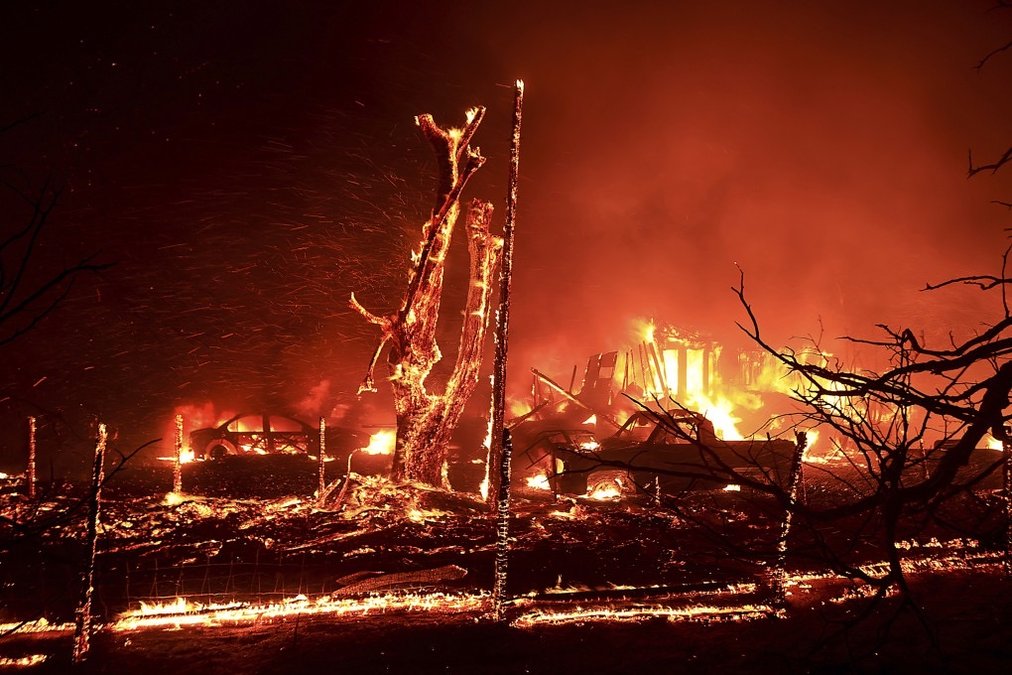
A high fire risk zone adopted earlier this year could scramble the new and resale housing market in South San Joaquin County.
The Tracy Hills neighborhoods, part of an overall 1,850-acre planned development in the southern part of Tracy, has been re-designated as a high risk fire zone.
That came in May after the state analyzed changing climate patterns that create red flag fire conditions in areas of California.
That designation does not directly impact fire insurance rates that are a growing concern of housing affordability statewide.
However, insurance companies are allowed to take it into consideration under state regulations when establishing annual insurance premium.
The area in the southwest corner of San Joaquin County, southwest of Interstate 580, already had a large swath of the area with the high risk and very high risk fire zone monikers.
That area, however, is sparsely populated.
An InsuranceNewsNet study shows one of every five homes in the highest fire risk areas in California have lost fire insurance coverage since 2019.
Industry surveys indicate the average premium for $300,000 of home insurance coverage was pegged at $1,383 in 2024.
For a number of homes in high risk fire zones, the annual premiums are between $5,000 and $12,000 for the same coverage.
No fire coverage puts 100 percent of the loss in a fire on homeowners.
That, in itself, would likely cause potential home buyers to think twice before buying in a high risk fire zone.
The real potential impact on the South San Joaquin County housing market — the primary go-to region for families in the tight Bay Area housing markets based on real estate transactions in recent years — are mortgage lenders.
Lenders require fire insurance in order for a buyer to secure a mortgage.
And it’s not just about getting the insurance.
How much a buyer has in monthly fixed housing costs — taxes, community district fees, and homeowners/fire insurance — determines how much the bank is willing to lend.
That, in turn, can translate into a buyer being able to affordable a loan for less house or no loan at all.
Since the designation in May, there has been no reports as of yet that insurance companies have hiked premiums when those they cover in Tracy Hills are up for renewal.
It is likely too early.
But given a number of insurance companies are reducing their risk exposure in California, the Tracy Hills High risk fire designation will likely have an impact on the regional housing market.
It could be a strong ripple or a tectonic shift depending how California’s insurance crisis unfolds amid additional wildfire losses and the need for insurance companies to control risk exposure.
And there is only three basic ways for insurance firms to do that — either drop all coverage or not write new policies in California, significantly increase rates in high risk areas, or a combination of both.
Potential impacts on housing
in Tracy, Manteca & Lathrop
Tracy Hills, in terms of housing, is the second or third largest development in South San Joaquin County.
River Islands at Lathrop is by far the largest with approval for 15,001 homes with 4,000 homes built so far.
Mountain House would likely be second as development is inching forward to groundbreaking on the east side of Byron Road northwest of Tracy.
Tracy Hills at build-out will have more than 5,500 new homes.
Manteca has several current developments that will add in excess of 1,200 homes each when completed.
But given Manteca built 1,130 in the fiscal year ending June 30, 1,306 homes in the previous year, and 978 homes in the year before that, the city as a whole is in the same league.
That’s because there are 8,000 plus single family homes in various stages of entitlement approval for Manteca.
Fire insurance premiums three to nine times higher on their own could impact both new and resale prices in Tracy Hills.
The most obvious is by what could be a $10,000 plus added cost to insurance a house.
Tracy prices already run higher, on average, than in Manteca and parts of Lathrop.
Insurance costs could make houses elsewhere in the South County more affordable.
And/or it could depress prices in Tracy Hills to accommodate the potential for higher insurance premiums for being in a high risk area.
Various housing and insurance analysts expect fire insurance coverage to grow significantly as an issue for buyers in California.
The high risk designation came after the fast moving Corral Fire in June 2024 that started in the Altamont Hills and ended up scorching 14,000 plus acres on Tracy’s southwestern flank.
Fire risk exposure elsewhere
in the South San Joaquin area
A grass fire in 2019 that started along Interstate 5 and was fanned by strong winds quickly spread that destroyed 36 homes north of March Lane in Stockton underscores the fire danger in the valley even in areas not designated by the state as being high risk zones.
The fire risk is not lost on local leaders.
Manteca, in response to growth, is in the preliminary stages of building a sixth fire station, is in the process of bringing their aging fire engine fleet up to date, and has started planning needed to hire at least 9 more firefighters.
Manteca — along with Lathrop, Tracy, and Mountain House — have a significant number of homes built after 2011.
That is the year California required fire sprinklers in all new residential construction.
They essentially buy time for fire crews to reach house fires which in return works to reduce loss of property and life.
More than 20 percent of all current homes in Manteca have fire sprinklers.
The South County gold standard for fire protection might just be River Islands at Lathrop.
It is part of the Lathrop Manteca Fire District.
Not only does Cambay Group take care of funding new fire stations and such via growth fees, but the design of River Islands lends itself to redundant and more robust water supplies for firefighting.
The planned community covers the entirety of Stewart Tract, an outer Delta island. It has a high water table which requires constant pumping.
River Islands engineers devised a system that ultimately will include 26 manmade lakes — 16 are already in place.
They are part of a de-watering process that controls the water table influenced heavily by the adjoins San Joaquin River and to a smaller degree when Paradise Cut is open at flood stage.
The lakes are filled with that water that also supplies water to fire hydrants and other non-potable that comes from the treatment of wastewater.
Manteca, Lathrop, and Manteca all pump groundwater as part of their potable water mix.
A prolonged power outage could be part of a worst case urban fire scenario.
But in River Islands case, they can rely on recently installed 10 linear generators put in place by Lathrop Irrigation District that are powered by natural gas.
And if that were not enough, the fire department — if need be — can pump water from any one of the 16 lakes.
Even though River Islands is not in a high risk fire zone, it has effectively addressed one of California’s three most vexing natural disaster concerns — the ability to fight fires that can get out of control during red flag conditions that include strong winds.
River Islands is also California’s platinum standard for 200-year flood protection that was put in place by the developer.
The third natural disaster is earthquakes, of which River Islands is not in a high risk area.
To contact Dennis Wyatt, email dwyatt@mantecabulletin.com