Fifteen months ago the Manteca City Council was hopeful they could start 2021 by being the first jurisdiction in the San Joaquin Valley to ban the use of non-compostable containers cups, and utensils for takeout food.
The council — without 100 percent committing to the strategy — instructed municipal staff to research such a move and delineate what it would entail. The goal was to have staff report back in several months to determine whether to move forward.
City residents frustrated
recyclables being buried
The council embraced the staff research in late August 2019 amid growing frustration of residents that had been faithfully recycling items that the city was simply landfilling what they were placing in blue carts.
That’s because not all residents were refraining from tossing garbage into blue carts. When foreign countries that were accepting recyclables for repurposing no longer tolerated the high contamination rates from recyclable materials from the United States, what Manteca collected failed to meet the new litmus test that was close to zero contamination as opposed to the 20 percent or so that had been acceptable
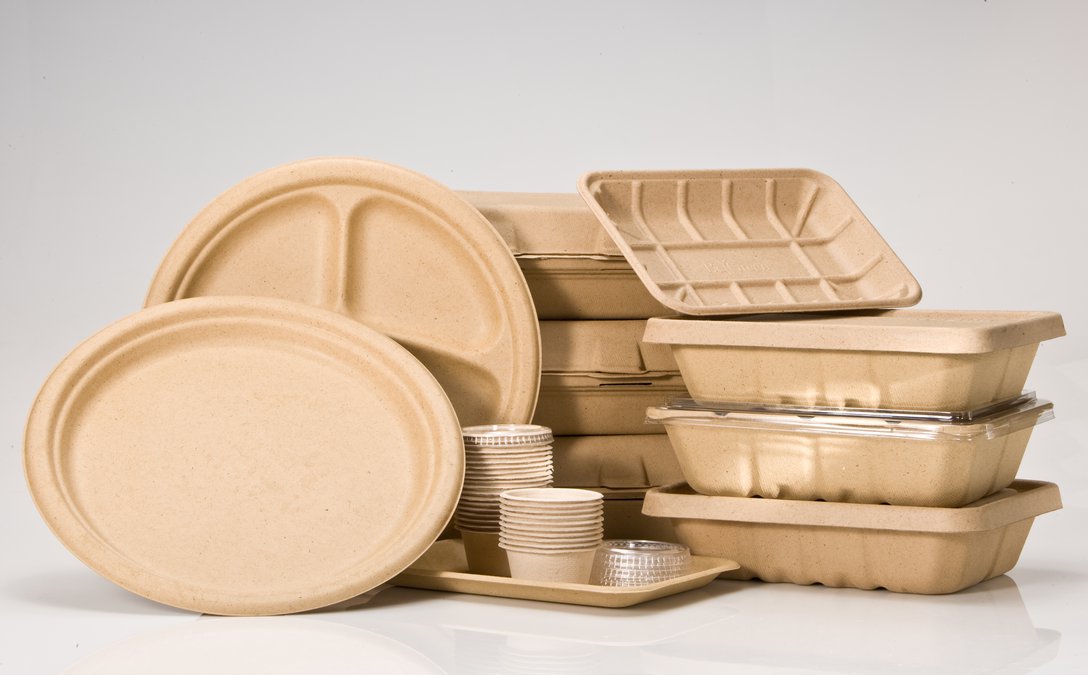
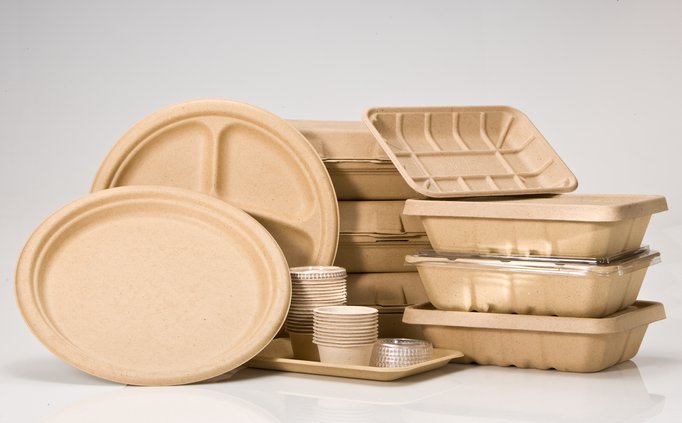
One resident appearing before the council suggested the council reduce the landfill stream by requiring the switch to compostable food containers. Such fiber-based containers can be combined with green waste to create soil additives.
When sent to a commercial compost facility to decompose within 180 days. The design of some containers allows them to decompose in as little as 45 to 60 days.
Departing department
heads, COVID caused
initiative to go to wayside
A month after the council instructed staff to prepare a report on instituting such a ban, then-City Manager Tim Ogden was out on administrative leave. The start of what ended up being almost a 100 percent in department head change — including the community development department charged with researching the ban and the public works department whose operations would benefit from it — started weeks after that.
Just as things started to settle down, the pandemic emergency started in mid-March.
“It got pushed aside and then delayed by COVID-19,” noted Assistant City Manager Lisa Blackmon.
Blackmon indicated the council request is being put back into the work flow.
A widely cited study published in Environmental Science and Technology Letters confirmed estimates that it can take polystyrene thousands of years to deteriorate in the absence of light which is what happens when they are landfilled. How light exposure does occur can shorten that time frame down to centuries or even decades
That means even if compostable food container make it into landfills where there are less than optimum conditions for them to break down, they will decompose in a relatively instantaneous time compared to polystyrene. It is also what Styrofoam used in packaging everything from breakable dry goods to items shipped by Amazon.
The Californians Against Waste website notes there are 120 cities or counties in the state — roughly just under a fourth of all jurisdictions — that already ban items made out of polystyrene that are neither compostable or recyclable in today’s recycling market. Davis is the only jurisdiction in the Great Central Valley that stretches from Bakersfield to Redding that has such a ban.
Council asked staff to
look at Berkeley law
on disposable cups
And if the council ultimately adopts the vision outlined by the resident, Manteca would one up Davis by also requiring restaurant customers to pay 25 cents for a disposable cup or else bring their own. That is similar to a landmark ordinance Berkeley adopted in January 2019 went into effect Jan. 1, 2020.
The Berkeley ordinance also allows disposable items like utensils, straws and napkins to be available only upon request or at self-serve stations. It also required that takeout food be served only using compostable dishes and utensils by January 2020. At the same time dine-in food was restricted to being served only using reusable dishes and utensils starting in July 2020.
That means a casual dining places such as Chipolte Mexican Grill in Berkeley were required to provide dine in patrons with reusable utensils and dishes used for their burrito bowls instead of the same containers that are used for takeout orders. It also banned aluminum they use to cover the takeout burrito bowls.
Considering such rules in Manteca is a logical extension of existing city efforts to reduce waste.
The city’s nationally acclaimed food waste to fuel program has been up and running since mid-2019. It is diverting food waste that would normally end up landfilled and combining it with methane gas produced from the treatment of wastewater to make clean burning compressed gas to eventually power all of the city’s solid waste truck fleet. That eliminates methane pollution as the gas generated from the treatment process would otherwise have to be burned off and create air quality issues. It also eliminates the use of diesel to power the solid waste trucks.
Manteca has a higher
than normal takeout
rate long before pandemic
Takeout food and their packaging is also a big part of the Manteca waste stream apparently due to the high concentration of long-range commuters that tend to eat out more often. That observation was based on an outside “audit” of random residential garbage carts about six years ago that showed roughly 40 percent of garbage was classified as fast food and accompanying containers as well as items such as pizza boxes and takeout bags.
The city’s solid waste manager at the time — Rexie LeStrange who has since retired — indicated the consultant said that was one of the highest percentage of fast food waste he had ever come across.
The city is also in the preliminary stages of exploring the feasibility of establishing their own recycling sorting and composting facility at the wastewater treatment plant to reduce the amount of waste that is being buried including truckloads of recyclable materials that residents keep contaminating with garbage to render it useless in the recycling market that still exists for some items.
The city, instead of waiting for domestic re-manufacturing markets to be established, is trying to find a way to have more control of the solid waste stream generated by Manteca’s 87,000 residents as well as businesses going forward.
The goal is for the city is to be able to take residential food waste along with fiber based waste such as newspapers and product boxes for items like cereal and combine them with yard waste to make compost. Polystyrene products that now dominate the Manteca food takeout market are not compostable meaning they would still have to be landfilled even if Manteca invested in its own sorting and composting facility.
No timetable was given as to when the council would be presented with information on pursuing a possible ban on non-compostable takeout containers that they first requested 16 years ago.
To contact Dennis Wyatt, email dwyatt@mantecabulletin.com