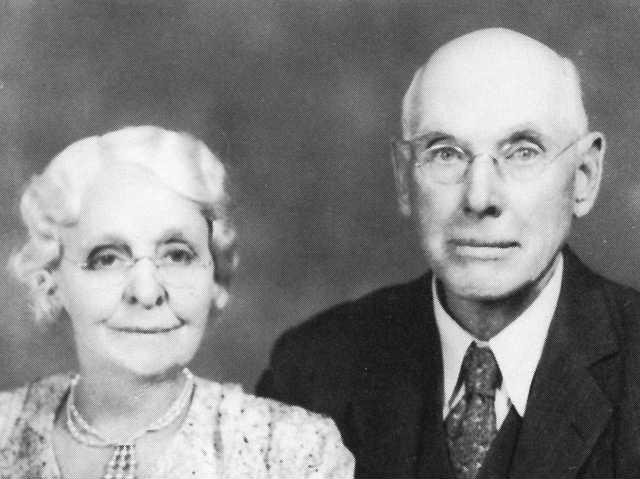
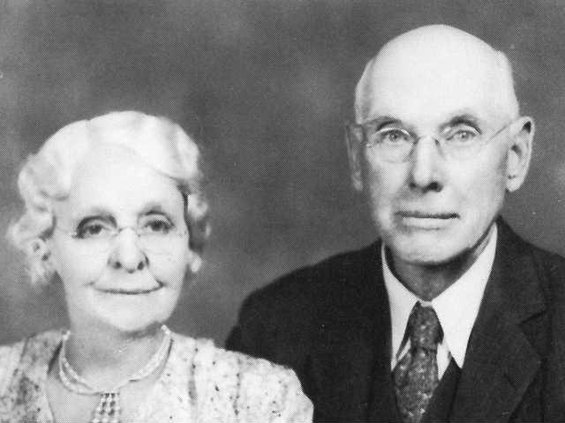
Pioneer Walter J. Woodward was responsible for the ground work for securing water that made it possible for Manteca to grow from a railroad siding to a vibrant agriculture commerce center in the late 1910s.
Woodward Reservoir — the initial backbone of the South San Joaquin Irrigation District that holds a maximum of 36,000 acre feet of water completed in 1917 some 16 miles northeast of Manteca — was named in his honor.
Originally it was built as the district’s only reservoir for irrigation storage. Today it serves as an in-district safety net for agricultural deliveries as well as a “holding pond” for municipal water supplies for Manteca, Lathrop, and Tracy prior to being treated at the Nick DeGroot South County Surface Water Treatment Plant.
The SSJID operates four other reservoirs today for principal water storage with the Oakdale Irrigation District in the form of the Tri-Dam Project and Goodwin Dam, all on the Stanislaus River.
Woodward served as SSJID director from 1909 to 1916 and spent many hours laying out the system including the reservoir accessed by heading east on Highway 120 toward Oakdale, turning left on 26 Mile Road, and traveling four miles to the reservoir park entrance.
Built at cost
of $600,000
The reservoir cost $600,000 when it was completed. By comparison, the water play feature was built in Manteca’s Library Park in 2008 for $450,000.
The reservoir is the last holding area for irrigation water before it is diverted into canals for the trip to 60,000 irrigated farm acres in the Ripon, Manteca and Escalon areas.
The dedication was a major event attracting 10,000 spectators according to published reports. Part of the attraction was the impact dams such as Woodward Reservoir were having on the California economy in the early part of the 20th century.
The irrigation water was able to convert the sandy plains around Manteca into some of the most productive farmland in the state.
It was Woodward’s suggestion that the reservoir site be selected plus his idea to create a distribution system to reach every 40 acres rather than just larger area ranches.
The ability to buy land close to irrigation lines triggered Manteca’s first economic boom helping the city to virtually double in size overnight.
Born in Vermont
Woodward was born Aug. 2, 1858 in Wolcott, Vermont. At age 14 he moved with his family to near Greely, Colorado, where he learned Morse code. That enabled him able to land his first job away from the family farm as the railroad’s station agent at Greely.
Eventually, he owned the second largest hardware store in Denver but lost it during the Panic of 1893. He was able to pay his debts and moved his family to National City in Southern California in 1893. It was there, relying on his experience helping dig irrigation ditches on his father’s farm, that Woodward invented a way to machine band wood pipe.
In 1897 he filed for a patent and joined with partners to form the California Redwood Pipe Co. They soon were filling orders throughout the West and eventually merged with the National Wood Pipe Co. He was made vice president and moved his family to Oakland across the bay from the firm’s headquarters in San Francisco.
One of the projects he oversaw was transporting water across Death Valley’s step terrain using a molded redwood flume.
A heart problem prompted him to leave the company in 1905. It was that year he purchased 160 acres on the north side of what is now Woodward Avenue at the intersection with Oleander Avenue.
The ranch was successful under pump irrigation but he realized how much more productive the entire area could be with surface irrigation and set about working with others to form the SSJID. He was one of the original five SSJID board members.
He became Manteca’s first real estate agent in 1907.
The Manteca Unified School District named Walter Woodward School south of Woodward Park in his honor. Woodward Avenue and Woodward Park also carry his name.
To contact Dennis Wyatt, email dwyatt@mantecabulletin.com
Woodward name graces school, reservoir, park
Latest
-
 LIBRARY OR COP TRAINING?
 -
 FinFind Bulletin virtual Easter egg & win $100; more Manteca dining, shop options
 -
 Ripon Vice Mayor backs Naven in Manteca mayor against incumbent Singh
 -
 There are 18,000 Medi-Cal and CalFresh recipients in San Joaquin County subject to expanded work requirements. Overall, there are 314,058 county residents enrolled in Medi-Cal and 131,891 residents enrolled in CalFresh out of San Joaquin County’s overall