First the good news - if you can call it that.
The increase in the demand during March for food to help feed struggling families grew at a slower pace than the same month last year. The bad news is that during the course of a year some 250,000 individuals either at least once or as many as 52 times a year rely on the food closets in seven counties including San Joaquin and Stanislaus that are supplied by the Second Harvest Food Bank to keep food on their tables.
“A lot of people think about the need during the Holidays but hunger is a year-round problem,” said Mike Mallory who, as executive director, oversees the food bank based in the Manteca Industrial Park that serves as the regional distribution center for staples to help feed the hungry.
And while corporate donations of truckloads of food as well as items form individuals and groups help, it is just as important that the food bank raise cash.
But it’s not cash to pay for salaries, electricity, fuel for trucks, and such for the staff that runs the food bank. Instead it is cash to buy tons of fresh produce from farmers at bargain basement prices of between 8 and 18 cents a pound for everything from apples and oranges to cauliflower and broccoli.
It is all part of a statewide farmers to family effort where California growers provide surplus crops to the state’s food bank just to cover basic costs of harvesting it. Typically it is food that either became ripe in too large of quantities or isn’t “perfect” in terms only of how it looks. Fickle consumers typically shy away from it although it is still perfectly good. So instead of plowing it under - which would be the cheapest way to do it - they harvest it and provide it to the food banks at essentially the cost of removing it from their fields and orchards. Last year food banks up and down California received 115 million tons through the program.
“It is important that people eat healthy,” Mallory said.
About 50 percent of every 18 pounds of food that gets distributed for a typical household contains fresh produce.
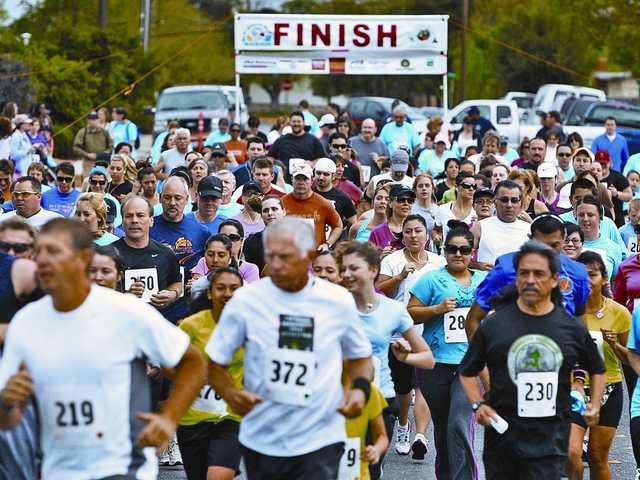
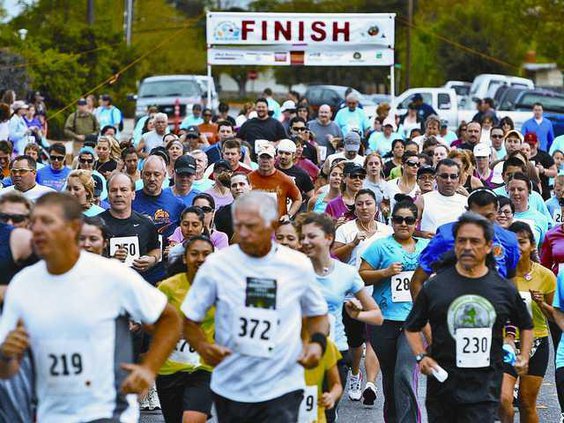
It is paid for with receipts from fundraisers such as the Saturday, April 14, Hit the Streets for Hunger taking place along the Tidewater Bikeway in Manteca. Registration is at 7 a.m. followed by the mile race at 8 a.m. and the 5K run at 8:30 a.m.
Advance registration is $20 for individuals and $50 for a family of four. Advance registration includes T-shirts. For details go to www.localfoodbank.org or call 239-2091.
“The face of hunger has changed (with The Great Recession),” Mallory said. “It now includes people who are our neighbors and who are part of our families.”