The forecast for Stanislaus River basin runoff from the current Sierra snowpack is pegged in excess of 1.2 million acre feet of water.
That’s more than double the water that actually flowed into New Melones Reservoir last year after the driest January-February on record depleted much of the historic snowfall in December of 2021.
It is why South San Joaquin Irrigation District General Manager Peter Reitkerk is more optimistic about this weather year than 2021 that started like gangbusters yet ended up with the snowpack producing a miserly runoff.
“We’re definitely better situated than in 2022,” Reitkerk said Thursday.
But as every seasoned water manager in California is emphasizing this week, Reitkerk noted precipitation still can take a sharp turn before the critical April 1 snowpack measurement that determines how much water is available in the spring, over the summer, and into the late fall.
Reitkerk pointed out forecasters expect a return to dry weather starting next Wednesday.
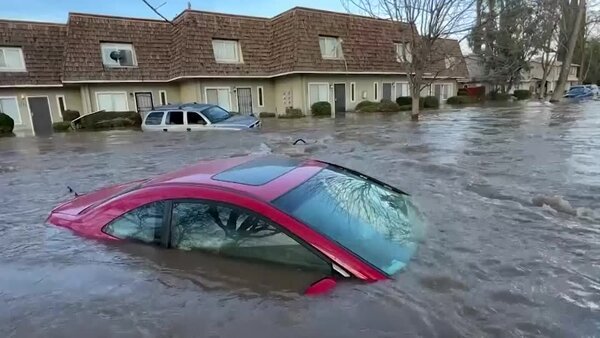
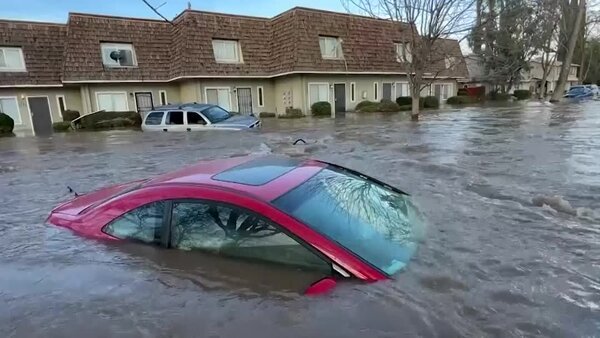
Still the heavy drenching that triggered mudslides and flooding throughout California and created a snowpack 25 feet deep in spots at the Mammoth Lake ski resort has also raised the water levels in the crucial large reservoirs throughout the state to near their normal levels for this time of the year.
The SSJID relies on adjudicated water rights on the Stanislaus River to supply water to 220,000 urban users in Manteca, Lathrop, and Tracy as well as for farmers in the Manteca, Ripon and Escalon area.
The Central Sierra snowpack that covers the watersheds for the Stanislaus, Tuolumne and Merced rivers that flow into the northern San Joaquin Valley was at 229 percent of average for the date of Jan. 12.
It is at 106 percent of normal for the critical April 1 measurement date that is used to determine water deliveries from the State Water Project and Central Valley Project.
The Sierra snowpack is the state’s largest “reservoir” as it is counted on to provide more than a third of California’s water needs every year.
The SSJID’s measurements since Oct. 1 had rainfall at 190 percent of normal within its service area.
The City of Manteca, using National Weather Service data, as of Thursday had accumulated 12.76 inches of rain since July 1.
In a normal year in Manteca there is 5.64 inches of rain between July 1 and Jan. 12. Based on the July 1 start date, Manteca’s rainfall is currently 226 percent of average.
To put that in perspective, during the same July 1-Jan. 12 period rainfall in hard hit areas in the region:
*Merced was at 10.81 inches or 238 percent of average.
*Modesto was at 11.06 inches or 225 percent of average.
*Sacramento (measured at the Sacramento State campus) was at 16 inches of 202 percent of average.
*San Francisco downtown was at 19.07 inches or 187 percent of average.
*Livermore was at 13.94 inches or 212 percent of average.
Reitkerk praised SSJID crews that were staying in top of efforts to keep canals clear of debris such as fallen trees. In doing so it has allowed the cities of Manteca and Escalon to discharge runoff into the canal system to reduce the chances of flooding in those communities.
Data compiled by the state Department of Water Resources indicated enough water has flowed into the California’s seven largest reservoirs since the start of the month to cover the 49-square-mile City of San Francisco with almost 50 feet of water.
To illustrate how much ground the state has to make up in surface storage due to the drought as of Jan. 12:
*Shasta, California’s largest reservoir that can hold 4.5 million acre feet of water, was at 2.7 million acre feet or 72 percent of average storage. It’s actual overall capacity was at 44 percent.
*Oroville, the state’s second largest reservoir that can hold 3.5 million acre feet, was at 1.9 million acre feet or 90 percent of average. It’s actual capacity was at 49 percent.
*New Melones, that is pivotal for SSJID and can hold 2.4 million acre feet, was at 1.3 million acre feet or 61 percent of average. It was at 35 percent of overall capacity.
*San Luis, the state’s largest off-stream reservoir near Los Banos that is designed to catch excess winter runoff and can hold 2 million acre feet, was at 1.3 million acre feet or 61 percent of average. It was at 41 percent of overall capacity.
Reitkerk said even if the rest of the rainy season plays out to bring water levels in reservoirs to normal on April 1, the replenishing of groundwater supplies reduced by the drought will still take a number of years to bounce back.
To contact Dennis Wyatt, email dwyatt@mantecabulletin.com