Mention downtown, and the street names that pop up for most people are Main Street, Yosemite Avenue, Center Street, Maple Avenue, Sycamore Avenue, and Grant Avenue.
Moffat Boulevard is an afterthought, if that.
But what was once the main Highway 99 entrance to Manteca from the south before the current freeway was built in 1955, is playing a growing role in downtown’s future.
*First the old Union Ice building and vacant land was replaced in 2011 with the iconic transit center building complete with a four-sided clock tower and accompanying transit hub.
*Manteca High’s modernization effort has reoriented the front of that campus to Moffat Boulevard.
*In the coming 18 months, a new ACE passenger loading platform will be built south of the transit center. The main entrance align with Sherman Avenue and the west side of the Manteca High campus.
The advent of rail service — plus a large developable parcel on South Grant Street directly across from the transit center — is expected to be a game changer for Moffat, downtown, and Manteca.
People will be able to board a commuter rail train starting in 2027 to reach either San Jose or Sacramento as well as points in between.
And somewhere in the next 8 to 15 years, they can also board an ACE train in downtown Manteca to reach Merced and reach the first leg of the California High Speed Rail line.
The same rough time frame is when Valley Link could be extended to the Lathrop Y to connect with ACE.
That means you could ride trains from downtown Manteca to Lathrop. There you would transfer to Valley Link to reach Pleasanton where you would then be able to access the BART system that serves the San Francisco Bay Area.
Toss in the fact the transit station hub is next door to the ACE platform and parking lots has regional transit connections to Stockton and Modesto.
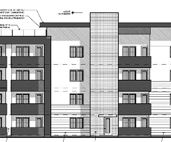
It makes Moffat an ideal location for a transit village right in downtown with high density housing and ground floor commercial where commuters have a short walk to access job markets in the Bay Area and the Valley by rail.
“It can help create a lot of foot traffic for downtown businesses,” Mayor Gary Singh said of the transit village that blends right into the city’s long range vision of second and third floor residential above new commercial projects as well as higher residential density in the central district.
Moffat could play key role
in transforming Yosemite
Even more important from Singh’s perspective, is what the Moffat corridor can do for Yosemite Avenue.
The mayor sees Moffat as an effective bypass of downtown for through east-west traffic.
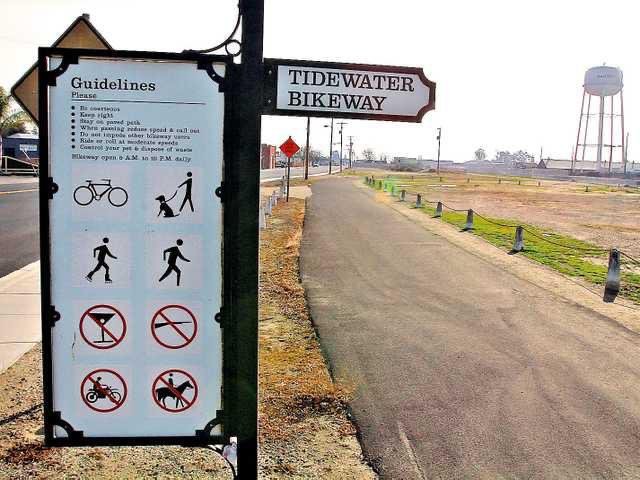
All it would require is repurposing city property along the Tidewater Bikeway behind the 100 and 200 blocks of West Yosemite and parts of two private parcels.
That would allow Yosemite Avenue as it heads east of the railroad crossing to swing to the southeast and connect into the existing Moffat-Main T-intersection as a two-lane road.
It is the is the obvious downtown bypass follow up to the “original downtown bypass” project, which was extending Industrial Park Drive to Spreckels Avenue where it T-intersected with Moffat just over two decades ago.
That effectively took a large chunk of traffic originating in south Manteca trying to reach the East Yosemite-Spreckels retail area from having to go through downtown.
Singh’s two-lane, no parking Moffat extension would take the traffic trying to reach the East Yosemite-Spreckels retail area off of Yosemite and direct it down Moffat — which has no cross streets after Main until Spreckels.
It could then turn north on Spreckels to reach Target et al.
In doing so, it reduces traffic congestion on Yosemite west of Powers Avenue to the train tracks.
Equally important for downtown’s future, the city would be able to “rethink” the Yosemite Avenue corridor from Manteca Avenue to Powers Avenue.
To reach Dennis Wyatt, email dwyatt@mantecabulletin.com