Drive west down the nearly five-mile stretch of West Ripon Road between Airport Way and Jack Tone Road in Ripon during most anytime on a weekday and you may pass perhaps a dozen vehicles if that.
But as mid-afternoon nears it is common to pass 10 plus vehicles driving between the major crossroads placed a mile apart along West Ripon Road.
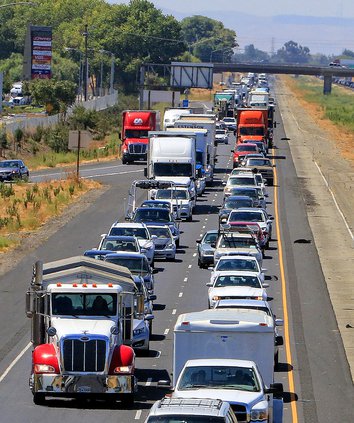
The traffic is fueled by commuters headed south on Highway 99 across the Stanislaus River trying to avoid the heavily congested last three miles of the 120 Bypass that is the deadliest and most accident prone stretch of freeway in the Northern San Joaquin Valley. They also miss a stretch of equally slow moving and congested Highway 99 heading south from the 120.
They take Airport Way allowing them — once they cross Woodward Avenue — to move at 55 mph plus without worrying about sudden stops in traffic ahead of them or motorists making abrupt unsafe lane changes. They then pass through Ripon — primarily using Main Street — to renter the freeway bringing congestion and speeding traffic into the heart of Ripon.
The City of Ripon has hired the firm of Fehr & Peers to help remedy the evening commute traffic through town.
No discussion was necessary at the Ripon City Council meeting on Dec. 11 on the hiring of the transportation planning and engineering firm for services not to exceed $6,900. Cost will be paid via the Streets and Road Fund, according to the report by Engineering Supervisor James Pease.
“Fehr & Peers will help develop a plan to reduce the amount of traffic cutting through the city by evaluating a number of mitigation measures including signal timing adjustments, stop signs and a new traffic signal,” he said.
Fehr & Peers is familiar with the traffic issues in Ripon having worked with the San Joaquin Council of Governments on the congested corridor plan that includes Highway 99 and the Highway 120 Bypass.
City Council have discussed the significant increase of vehicles cutting through town – commuters on the 99 / 120 interchange and Highway 99 through Ripon use the surface streets, in turn, adding to the increased number of motorists.
“This large increase in commute traffic is beyond what Ripon city streets were designed for and is resulting in significant delays for residents along with the increase in moving violations [speeding, not stopping at stop signs, etc.],” Pease said.
Elected leaders, meanwhile, gave staff the OK to adjust the timing of the traffic signal at Jack Tone Road and West Ripon Road back in July.
According to Pease, the timing of the light was changed to extend the time the light turned red for eastbound motorists on West Ripon Road while extending the green light timing for those traveling north onto Jack Tone Road as a way of encouraging drivers to enter Highway 99 at the Jack Tone interchange rather than driving through Ripon – incidentally, the changes here were set for weekdays, from 3:45 p.m. to 6:30 p.m.
Staff also observed the changes in trying to determine the effectiveness of metering cars traveling through Ripon in order to reduce congestion on the city streets.
However, Pease noted the difficulty in this observation.
“The commute cut-through traffic varied so much day-to-day depending on what was happening on Highway 99 – it was difficult to determine the most effective timing of the signal at Jack Tone Road and West Ripon Road,” he said in his report.
Enter Fehr & Peers.
The firm was called on to evaluate options such as installing loops or road sensors to record the number of vehicles entering Ripon. The traffic loops would then provide information to the traffic control system, which, in turn, would be programmed to adjust the signal based on the real time data.
“This would allow the traffic signal timing to be adjusted to avoid unnecessary delays to our residents when the volume of commute cut-through traffic is minimal,” said Pease.
He added: “It will also allow the volume of traffic entering Ripon to be metered during non-commute times when an accident occurs on Highway 99.”
Fehr & Peers have worked with Sacramento, Roseville, Citrus Height, Oakland and Carlsbad, to name a few other cities.
In addition, Caltrans has been looking into both the short- and long-term improvements on Highway 99 such as increasing roadway capacity as a way of eliminating the need for vehicles to get off the highway system.
“This project will not begin until 2021 and it’s not anticipated to be completed until 2024,” said Pease, using information provided by SJCOG.
Caltrans is currently considering a ramp metering project along Highway 99 as way of reducing traffic congestion by controlling the number of vehicles entering the freeway.
To contact reporter Vince Rembulat, e-mail vrembulat@mantecabulletin.com.