PACIFIC GROVE — Pacific Grove is an idyllic place to go for rest and relaxation.
West Coast Monarch butterflies would agree.
The Monarch Sanctuary a a few blocks from the Pacific Ocean is the reason butterflies flock to Pacific Grove from October through mid-February.
More about the more popular hang-outs like Pacific Grove in California that Monarch butterflies like to visit in a bit.
But first, let’s look at the reasons why humans tend to flock there as well not just now but year-round.
Pacific Grove sits where the Monterey Bay eases into the Pacific Ocean.
The location brings all of the expected Central California seaside charm.
Next door is the hustle-bustle of Monterey with its Cannery Row restaurants and tourist traps, the Monterey’s Fisherman’s Wharf with its whale excursion boats, and the Monterey Aquarium.
Journey just a short way to the south and you can access Pebble Beach and the 17-Mile Drive with its $12.50 per vehicle fee that can often be reimbursed at Pebble Beach restaurants with a purchase of $35 or more.
Walkers and bicyclists are free.
Even if you don’t partake in the dining options, the stunning architecture of homes you can see from your car and sweeping views are worth the price of admission.
There are also the picturesque Carmel-by-the-Sea and Point Lobos State Natural Reserve that has been described as one of the most dramatic meetings of sea and land on the planet.
What makes a weekend stay in Pacific Beach or a mid-week jaunt unforgettable isn’t the excitement. Nor is it the nearby attractions, although they are all worth exploring.
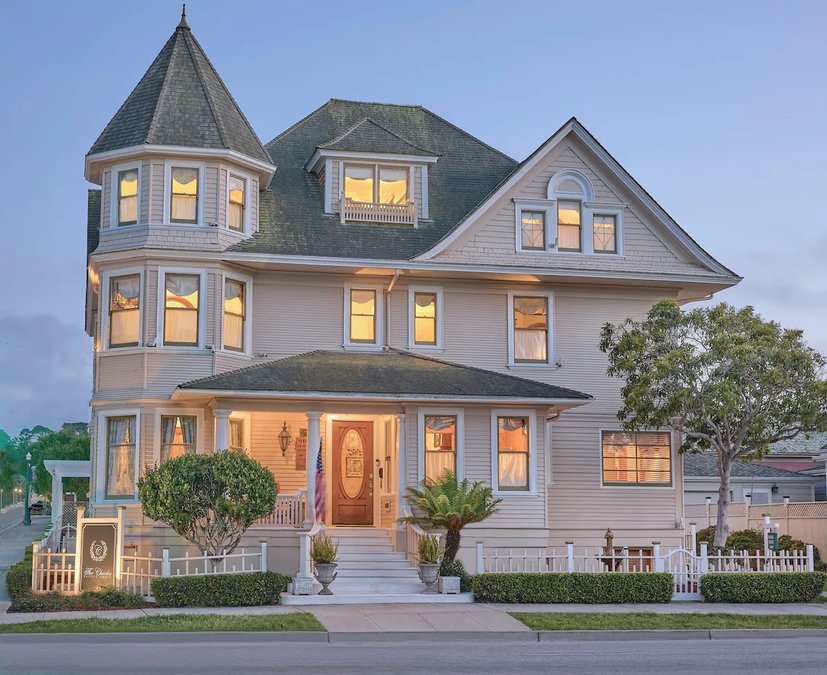
It is the incredible feel of rest and relaxation that comes with staying at one of the bed and breakfasts or the Gosby House Inn in Pacific Grove or the Victorian Inn, which is everything the name implies, next door in Monterey.
There is nothing finer than strolling down the picturesque streets and then walking along the oceans either before or after breakfast and then doing it again in the afternoon or before dusk.
To be honest, if your main goal is to unwind, it’s hard to top hanging out in your room reading, relaxing in a parlor or on a porch, or simply napping.
If you get bored with decompressing Pacific Grove style, there are plenty of short jaunts to satisfy virtually anyone.
And when it comes to dining, there are a number of options that provide views overlooking the waters of Monterey Bay.
That said, Pacific Grove itself has offerings worth exploring.
There are the quaint downtown shops in the community of 15,000, the Pacific Grove Museum of Natural History, the coast, city parks, the Point Pinos Lighthouse, and the Monarch butterfly preserve.
Pacific Grove is very much a year-round destination with an average temperature in the 60s.
Pacific Grove’s history
The first people to inhabit Pacific Grove were members of the Ohlone Rumsen tribe who lived between Big Sur and San Francisco since the 6th century.
Grinding stones from this tribe still exist in Pacific Grove. The area later became part of the Mexican land grant Rancho Punta de Pinos.
The second group of people to come to Pacific Grove were Chinese immigrants as early as 1853.
They established a successful fishing village at Point Alones, an area between Lover's Point and the western edge of Monterey.
The Chinese were the first to recognize the potential for commercial fishing in the Monterey Bay. Others quickly saw the benefit, however, and eventually pushed the Chinese from their daytime fishing grounds. Being resourceful, they began fishing for squid in the night, thus beginning California's squid fishery – now one of California's largest fisheries.
The Point Alones fishing village was the oldest and longest running fishing village on the West Coast.
The city of Pacific Grove originated as a Methodist Christian seaside resort.
Pacific Grove incorporated in 1889.
About those butterflies
and ‘Kodak moments’
The monarchs are still in Pacific Grove but it’s not peak season as noted on a post Thursday. Instead of clusters, you can see monarchs flying around on warm, sunny days, especially in the nectar beds in the lower part of the sanctuary.
For “Kodak moments” — or social media postings for those under 40 that have now idea what that is — take a walk or bike ride along the Monterey Bay Coastal Recreation Trail.
It begins at Jewell Avenue and Ocean View Boulevard, near Lovers Point Park.
You’ll pass the world-famous Monterey Bay Aquarium and Cannery Row as well.
The trail runs 18 miles along the shore north to Castroville.
Pacific Grove’s stretch is arguably the most stunning part of the entire route.
You’ll see wildlife like harbor seals and sea otters just offshore, and can also head out on the water yourself with a kayak rental from Adventures by the Sea at Lovers Point Park and Beach — one of the most popular spots for a photo op.
Unlike the monarchs that live east of the Rocky Mountains (which tend to winter in central Mexico), West Coast monarchs stick with the Golden State. While there are roughly 400 wintering sites for the butterflies along the California coastline, this eucalyptus-shaded sanctuary (monarchs seem to love the willowy trees) has been ranked in the top six of the state’s wintering spots.
For the second year in a row, California is seeing an explosion of color from monarch butterflies. The fiercely beautiful insects flutter 1,000 miles from southern Canada to the California coast, where they spend the winter before continuing their long migrations.
Going farther south to
San Louis Obispo County
You can put together a 57-mile road trip along this stretch of Highway 1 in San Luis Obispo County to visit several monarch wintering sites, which are found on nature preserves and near a winery, golf course, and campground.
Bring along binoculars so you can keep a respectful distance from the monarchs.
Start on the Monarch Trail’s north end at Hearst San Simeon State Park, not far from Hearst Castle. Look for orange-and-black clusters high up in eucalyptus trees above the beach, or near Hearst Ranch Winery. About one mile south, stop at the Fiscalini Ranch Preserve, where monarchs roost in a Monterey pine forest near the shoreline.
The next four stops are clustered around Morro Bay, including the Sweet Springs Nature Preserve in Los Osos, a 24-acre natural preserve that’s managed by the Morro Coast Audubon Society. Walk the trails through Monterey cypress and eucalyptus trees, and you’ll spot lots of shorebirds in addition to monarchs.
The Pismo Beach area marks the trail’s southern end, where the Pismo State Beach Monarch Butterfly Grove at Pismo State Beach hosts one of California’s largest monarch colonies. The butterflies that gather here are known for their longevity.
The nearby Oceano Campground, part of the Oceano Dunes State Vehicular Recreation Area, historically has attracted upwards of 20,000 monarchs a year. The butterflies are partial to the local Monterey cypress trees, and since their branches are often only about 15 feet off the ground, this is an easy place to view them.
To contact Dennis Wyatt, email dwyatt@mantecabulletin.com