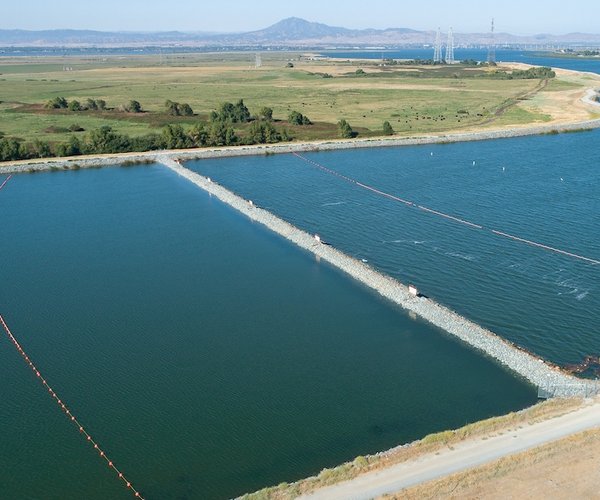
The Great Depression was still in its infancy when a young Bennie Gatto first frolicked as a kid along the eastern banks of the San Joaquin River.
It was where Leland Stanford and his partners in the Central Pacific Railroad known as the Big Four — Collins P. Huntington, Leland Stanford, Charles Crocker, and Mark Hopkins — completed the bridge at the Mossdale Crossing on Sept. 8, 1869.
It was the final segment of the Transcontinental Railroad whose much ballyhooed “completion celebration” had been staged four months earlier in the middle of No Where, Utah, better known in the history books of Promontory Point.
It was indeed where crews laying tracks — the Central Pacific from the west and Union Pacific from the east — met.
And it was a made “for the newspaper moment” symbolic of the first railroad tying the east with the west.
But the final proverbial stake was driven on a bridge above the San Joaquin River near where Bennie grew up.
The odds are Bennie saw hundreds, if not thousands, of Southern Pacific steam locomotives rumble through Lathrop and crossing the Mossdale bridge.
Forty-five years prior in 1885, Southern Pacific and Central Pacific merged.
And five years before that, Bennie’s grandfather arrived in Lathrop to farm.
Luigi along with his first wife and their four children arrived in 1880.
After his first wide passed, Luigi married and had 12 children. And of those, Bennie was born when his father 71.
The establishment of a robust railroad stop in Lathrop enabled Luigi to open one of several hotels that popped up on the western side of the wye where Lathrop’s “downtown” to provide passengers with dining and even sleep options during stopovers while the need of engines were being addressed.
A fire in May 1911 destroyed the two-story Lathrop Hotel.
Luigi opted not to rebuild. Instead, he focused his energies on farming.
By the time Bennie was 5 in 1930, the first engines powered by diesel started appearing on American tracks.
Steam engines eventually gave way to diesel eliminating the need for a roundhouse operation in Lathrop.
It was also the beginning of a long hibernation, so to speak, for Lathrop.
What brings up the history lesson is the need to make more than a footnote in San Joaquin County history about the passing this month of Bennie.
The railroad is an integral part of Lathrop’s history.
The same is true of Bennie, perhaps more than anyone else ever to have been connected with a community that Stanford named in honor of his wife Jane and her brother Charles Lathrop, who worked as an engineer for the Central Pacific.
It should be noted, before you read further, that the love of his life — his bride Joyce of 70 years — was a part of Bennie’s heart and soul, even more so than Lathrop.
Back to the Lathrop history lesson, and how Bennie had a pivotal role in changing Lathrop’s destiny that had been heading towards the proverbial wide spot in the road while at the same time helping sew the fabric that makes the Lathrop community special.
Thanks to memories shared by his father, Bennie was a walking, talking encyclopedia of 148 years of Lathrop history.
Gatto three years ago, fondly remembered taking trips in a horse and buggy down Harland Road past empty fields that today is home to Tesla component and manufacturing facilities.
It was there are a young boy that Gatto played across the river from the levee where one day he would stand as a Lathrop City Council member with Alan Chapman — the CEO of Cambay Group — as the latter shared his dream of building the planned community of River Islands of Lathrop with 15,001 homes.
Gatto was among civic leaders that played an active role in not only making sure River Islands was a complete package but also would lift up the entire community.
As such, development at River Islands has transfused money into upgrading the older sections of the city.
The native Lathrop son played two years of football at Manteca High in 1946 and 1947 as an end.
But before he earned his high school diploma, Gatto was off to see the world.
He enlisted in the Navy and served from 1947 to 1956.
Several years before being discharged from the Navy, continued assignment changes led to a desire move his young family to Lathrop into a home on Fifth Street his brother vacated and agreed to rent to him by Gatto’s taking over the payments on after building a new home next door.
He ended up landing a job at Best Fertilizer — the forerunner of J.R. Simplot — where he worked for 32 years.
Bennie and Joyce set about raising their family and helping Lathrop grow,
Gatto served on the first Lathrop City Council elected in 1989 when residents voted to become an incorporated city with just over 5,000 residents. Today, Lathrop is home to roughly 43,000 people.
Gatto was one of the five top vote getters from a total of 19 candidates who ran during the special election held on June 6, 1989.
During the same election, Lathrop voters were also asked to vote if they wanted to become an incorporated city. Incorporation passed by 81.6 percent of the votes cast, or 783 in favor and 177 against.
During his eight-year tenure on the council, Gatto became Lathrop’s second mayor. He also has served more than 14 years on the Lathrop Planning Commission.
He served 22 years as a volunteer firefighter and served on the Lathrop-Manteca Fire District board from 1981 to 2010 including six years as chairman.
He has served on the Manteca District Ambulance board as well as the now-defunct Lathrop Water District Board.
His community service included helping at the high school his two children attended and gradated — East Union High where Lathrop students went for decades — and ultimately Lathrop High after it was built.
Between the two schools, he served for a half century on high school football chain gangs. That is in addition to a lifetime of setting the bar in terms of community involvement
In September 2012, the Lathrop High Spartans dedicated the football field “Bennie Gatto Field” in his honor for his tireless dedication not just to Lathrop but to its youth as well.
Gatto once noted he volunteered to help in the community because was “the right thing to do.”
Bennie had a front-row seat — figuratively and literally — to Lathrop’s success and growth as a community.
Gatto remembered back in 1989 there were naysayers that thought it was a mistake for Lathrop to incorporate as a city.
But Gatto and others believed Lathrop’s future would be better if the community was in control of their own destiny.
In the past 36 years, Lathrop has emerged as major distribution hub with a healthy manufacturing base. It is also home to the largest planned community in the Great Central Valley.
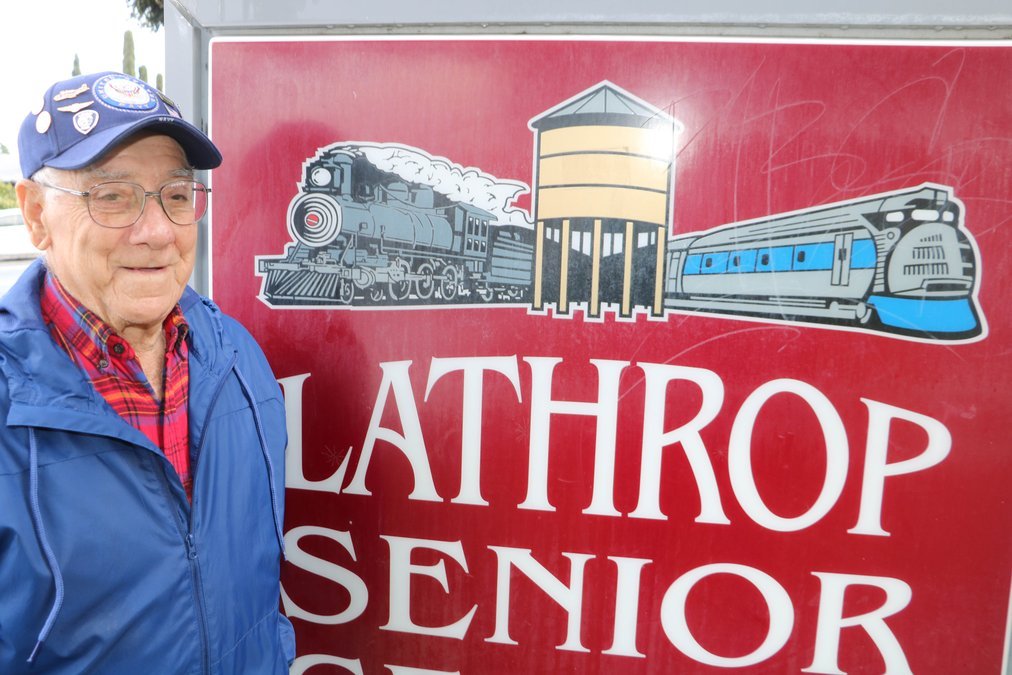
Gatto reflected on that and more on a rainy afternoon in 2022 at the Lathrop Senior Center where for the better part of a decade he volunteered as cook at monthly breakfasts.
It took just four words for Gatto to sum it all up.
“Look at us now.”
This column is the opinion of editor, Dennis Wyatt, and does not necessarily represent the opinions of The Bulletin or 209 Multimedia. He can be reached at dwyatt@mantecabulletin.com